How to Build an AI Short-Form Clipping Business
TL;DR
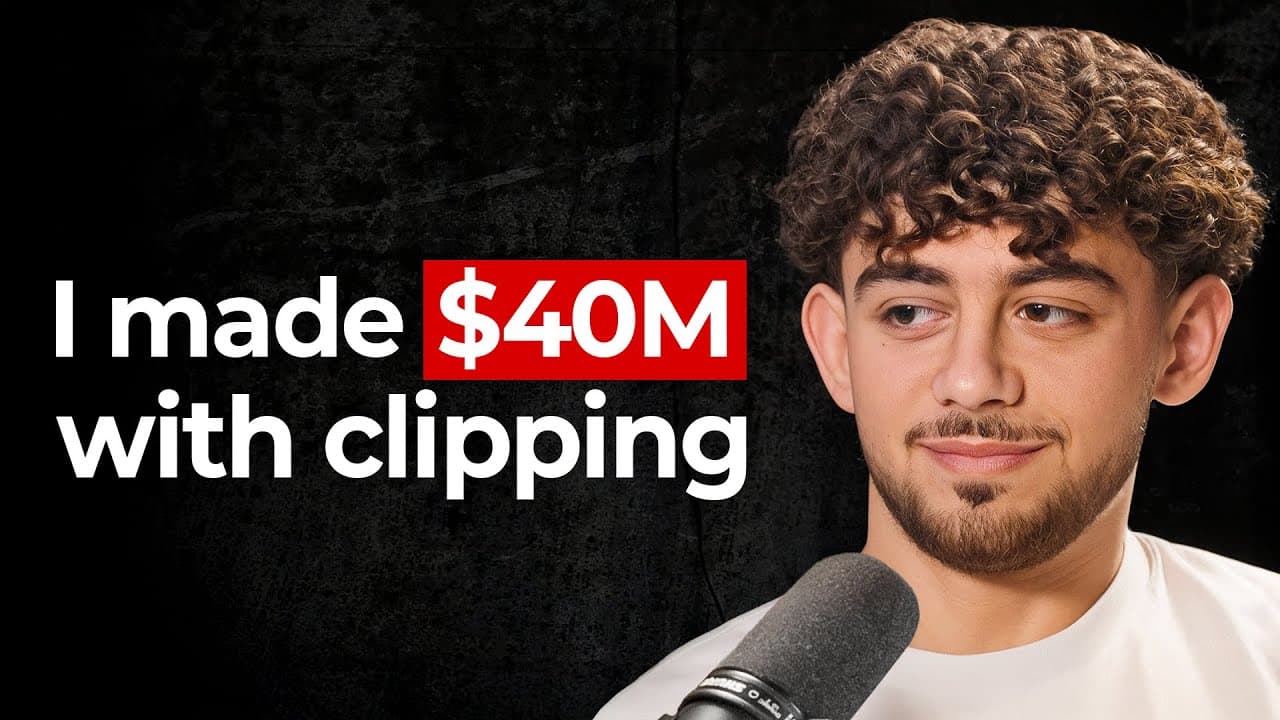
An AI clipping business can grow by removing technical editing barriers, helping users produce short-form videos quickly, and proving enough value to retain subscribers. Musa Mustafa says Crayo emerged from his editing agency and training program, while its growth strategy combines a low-cost subscription, cold paid traffic, and a funnel designed to recover advertising costs through initial sales.
Transcript
Today's guest makes a million dollars a month at 22 years old. >> You want to say you're working harder to make 50k a year? Yeah, you are. I'm working hard to make a million and you got what you wanted and I got what I wanted. It's that simple. >> Originally a video editor for small YouTubers, he realized the way he told stories was blowing creator... Read More
Key Insights
- Crayo is designed to bridge the gap between people who want to create viral videos and people who lack video-editing skills. It combines AI prompts with other production elements so users can assemble clips without mastering a traditional editing program.
- Musa identifies Crayo, information products, and investments as his three main revenue sources. He says his monthly income remains consistently within the seven-figure range, was close to $2 million in the month discussed, and currently benefits most from Crayo.
- Crayo emerged from an editing agency's need for more trained editors. Musa created a paid course that taught clipping, then offered jobs to students who could generate 50 million views within 30 days by applying the material.
- Customer retention is presented as evidence that Crayo delivers meaningful value. Musa reports a churn rate below 15% and argues that subscribers remain because they either recover the $20 monthly cost or achieve audience growth and traffic objectives.
- The customer-acquisition strategy uses a low-ticket subscription funnel intended to break even on advertising costs immediately. Continuing monthly subscriptions can then turn the acquired customers profitable, provided that the product performs well enough to retain them.
- A native mobile application is not treated as the immediate growth priority. Crayo's website works on phones, while the company focuses on increasing revenue, customers, and users through scalable acquisition before investing attention in a separate app.
- Cold paid traffic is positioned as a strategic advantage because Musa believes most competing software tools have not solved it profitably. He applies experience from information-product advertising funnels to acquire Crayo subscribers while managing front-end acquisition costs.
- Musa's routine at home centers on repetition and focused work. He describes going to the gym, eating breakfast with family, working in his office for roughly 10 hours, returning home to sleep, and changing locations when he becomes bored with his environment.
Install to Summarize YouTube Videos and Get Transcripts
Explore YouTube Video Summarizer or Get YouTube Transcript Extractor
Questions & Answers
Q: How did Musa Mustafa start an AI clipping business?
Musa says the business developed from his video-editing agency, where he needed more editors to serve clients. He began selling a course that trained people to make clips and hired strong performers. After noticing that many students could not use conventional editing software effectively, he and his partners created Crayo to reduce the technical barrier through AI-assisted video production.
Q: What problem does Crayo solve for content creators?
Crayo addresses the gap between wanting to publish short-form videos and knowing how to edit them. Musa says many prospective creators were unfamiliar with Premiere Pro, Sony Vegas, DaVinci Resolve, and even the remaining manual work required in CapCut. Crayo uses AI prompts and assembled production components to help those users create videos with less editing knowledge and effort.
Q: How does Crayo make money from AI video clipping?
Crayo sells access through a low-cost software subscription. Musa gives $20 per month as an example and says customers keep paying when the software helps them earn that cost back or produces another valued result, such as growing a social account or driving traffic. He presents recurring subscriptions and continued customer satisfaction as the core economic relationship.
Q: What revenue sources does Musa Mustafa describe?
Musa identifies three major sources of revenue: Crayo, information products such as his course, and investments. He says his total monthly income is consistently in the seven-figure range and was close to $2 million during the month discussed. When asked which source was strongest at the time, he singled out Crayo as the leading contributor.
Q: Why did Musa sell a course before building Crayo?
Musa originally sold the course because his agency needed additional editors. The course let him train candidates in clipping while they paid to acquire the skill. He offered employment to participants who could achieve 50 million views within 30 days, and he says numerous young participants earned jobs through that process, with strong editors able to earn about $2,000 per month.
Q: How does Crayo acquire customers through paid advertising?
Musa applies a low-ticket ascension funnel previously used for his information product. His example is spending $10,000 on advertisements in one day and earning the same amount from low-ticket sales that day, then moving some customers toward higher-value offers. For Crayo, the objective is to offset acquisition spending with initial subscriptions and profit from retained monthly customers.
Q: Why does Crayo not prioritize a native mobile app?
Musa says Crayo does not currently have a native mobile app, although its website is compatible with phones. He considers revenue growth, customer growth, and user growth more important to the company's scale and potential exit value. A mobile app may come later, but he does not view it as the solution to the broader challenge of scalable customer acquisition.
Q: What is Musa Mustafa's daily work routine?
When staying at home with his family, Musa says he wakes up, goes to the gym, eats breakfast with his father or brothers, and then works in his office for about 10 hours. He returns home to sleep and repeats the schedule. When the environment becomes boring, he follows essentially the same routine from another place, such as a hotel.
Summary & Key Takeaways
-
Musa Mustafa says his income is consistently in the seven-figure monthly range and close to $2 million in the discussed month. His three main revenue sources are Crayo, information products, and investments, with Crayo described as the largest current contributor. The software helps inexperienced editors create short-form videos using AI prompts.
-
Crayo grew from a practical staffing problem inside Musa's editing agency. He sold a course to teach clipping skills, challenged students to generate 50 million views in 30 days, and offered successful participants jobs. This process revealed that many aspiring creators lacked experience with tools such as Premiere Pro, DaVinci Resolve, and CapCut.
-
The business focuses on reducing editing friction and scaling customer acquisition rather than prioritizing a native mobile app. Musa transferred lessons from a low-ticket information-product funnel into Crayo, aiming to recover daily advertising costs through initial subscriptions. Retention then makes customers more valuable when they continue receiving useful financial or audience-growth results.
Read in Other Languages (beta)
Share This Summary 📚
Summarize YouTube Videos and Get Video Transcripts with 1-Click
Try YouTube Summary with ChatGPT & Claude or YouTube Transcript Generator
Explore More Summaries from Jack Neel 📚






Summarize YouTube Videos and Get Video Transcripts with 1-Click
Try YouTube Summary with ChatGPT & Claude or YouTube Transcript Generator