Who Controls Global Power: Secret Societies or Nation States?
TL;DR
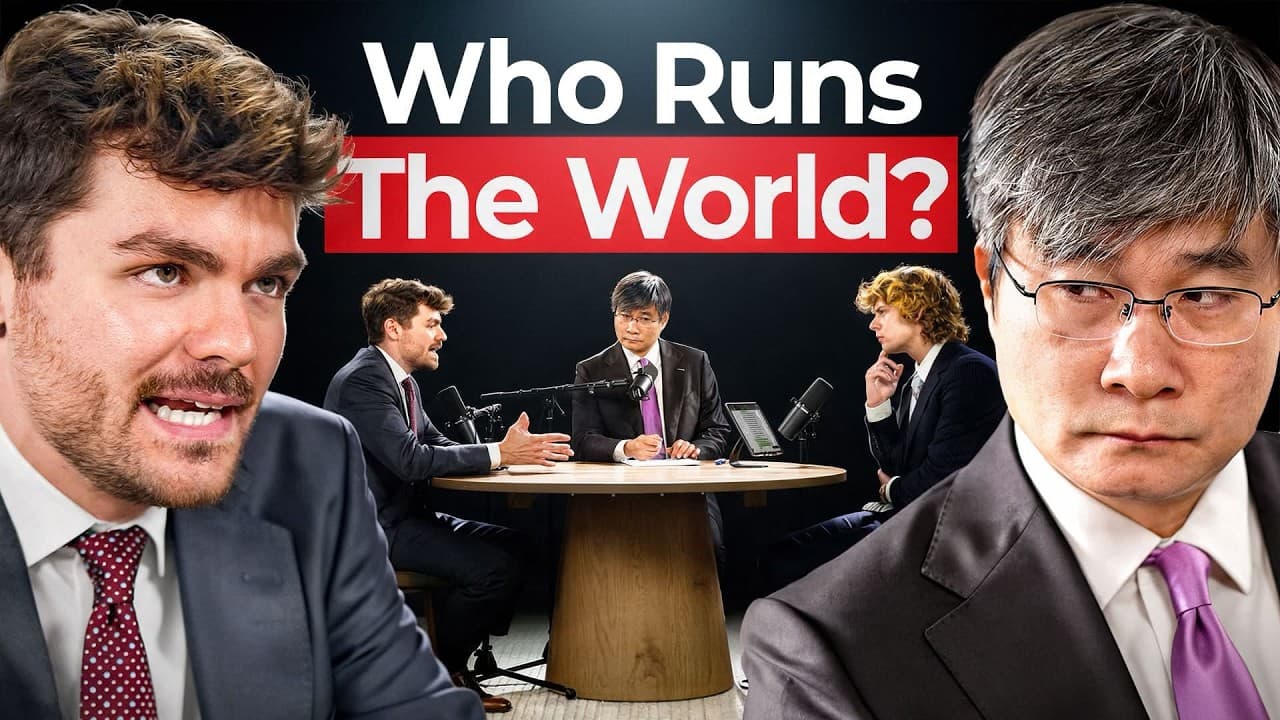
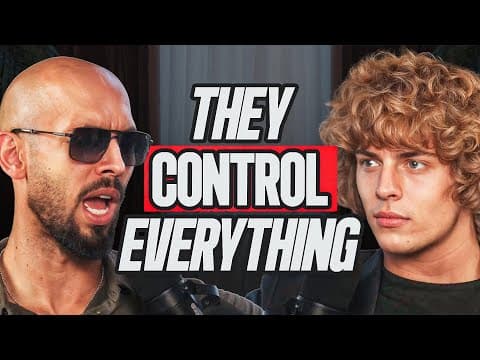
The podcast features a debate between Nick Fuentes and Professor Jiang on who truly holds global power. While Fuentes argues that nation states and intelligence agencies are the primary power holders, Jiang suggests that secret societies and transnational capital play a significant role. Both discuss the influence of Jewish groups, the role of eschatology, and the impact of geopolitical strategies.
Transcript
Trump is not in control. >> Yes. >> The people that are orchestrating the tempo and the timeline of events are Israel. >> He has surrounded himself with religious fanatics. They believe that this war will usher in the end times. Do you think America should have a dictator? You need a dictator now because the system is so fundamentally broken. >> To... Read More
Key Insights
- Nick Fuentes argues that nation states and intelligence agencies are the primary holders of global power.
- Professor Jiang suggests that secret societies and transnational capital significantly influence world events.
- The debate touches on the influence of Jewish groups and the potential impact of eschatology on geopolitical strategies.
- Fuentes dismisses the idea of secret societies like the Freemasons having current global influence.
- Jiang believes that the most fanatical and energetic groups within a coalition can drive events.
- The discussion includes the Greater Israel Project and its implications for Middle Eastern geopolitics.
- Both speakers discuss the historical and potential future impacts of religious motivations on global politics.
- The podcast explores the concept of a nation without borders, focusing on Jewish communities as an example.
Install to Summarize YouTube Videos and Get Transcripts
Explore YouTube Video Summarizer or Get YouTube Transcript Extractor
Questions & Answers
Q: How do Nick Fuentes and Professor Jiang view the role of secret societies in global power?
Nick Fuentes argues that secret societies like the Freemasons have little to no current influence on global power, emphasizing the role of nation states and intelligence agencies. In contrast, Professor Jiang believes that secret societies and transnational capital significantly influence world events, suggesting they solve key problems like information, infiltration, and coordination.
Q: What is the Greater Israel Project and its significance in the podcast?
The Greater Israel Project is a geopolitical strategy discussed by Nick Fuentes and Professor Jiang, involving Israel's expansion and dominance in the Middle East. Fuentes views it as a pragmatic geopolitical goal, while Jiang suggests it could be driven by messianic motivations. Both explore its implications for regional stability and global politics.
Q: What are the differing views on the influence of Jewish groups?
Nick Fuentes sees Jewish groups as a cohesive, transnational entity that wields significant power due to their global coordination and resistance to assimilation. Professor Jiang, however, views Jewish influence as part of a broader coalition of interests, with the most fanatical groups potentially driving events. He suggests that historical scapegoating of Jews complicates the narrative.
Q: How do the speakers address the concept of eschatology in geopolitics?
Eschatology, or end-times prophecy, is discussed as a potential motivator for certain geopolitical strategies. Professor Jiang suggests that groups like Habad Lubovich may be driven by messianic visions, influencing events like the Greater Israel Project. Nick Fuentes acknowledges the role of religious motivations but emphasizes pragmatic geopolitical interests.
Q: What is the central disagreement between Fuentes and Jiang regarding global power structures?
The central disagreement lies in the role of secret societies and Jewish influence. Fuentes dismisses the current power of secret societies, focusing on nation states and intelligence agencies. Jiang argues for the significant influence of secret societies and transnational capital, suggesting they drive global events through coordination and infiltration.
Q: How do the speakers view the role of baby boomers in current power dynamics?
Professor Jiang criticizes baby boomers for holding onto power and resources, suggesting they contribute to societal stagnation. Nick Fuentes, however, views baby boomers as a conservative force that, despite criticisms, helps maintain stability against more progressive younger generations. He believes their influence is over-hated.
Q: What are the potential future implications of the Greater Israel Project?
The Greater Israel Project could lead to significant geopolitical shifts in the Middle East, potentially sparking conflicts over religious sites like the Al-Aqsa Mosque. Both speakers suggest that achieving the project's goals could either align with pragmatic geopolitical interests or fulfill religious prophecies, with significant implications for regional and global stability.
Q: What role does religion play in the geopolitical strategies discussed in the podcast?
Religion plays a complex role in the geopolitical strategies discussed. While some groups might be motivated by religious eschatology, others may use religious narratives to rally support for pragmatic geopolitical goals. The podcast explores how these religious motivations intersect with broader political and strategic interests.
Summary & Key Takeaways
-
Nick Fuentes argues that nation states and intelligence agencies, rather than secret societies, are the primary power holders in the world. He believes that the Jewish community acts as a nation without borders, coordinating globally.
-
Professor Jiang counters that secret societies, such as the Freemasons and Jesuits, along with transnational capital, play a significant role in global power dynamics. He suggests that the most fanatical groups can influence the direction of broader coalitions.
-
The podcast delves into the influence of Jewish groups, the Greater Israel Project, and the role of eschatology in shaping geopolitical strategies. Both speakers discuss the potential impacts of these factors on future global events.
Read in Other Languages (beta)
Share This Summary 📚
Summarize YouTube Videos and Get Video Transcripts with 1-Click
Try YouTube Summary with ChatGPT & Claude or YouTube Transcript Generator
Explore More Summaries from Jack Neel 📚

Summarize YouTube Videos and Get Video Transcripts with 1-Click
Try YouTube Summary with ChatGPT & Claude or YouTube Transcript Generator