Why Do the Kurds Still Lack an Independent State?
TL;DR
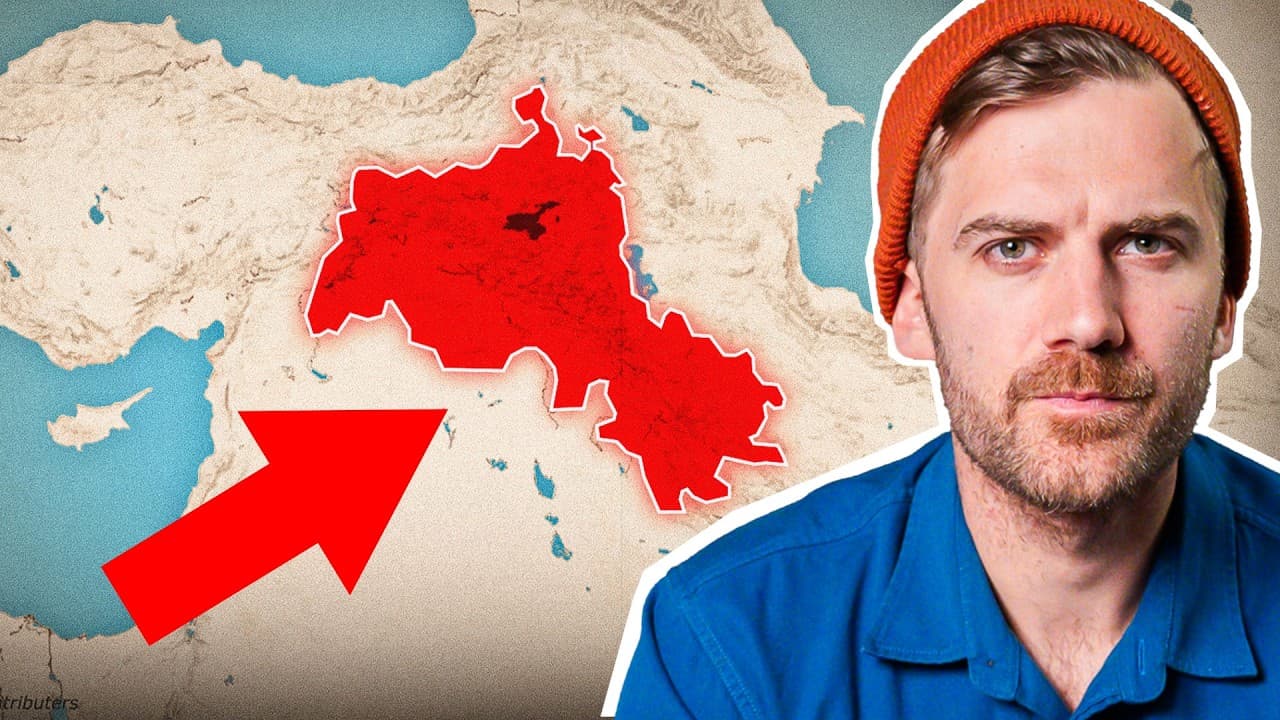
The Kurds still lack an independent state because post–World War I borders divided their homeland among five territories, while the resulting governments suppressed Kurdish autonomy and foreign powers offered only conditional support. Kurdish movements pursued politics, uprisings, and armed resistance, sometimes gaining temporary protection or self-rule but not lasting statehood. Read on to understand how borders, repression, and shifting alliances repeatedly blocked Kurdish independence.
Transcript
- Up in the Zagros Mountains have long lived a people called the Kurds. There are people with a centuries long history of fighting back against invaders who have crossed through their lands, resisting conquest in the name of defending their shared cultural identity. Some living as nomads, a people with no friends, but these mountains. (suspenseful ... Read More
Key Insights
- The Kurds are a people from the Zagros Mountains with a centuries-long history of resisting invaders and defending a shared cultural identity. Some lived as nomads, while Kurdish communities retained substantial autonomy and freedom even after the Ottoman Empire took control of their territory.
- Postwar borders divided Kurdish lands because European plans changed after Turkey's new leader opposed surrendering territory and resources. Instead of establishing borders around a Kurdish homeland, the victorious powers drew borders through it, splitting what could have become Kurdistan among five separate territories.
- The hardening of national borders restricted Kurdish movement and livelihoods after European powers left and new countries became independent. Their leaders sought to centralize authority around common national languages and cultures, treating Kurdish identity, autonomy, and independence movements as threats to political unity.
- Kurdish resistance took both political and violent forms throughout the 1900s. Early uprisings were crushed, while later movements continued demanding autonomy or independence. Although Kurdish communities faced different conditions across Iran, Iraq, Syria, and Turkey, they remained connected by aspirations for Kurdish self-rule.
- Iraq's promises of Kurdish recognition and political representation proved unreliable under Saddam Hussein. His regime continued repression and used deadly chemical weapons against Kurdish towns, systematically killing thousands of civilians in a genocide that the transcript says killed at least 50,000 Kurdish people, probably more.
- Turkey's Turkification campaign sought national unity by denying Kurdish citizenship, outlawing the Kurdish language, and excluding Kurds from politics. Armed resistance later emerged through the communist-oriented Kurdish Workers Party, or PKK, whose violent tactics led Turkey and most Western powers to classify it as a terrorist organization.
- Foreign support for Kurdish movements was repeatedly conditional on strategic usefulness. The Soviet Union backed Kurds in Iran, Syria supported the PKK against Turkey, and Iran and Iraq armed Kurdish groups inside each other's territory, but these relationships ended or shifted when patrons' geopolitical interests changed.
- United States support gave Iraqi Kurds limited protection and autonomy but did not secure independence. After encouraging an uprising against Saddam Hussein, the United States initially provided no military support as his forces crushed it, and later opposed Kurdish independence despite their cooperation against Saddam, insurgents, and ISIS.
Install to Summarize YouTube Videos and Get Transcripts
Explore YouTube Video Summarizer or Get YouTube Transcript Extractor
Questions & Answers
Q: Why do the Kurds still lack an independent state?
After World War I, European powers drew borders through Kurdish lands rather than around a Kurdish homeland, splitting the Kurds among five territories. The resulting governments centralized power and suppressed Kurdish autonomy, while foreign powers generally supported Kurdish groups only when doing so served other strategic goals.
Q: How were Kurdish lands divided after World War I?
The British initially wanted to designate much of the Kurdish-inhabited region as Kurdish territory, potentially paving the way for an independent country. Turkey’s new leader opposed surrendering the land and its resources and pushed European forces out of Turkey. European powers abandoned the plan and drew borders that divided the Kurds among five territories.
Q: How did the new borders affect Kurdish communities?
The borders were initially lines on a map, and Kurdish communities continued moving throughout the region. After European powers left, the new countries centralized authority and hardened those borders, restricting Kurdish movement and livelihoods. Their leaders also treated Kurdish autonomy and independence movements as threats to national unity.
Q: How did Iran respond to Kurdish demands for autonomy?
Kurds in Iran had some political rights but faced violent crackdowns when they demanded greater autonomy and independence. During Iran’s revolution in the 1970s, Kurdish communities rose again, but the new regime suppressed them because it would not tolerate a challenge to its ruling religious leader.
Q: What happened to the Kurds under Saddam Hussein in Iraq?
Iraq’s government promised to recognize Kurds as an ethnic group and guarantee political representation, but the agreement proved false. Saddam Hussein’s regime continued repressing the Kurds and used deadly chemical weapons against Kurdish towns. The resulting genocide killed at least 50,000 Kurdish people, and probably more.
Q: How were the Kurds treated in Syria?
Under French control, Kurds in Syria were citizens and had some rights. After the French left in the 1940s, later regimes oppressed them; by the 1970s, authorities were arresting and deporting Kurds, confiscating their land, and transferring it to Arabs. The Syrian government ultimately removed 140,000 Kurds from the country.
Q: What is the PKK, and why is it controversial?
The Kurdish Workers Party, or PKK, is a communist-oriented armed organization that became one of the largest resistance movements against Turkey’s government. It used tactics including suicide bombings, improvised explosives, and youth militia fighters. Turkey and most Western powers consequently classify it as a terrorist organization.
Q: How did foreign powers affect Kurdish independence movements?
Foreign powers repeatedly backed Kurdish groups when doing so weakened an opponent: the Soviet Union supported Kurds in Iran, Syria supported the PKK against Turkey, and Iran and Iraq armed Kurdish groups in each other’s territory. The United States also protected and fought alongside Iraqi Kurds but opposed Kurdish independence. Such assistance was limited or withdrawn whenever Kurdish aspirations conflicted with a patron’s wider goals.
Summary & Key Takeaways
-
Kurdish communities in the Zagros Mountains preserved a shared cultural identity and considerable autonomy under Ottoman rule. After World War I, British officials considered Kurdish territory while dividing the defeated empire, but Turkey's new leader resisted. European powers ultimately drew borders through Kurdish lands, splitting the population among five territories.
-
As the new countries consolidated power, their governments restricted Kurdish movement, political participation, language, land ownership, and demands for autonomy. Kurdish communities responded through politics, uprisings, and armed resistance. Iran, Iraq, Syria, and Turkey each suppressed Kurdish movements, while Saddam Hussein's Iraqi regime carried out genocidal chemical attacks against Kurdish civilians.
-
Regional and global powers repeatedly supported Kurdish fighters when doing so weakened an opponent. The Soviet Union, Syria, Iran, Iraq, and the United States all used Kurdish movements for strategic purposes, then limited or withdrew support. Iraqi Kurds gained protected autonomy and overwhelmingly voted for independence, but the United States opposed statehood concerns.
-
Key Insights highlights the recurring pattern in which Kurdish aspirations for self-rule collided with state centralization and foreign strategic interests. Kurdish fighters sometimes gained weapons, protection, political recognition, or temporary autonomy, but patrons abandoned them when alliances shifted. The result was persistent statelessness, repression, displacement, and repeated failed independence efforts.
Read in Other Languages (beta)
Share This Summary 📚
Summarize YouTube Videos and Get Video Transcripts with 1-Click
Try YouTube Summary with ChatGPT & Claude or YouTube Transcript Generator
Explore More Summaries from Johnny Harris 📚



Summarize YouTube Videos and Get Video Transcripts with 1-Click
Try YouTube Summary with ChatGPT & Claude or YouTube Transcript Generator