Should Children Under 16 Be Banned From Social Media?
TL;DR
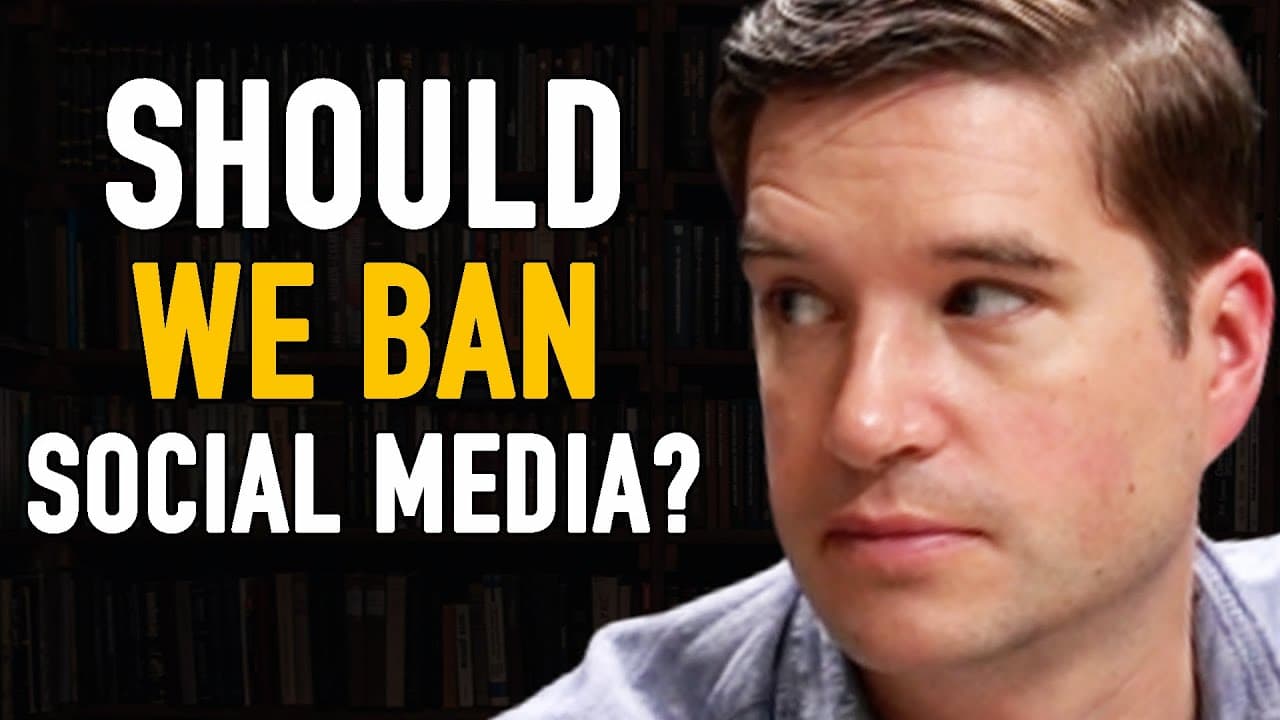
Social media can expose children to bullying, intense peer pressure, anxiety, scams, and online predators, which supports restricting access for users under 16. Australia’s law makes platforms responsible for taking reasonable preventive steps, but critics warn that age verification could threaten privacy, isolate children, remove positive online experiences, and create unintended safety problems.
Transcript
just the other day Australia passed the law the first in the world of its kind to ban social media for children under 16 and to offer stiff finds to social media companies if they don't put in the right safeguards to make this ban possible I want to get into this law today I'm going to go through the main arguments from both sides so I will quote a... Read More
Key Insights
- Australia’s law is a nationwide restriction that requires social media companies to take reasonable steps to block access by users under 16. Platforms that fail to provide appropriate safeguards could face fines of nearly 50 million Australian dollars, or about 32 million US dollars.
- The law is expected to cover Snapchat, TikTok, Facebook, Instagram, Reddit, and X, although its final reach could expand. Most members of Australia’s main opposition party supported the measure, and the proposal also received support from a large majority of the Australian public.
- Pseudonymous digital communication can weaken the interpersonal inhibitions that normally shape face-to-face behavior. Users interact with abstract digital representations rather than people whose expressions and body language they can observe, creating conditions in which bullying and other antisocial conduct can become more extreme.
- Engagement-driven recommendation systems elevate niche communities that are especially effective at capturing attention. Adolescents may therefore encounter unusually persuasive groups rather than random communities, increasing the risk that online peer pressure will pull them toward strange, harmful, or destructive patterns of behavior.
- Disordered-eating communities illustrate how compelling online groups can glamorize dangerous behavior for vulnerable young users. The discussion identifies harm to children from these communities as the focus of a small number of powerful lawsuits directed at Meta.
- Heavy social media use among young people is associated with greater anxiety in the evidence and self-reports discussed. The argument emphasizes that multiple independent streams of data align with what young users report about their own experiences, making anxiety a serious concern in evaluating platform access.
- Open-access global platforms create opportunities for scammers and predators to locate inexperienced children. One described exploitation pattern involves obtaining compromising images or videos and then demanding money while threatening disclosure, leaving young victims feeling trapped and sometimes contributing to terrible outcomes.
- Age verification creates a privacy tradeoff because adults may also need to establish that they are older than 16. Critics question whether users would have to provide identification to social media companies, while the companies argue that effective age gating is technically difficult and requires more time and study.
Install to Summarize YouTube Videos and Get Transcripts
Explore YouTube Video Summarizer or Get YouTube Transcript Extractor
Questions & Answers
Q: What does Australia’s social media ban for children require?
Australia’s law requires social media companies to take reasonable steps to prevent users under 16 from accessing covered services. A company that fails to install appropriate safeguards could face a fine of nearly 50 million Australian dollars, described as about 32 million US dollars. The cutoff date had not yet been set in the source discussion.
Q: Which social media platforms are expected to be covered?
The ban is expected to apply to Snapchat, TikTok, Facebook, Instagram, Reddit, and X. The list is not necessarily final and could expand. The measure is presented as a nationwide response that places responsibility on technology companies, rather than merely restricting children without holding platforms accountable when their safeguards fail.
Q: Why can social media make online bullying more severe?
Social media often replaces direct human interaction with pseudonymous or abstract digital communication. A person cannot fully observe another user’s body language or immediately feel the social cost of a harmful statement. This reduced interpersonal feedback can weaken ordinary inhibitions, enabling extreme or antisocial behavior that would be less acceptable in a face-to-face setting.
Q: How do recommendation algorithms increase peer pressure on children?
Recommendation systems rank communities and content through engagement-driven competition, favoring material that captures attention most effectively. A young user may consequently encounter highly persuasive niche groups rather than a random selection of communities. Because adolescents are especially vulnerable to group influence, these optimized feeds can pull them toward strange, risky, or destructive behavior.
Q: Why are online niche communities dangerous for adolescents?
Online niche communities can present harmful behavior in a compelling and glamorized form. The discussion highlights communities that promote disordered eating as one concrete example. Adolescents who encounter such groups through recommendation feeds may be drawn into dangerous habits, and harm connected to these communities has become the focus of lawsuits directed at Meta.
Q: How can scammers exploit children through social media?
Scammers can meet children on open, pseudonymous platforms and persuade them to send compromising or embarrassing images or videos. They may then threaten to share the material with the child’s parents unless a large payment is made. Young victims may lack the experience to manage this pressure, feel trapped, and experience extremely serious consequences.
Q: What are the main arguments against banning social media for children?
Critics argue that the ban could reduce privacy for all users because adults may need to prove they are older than 16. They also warn that it could isolate children, remove beneficial aspects of social media, push young users toward the dark web, discourage underage users from reporting harm, and reduce incentives for platforms to improve online safety.
Q: Why is age verification a privacy concern for adults?
An age gate does not affect only children because platforms must distinguish users under 16 from everyone else. Adults may therefore need to prove their age, potentially by providing identification or other personal information. Critics question whether social media companies should receive that information, while the companies maintain that reliable verification is technically difficult to implement.
Summary & Key Takeaways
-
Australia passed a world-first law requiring social media companies to take reasonable steps to prevent users under 16 from accessing their services. Companies could face fines of nearly 50 million Australian dollars for breaches. The expected scope includes Snapchat, TikTok, Facebook, Instagram, Reddit, and X, although the list could expand further.
-
Supporters argue that social media creates several concrete dangers for children, including bullying, peer pressure, anxiety, scams, and contact with online predators. Pseudonymous communication can weaken normal interpersonal inhibitions, while engagement-driven recommendation systems can amplify persuasive niche communities and expose vulnerable adolescents to destructive behaviors, including communities that glamorize disordered eating.
-
Critics contend that enforcing the ban could affect every user because adults may need to prove they are older than 16. They also warn that exclusion could isolate children, remove positive uses of social media, push young users toward the dark web, discourage reporting of harm, and weaken platforms’ incentives to improve safety.
Read in Other Languages (beta)
Share This Summary 📚
Summarize YouTube Videos and Get Video Transcripts with 1-Click
Try YouTube Summary with ChatGPT & Claude or YouTube Transcript Generator
Explore More Summaries from Cal Newport 📚
Summarize YouTube Videos and Get Video Transcripts with 1-Click
Try YouTube Summary with ChatGPT & Claude or YouTube Transcript Generator