What Are the Different Theories of Justice?
TL;DR
Justice is a complex concept with various interpretations, including equality, fairness, merit, and need-based approaches. Different philosophical views offer distinct frameworks for understanding justice, such as distributive, retributive, and restorative justice. Each perspective influences societal norms and personal beliefs about fairness and punishment.
Transcript
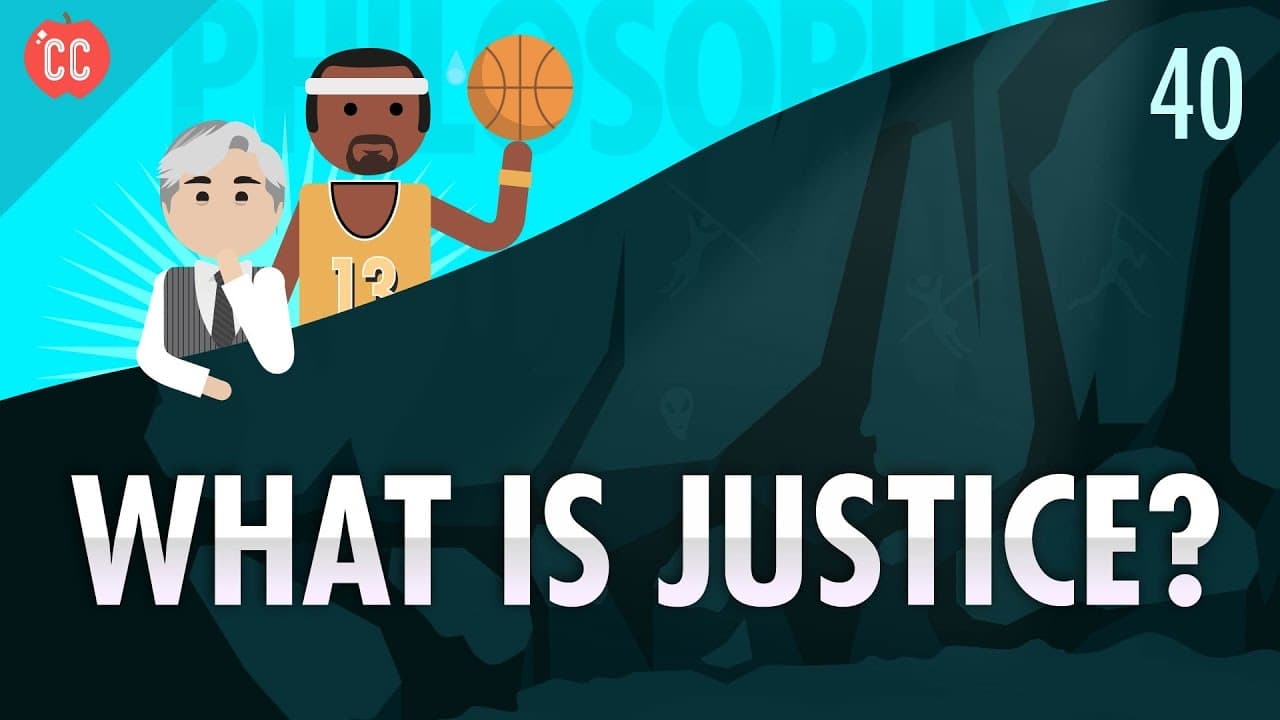
Justice is one of those things that people talk about all the time, without really being specific about what they mean. Activists talk about economic justice. Police and lawyers talk about criminal justice. Parents, teachers, and students talk about justice a lot, too, though they may never use that word. When there’s a fight on the playground, or ... Read More
Key Insights
- Justice is a fundamental social, ethical, and moral principle discussed in various contexts.
- Distributive justice deals with the allocation of resources and opportunities in society.
- Need-based justice argues for distribution based on individual needs rather than equality.
- Merit-based justice rewards individuals based on their contributions and achievements.
- John Rawls proposed that justice should focus on fairness and leveling societal inequalities.
- Robert Nozick argued against Rawls, emphasizing individual entitlement to resources.
- Retributive justice focuses on punishment proportional to the wrongdoing, often criticized for its harshness.
- Restorative justice aims to repair harm through reconciliation and making amends rather than punishment.
Install to Summarize YouTube Videos and Get Transcripts
Explore YouTube Video Summarizer or Get YouTube Transcript Extractor
Questions & Answers
Q: What is distributive justice?
Distributive justice concerns the fair allocation of resources and opportunities within a society. It addresses questions of who should receive what, based on various principles like equality, need, and merit. Different schools of thought advocate for distinct distribution methods, such as equal distribution, need-based allocation, or merit-based rewards, each reflecting different values and societal goals.
Q: How does John Rawls define justice?
John Rawls defines justice as fairness, emphasizing that social inequalities should benefit the least well-off to create a more equitable society. His theory suggests that justice involves correcting natural inequalities by ensuring everyone can meet their basic needs. Rawls' approach focuses on leveling the playing field and prioritizing the welfare of the disadvantaged, challenging traditional notions of merit and entitlement.
Q: What is retributive justice?
Retributive justice is a concept that emphasizes punishment proportional to the harm caused by a wrongdoer. It is based on the idea that justice is served when offenders suffer consequences equivalent to their offenses. This approach is often associated with 'eye-for-an-eye' principles and aims to satisfy justice by ensuring that wrongdoers face retribution, though it is sometimes criticized for its harshness and lack of focus on rehabilitation.
Q: What is restorative justice?
Restorative justice focuses on repairing harm caused by wrongdoing through reconciliation and making amends. Instead of emphasizing punishment, this approach seeks to restore relationships and address the needs of both victims and offenders. It encourages offenders to take responsibility for their actions and actively participate in the healing process, fostering forgiveness and community healing rather than retribution.
Q: What is merit-based justice?
Merit-based justice is a principle that advocates for distributing resources and opportunities based on individual contributions and achievements. This approach rewards hard work and accomplishments, arguing that people deserve benefits proportional to their efforts. While it promotes motivation and productivity, critics argue that it may ignore systemic inequalities and create disparities for those unable to compete on equal terms.
Q: How does Robert Nozick's view of justice differ from Rawls'?
Robert Nozick's view of justice emphasizes individual entitlement to resources, contrasting with John Rawls' fairness-focused approach. Nozick argues that people are entitled to the wealth they acquire through just means, without redistribution to correct inequalities. He believes that justice should not involve leveling the playing field but rather ensuring that individuals retain what they rightfully own, challenging Rawls' emphasis on societal equity.
Q: What is the concept of need-based justice?
Need-based justice advocates for distributing resources according to individual needs rather than equal distribution. It argues that justice involves providing more to those with greater needs, ensuring everyone can meet their basic requirements. This approach prioritizes addressing disparities in access to essential resources, though it faces criticism for potentially favoring some individuals over others and creating dependency.
Q: What is the utilitarian approach to punishment?
The utilitarian approach to punishment focuses on welfare maximization rather than retribution. It seeks to prevent future wrongdoing by rehabilitating offenders and deterring others through the consequences of punishment. This approach prioritizes the overall good of society, emphasizing education, therapy, and deterrence over vindictive punishment. Critics argue it may overlook the need for justice and accountability for past actions.
Summary & Key Takeaways
-
Justice is a multifaceted concept with interpretations like equality, fairness, and merit-based approaches. Various philosophical perspectives, such as distributive and retributive justice, provide frameworks for understanding justice's role in society. These theories influence personal beliefs and societal norms about fairness and punishment.
-
Distributive justice examines resource allocation, with need-based justice advocating for distribution based on individual needs. Merit-based justice rewards individuals for their contributions. John Rawls and Robert Nozick offer contrasting views on fairness and individual entitlement, shaping the debate on societal inequalities.
-
Retributive justice emphasizes punishment proportional to wrongdoing, while restorative justice seeks to repair harm through reconciliation. These differing approaches highlight the complexity of justice and its impact on societal norms, personal beliefs, and legal systems. Understanding these theories helps shape informed opinions on justice-related issues.
Read in Other Languages (beta)
Share This Summary 📚
Summarize YouTube Videos and Get Video Transcripts with 1-Click
Try YouTube Summary with ChatGPT & Claude or YouTube Transcript Generator
Explore More Summaries from CrashCourse 📚





Summarize YouTube Videos and Get Video Transcripts with 1-Click
Try YouTube Summary with ChatGPT & Claude or YouTube Transcript Generator