How Did the Civil War Shape Modern America?
TL;DR
The Civil War significantly shaped the United States by ending slavery and fostering a unified, industrial nation. Lincoln's Emancipation Proclamation and push for the Thirteenth Amendment were pivotal in abolishing slavery. The war also accelerated industrialization and centralized federal power, setting the stage for modern America.
Transcript
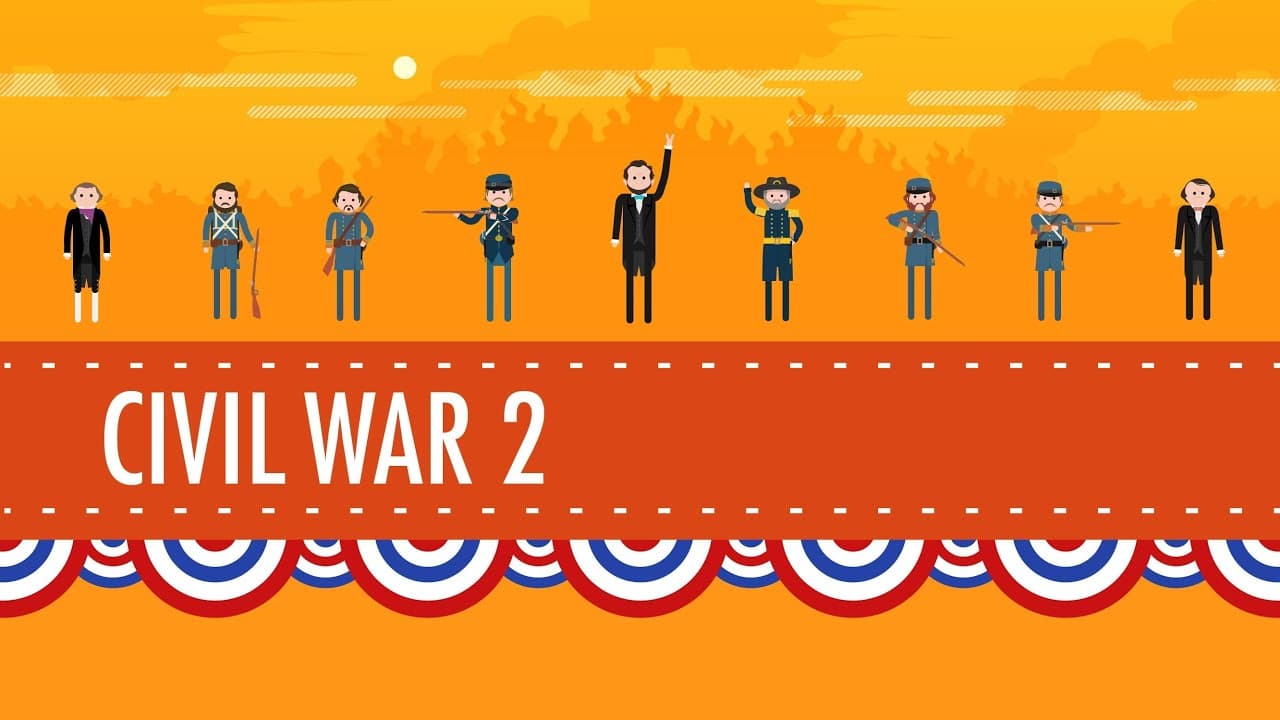
Hi, I’m John Green; this is Crash Course U.S. History and today we return to...wait, what are we talking about today, Stan? Ah, the Civil War! I can tell because Lincoln’s here. But this week we’re not gonna talk about casualty counts or battles or its generals with their heroic and probably fictional dying declarations. Mr. Green, Mr. Green, wait ... Read More
Key Insights
- Lincoln's Emancipation Proclamation, issued in 1863, freed slaves in rebellious territories but not in Union-controlled areas.
- Many slaves self-emancipated by fleeing to Union lines, becoming 'contrabands' and forcing a shift in the war's focus to slavery.
- The Emancipation Proclamation discouraged British support for the Confederacy by framing the war as a fight against slavery.
- Lincoln's push for the Thirteenth Amendment was crucial in legally ending slavery across the United States.
- The Civil War was a modern war, introducing new technologies and changing warfare tactics, notably with rifles and machine guns.
- Photography, particularly by Mathew Brady, changed public perception by providing visual documentation of the war's brutality.
- The war led to significant federalization, with acts like the Homestead Act and the creation of national currency and taxes.
- The Civil War marked a shift from an agrarian to an industrial nation, aligning with global trends of nation-building and industrialization.
Install to Summarize YouTube Videos and Get Transcripts
Explore YouTube Video Summarizer or Get YouTube Transcript Extractor
Questions & Answers
Q: How did Lincoln's Emancipation Proclamation affect the Civil War?
Lincoln's Emancipation Proclamation reframed the Civil War as a fight against slavery, discouraging British support for the Confederacy. It declared freedom for slaves in rebellious territories, though not in Union-controlled areas, and encouraged slaves to flee to Union lines. This strategic shift bolstered Union forces with former slaves and aligned the war with global abolitionist sentiments.
Q: What role did self-emancipated slaves play in the Civil War?
Self-emancipated slaves, known as 'contrabands,' played a crucial role by fleeing to Union lines, forcing Union commanders to retain them despite fugitive slave laws. Their actions pressured Lincoln to issue the Emancipation Proclamation and contributed significantly to the Union's manpower, with many joining the army, thus strengthening the Union's position in the war.
Q: Why was the Civil War considered the first modern war?
The Civil War is considered the first modern war due to its scale, technological advancements, and impact on society. Innovations like rifles and machine guns altered combat tactics, making defensive positions more effective. Additionally, the widespread use of photography by figures like Mathew Brady brought the war's realities to the public, changing perceptions and documenting the conflict comprehensively.
Q: How did photography influence public perception of the Civil War?
Photography, particularly by Mathew Brady and his team, profoundly influenced public perception by providing visual documentation of the Civil War's brutality. These images, often staged for effect, accompanied written accounts and made the war's horrors tangible to the public, altering how people understood and engaged with the conflict, marking a significant shift in media's role in warfare.
Q: What were the long-term effects of the Civil War on the United States?
The Civil War's long-term effects included the abolition of slavery, the rise of federal authority, and the transition to an industrial economy. Legislative acts like the Homestead Act and the creation of a national currency fostered economic growth and national unity. The war's outcome also aligned the U.S. with global trends of nation-building, setting the stage for its emergence as a modern state.
Q: How did the Civil War contribute to the federalization of the United States?
The Civil War contributed to federalization by expanding federal power through legislation and military actions. Acts like the Homestead Act and the National Bank Act centralized authority, while Lincoln's wartime measures, including blockades and the suspension of habeas corpus, set precedents for executive power. These changes laid the foundation for a stronger national government post-war.
Q: What impact did the Homestead Act have during and after the Civil War?
The Homestead Act, passed during the Civil War, encouraged westward expansion by granting land to settlers willing to farm it for five years. This act promoted agricultural development and population growth in the West, contributing to national unity and economic expansion. It exemplified the federal government's role in shaping the nation's future and integrating new territories into the Union.
Q: Why was it significant that the British did not support the Confederacy?
British non-support for the Confederacy was significant because it deprived the South of crucial foreign aid and recognition, which could have altered the war's outcome. Lincoln's framing of the war as a fight against slavery aligned with British abolitionist sentiments, discouraging their involvement. This strategic diplomatic victory helped ensure Union success and the eventual abolition of slavery.
Summary & Key Takeaways
-
The Civil War was pivotal in transforming the United States into a unified, industrial nation. Lincoln's Emancipation Proclamation and the Thirteenth Amendment were key in abolishing slavery, while the war's outcome discouraged foreign intervention and fostered federal power. Technological advancements and photography reshaped warfare and public perception, marking the Civil War as the first modern conflict.
-
Lincoln's strategic decisions during the Civil War, including the Emancipation Proclamation, played a crucial role in redefining the war's purpose and preventing British support for the Confederacy. The war's end solidified the United States as a centralized, industrial power, aligning with global trends of nation-building and modern governance.
-
The Civil War's legacy includes the abolition of slavery, the rise of federal authority, and the shift towards industrialization. Key legislative acts like the Homestead Act and the establishment of a national currency were instrumental in shaping the post-war United States, while photography brought the war's realities to the public, changing perceptions of conflict.
Read in Other Languages (beta)
Share This Summary 📚
Summarize YouTube Videos and Get Video Transcripts with 1-Click
Try YouTube Summary with ChatGPT & Claude or YouTube Transcript Generator
Explore More Summaries from CrashCourse 📚






Summarize YouTube Videos and Get Video Transcripts with 1-Click
Try YouTube Summary with ChatGPT & Claude or YouTube Transcript Generator