How to become a full stack web developer in 12 months
TL;DR
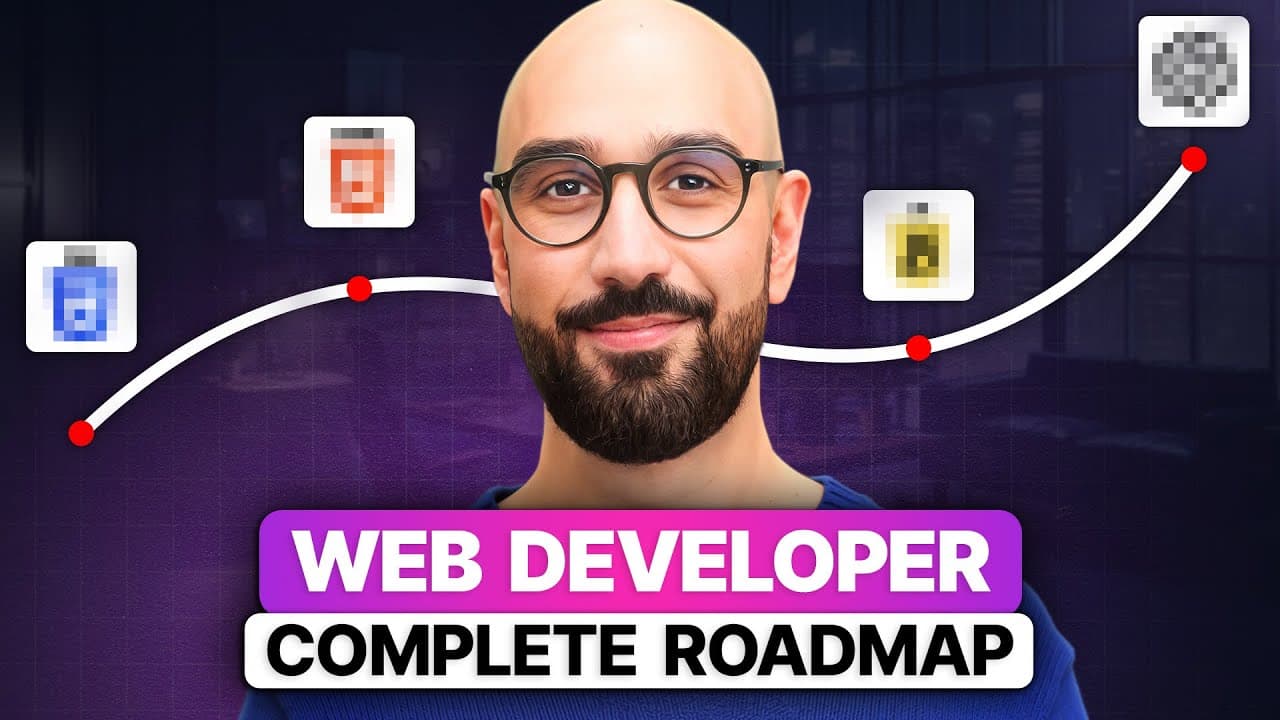
You can become a full stack web developer in about 12 months by following a step by step roadmap. Start with backend to build fundamentals and problem solving, then learn frontend skills. The plan covers programming languages, version control, data structures, design patterns, databases, and core frameworks for both backend and frontend.
Transcript
let's talk about the skills you need to become a web developer web development is generally broken down into two areas frontend development and backend development and then full stack development which is a combination of both frontend development is all about what the user sees and interacts with it's the website in your browser or the app on your... Read More
Key Insights
- Backend is the foundation for problem solving and understanding how systems work under the hood.
- Choose a single language to start with and gauge job opportunities before committing to others.
- Two main database types exist: relational and NoSQL, each serving different data needs.
- Learning data structures and algorithms is essential for interviews at major tech firms.
- Design patterns provide reusable solutions for common software design problems.
- Frameworks streamline building APIs, routing, and security for backends.
- Frontend basics are HTML, CSS, and JavaScript, with improvements through practice.
- Consistent daily practice over 2 months per skill stack enables steady progress toward 12 month goal.
Install to Summarize YouTube Videos and Get Transcripts
Explore YouTube Video Summarizer or Get YouTube Transcript Extractor
Questions & Answers
Q: What is the recommended starting focus for a complete web development career?
The recommended starting focus is backend development to build a solid foundation in programming and problem solving. Starting on the backend helps you understand what happens under the hood and makes the transition to frontend smoother. This approach reduces the mystery around backend tasks and establishes a strong base for learning frameworks, databases, and design patterns.
Q: Which language strategy is advised for beginners in backend development?
Beginners should pick one language to start with, research job opportunities in their area, and commit to learning it deeply for about two months with consistent daily practice. The language should be easy to learn and have a supportive ecosystem. Python is suggested as the easiest option, followed by Java, with JavaScript as another viable choice depending on the project needs.
Q: Why is learning data structures and algorithms emphasized despite other topics?
Data structures and algorithms are emphasized because they form the core problem solving skills used in most technical interviews, especially at big tech companies. Without this foundation, learners may struggle to optimize code and reason about performance. Allocating one to two months to study these subjects builds a durable toolkit for software engineering roles.
Q: What role do design patterns play in the roadmap?
Design patterns provide proven solutions to common software design problems and help developers understand object oriented design principles. They are widely used in modern frameworks and can improve code maintainability and scalability. A hands on, pragmatic course can help learners grasp how patterns are applied in real applications.
Q: How should a learner approach databases in the roadmap?
Learners should study both relational and NoSQL databases, starting with one relational system such as MySQL to learn SQL basics and practical data management. They should also explore NoSQL options like MongoDB to understand flexible data models. The goal is to gain functional, working knowledge sufficient to design and query real applications.
Q: What are the core frontend skills mentioned, and why are they important?
Core frontend skills are HTML for structure, CSS for styling, and JavaScript for interactivity. These basics enable building functional and responsive user interfaces. Mastery comes with practice and progressively learning more advanced techniques as you work on different projects, which complements backend expertise to create full stack capabilities.
Q: How long does the roadmap estimate to reach entry level backend jobs?
The roadmap estimates that with consistent daily study and a structured plan, you can reach entry level backend developer roles in about 12 months. This timeline assumes steady progress across multiple domains including language learning, data structures, databases, frameworks, and essential tooling, plus practical practice and project work.
Q: What resources does the video offer to aid learning?
The video notes provide resources such as a free supplementary PDF detailing concepts to learn for each skill and project ideas to apply knowledge. It also mentions additional tutorials and complete courses available on the creator’s website, plus links to other roadmaps and relevant backend and frontend tutorials to reinforce learning.
Summary & Key Takeaways
-
In the roadmap, backend development is presented as foundational, with emphasis on choosing a language, learning its ecosystem, and practicing coding daily to build problem solving abilities. It also highlights the importance of understanding data structures and algorithms for interviews and long term growth. The guide then moves to frontend skills, including HTML, CSS, and JavaScript, to complete the stack.
-
The plan stresses learning one language well enough to leverage its ecosystem before expanding to other languages. It recommends studying version control, like Git, for collaboration and project management. It also covers databases, frameworks, and architectural concepts to enable building and deploying real applications.
-
Finally, the roadmaps suggests dedicating consistent daily study to master both back end and front end within roughly a year, while using practical projects and available resources such as PDFs and tutorials to reinforce learning and prep for entry level roles.
Read in Other Languages (beta)
Share This Summary 📚
Summarize YouTube Videos and Get Video Transcripts with 1-Click
Try YouTube Summary with ChatGPT & Claude or YouTube Transcript Generator
Explore More Summaries from Programming with Mosh 📚


Summarize YouTube Videos and Get Video Transcripts with 1-Click
Try YouTube Summary with ChatGPT & Claude or YouTube Transcript Generator