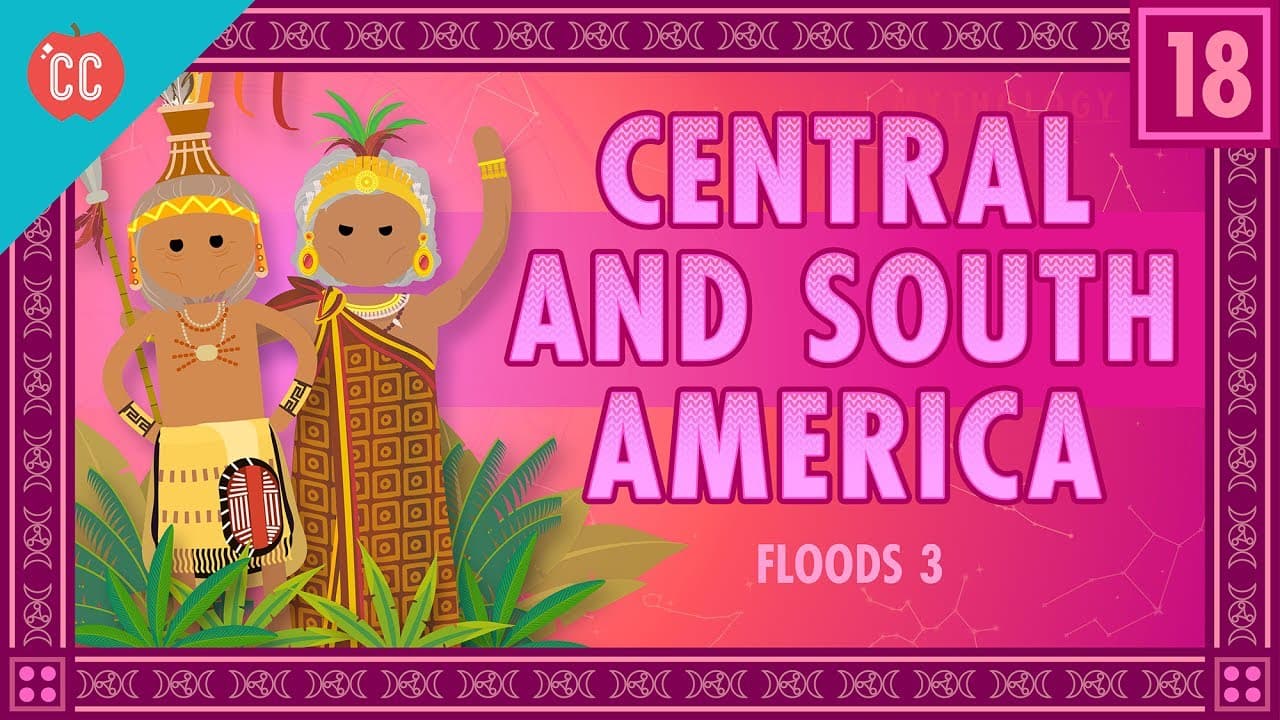
American Floods: Crash Course World Mythology #18
TL;DR
American flood myths portray catastrophic floods as divine attempts to replace flawed creations, punish disobedience, or begin humanity again. In the Inca story, Viracocha spares a couple floating in a box; in the Popol Vuh, wooden people give way to four men and four women made with cornmeal and nine kinds of liquor. Read on to compare how Inca, Mayan, and Aztec traditions explain destruction, survival, and renewal.
Transcript
Hi, I'm Mike Rugnetta. This is crash course Mythology and today It's everybody back in the pool... or river... or storm drain overflow from Divine Rainstorms. That's right It's our final flood episode and we're heading West to the Americas. Surf's up Thoth We've already talked about floods from the ancient near east at the point between Europe, Afr... Read More
Key Insights
- Flood myths are prevalent across civilizations, often symbolizing divine retribution or a fresh start for humanity.
- The Inca myth describes Viracocha's flood to eliminate flawed giants, sparing only a couple to repopulate the earth.
- The Mayan Popul Vuh recounts multiple creation attempts, with wooden humans destroyed by flood due to their soulless nature.
- In Aztec mythology, a disobedient survivor of the flood is transformed into a monkey, highlighting themes of independence versus loyalty.
- Flood myths often reflect cultural values, with some emphasizing obedience and others independence or human imperfection.
- Many flood stories share similarities, such as divine floods and chosen survivors, despite cultural and geographical differences.
- Flood myths serve as cautionary tales about human transgressions and divine dissatisfaction with creation.
- These stories illustrate the recurring theme of imperfect humanity and the gods' struggle to create a flawless world.
Install to Summarize YouTube Videos and Get Transcripts
Explore YouTube Video Summarizer or Get YouTube Transcript Extractor
Questions & Answers
Q: What do American flood myths mean?
The Inca, Mayan, and Aztec stories depict floods as a means for gods to destroy an unsatisfactory world or flawed people and start again. Together, they explore divine dissatisfaction, human imperfection, obedience, survival, and renewal.
Q: What happens in the Inca flood myth?
Viracocha, the supreme Inca god and creator of the world, becomes tired of the lazy, bad-tempered giants he created and sends a flood higher than the Andes Mountains. A couple survives by floating in a box to Tiahuanaco, where Viracocha uses them to make a new people.
Q: Who is Viracocha in Inca mythology?
Viracocha is described as the supreme god of the Incas, the father of the other gods, and the creator of the world. After rejecting the race of giants he had created, he destroys them with a flood and makes a new people from a surviving couple.
Q: What is the Popol Vuh flood story about?
The Popol Vuh describes humans made of wood who can walk, talk, have children, and build houses but possess no minds, souls, or hearts. Because they mistreat animals, damage their cooking pots, and forget their creator, a great flood destroys them, while the few escapees become ancestors of monkeys.
Q: Why are the wooden people destroyed in the Mayan flood myth?
The wooden people have no minds, souls, or hearts and cannot remember the names of their creator. They also beat their dogs and burn their cooking pots, so the creator decides they are a failed creation and sends a flood.
Q: How does the creator replace the wooden people in the Popol Vuh?
The creator makes new humans from cornmeal and uses nine kinds of liquor to strengthen them. He creates four men and four women, then clouds their vision with mist because he fears they may be too powerful.
Q: What happens in the Aztec flood story from Oaxaca?
A god called the Old One warns a chosen man that the world will be destroyed and tells him to plant a cedar tree and have a carpenter build a canoe. The man and his family survive the rain in the canoe, but after the land dries, he disobeys the Old One by making a fire to cook fish and is transformed into a monkey.
Q: How do the Inca, Mayan, and Aztec flood myths differ?
Viracocha floods his flawed giants and creates a new people from a surviving couple, while the Popol Vuh presents the flood as the correction of a failed experiment with wooden humans. The Aztec story instead centers on a chosen survivor who follows instructions before later disobeying the Old One by cooking fish.
Summary & Key Takeaways
-
Flood myths are a common narrative across various cultures, symbolizing divine intervention and the cleansing of humanity's flaws. In American mythology, stories from the Inca, Mayan, and Aztec traditions offer unique perspectives on creation, destruction, and the relationship between gods and humans.
-
The Inca myth tells of Viracocha's flood to eliminate giants, while the Mayan Popul Vuh describes the destruction of wooden humans. The Aztec tale features a disobedient survivor transformed into a monkey, reflecting cultural values of independence and obedience.
-
Flood myths highlight themes of divine retribution and human imperfection. Despite cultural differences, these stories share similarities, such as chosen survivors and divine dissatisfaction, serving as cautionary tales about humanity's transgressions and the gods' challenges in creating a perfect world.
Read in Other Languages (beta)
Share This Summary 📚
Summarize YouTube Videos and Get Video Transcripts with 1-Click
Try YouTube Summary with ChatGPT & Claude or YouTube Transcript Generator
Explore More Summaries from CrashCourse 📚





Summarize YouTube Videos and Get Video Transcripts with 1-Click
Try YouTube Summary with ChatGPT & Claude or YouTube Transcript Generator