Energy & Chemistry: Crash Course Chemistry #17
TL;DR
Everything is energy, including chemical and potential energy.
Transcript
I have a certain fondness for saying everything is chemicals, mostly this is because I'm tired of all the people complaining about all the "chemicals" that they are exposed to when literally everything you have ever been exposed to, including the most organically grown lettuce is composed entirely of chemicals. But when I say everything is chemical... Read More
Key Insights
- Hank discusses the concept that everything is energy, challenging the common notion that everything is composed of chemicals.
- Energy exists in various forms, including chemical, thermal, and potential energy, each with unique characteristics and implications.
- The law of conservation of energy states that energy cannot be created or destroyed, only transferred or transformed.
- Thermodynamics is the study of energy and its ability to do work, with applications in both physics and chemistry.
- The universe can be divided into systems and surroundings, allowing the study of energy changes within specific contexts.
- Energy can be transferred in two primary ways: as work, through force and movement, or as heat, through thermal interactions.
- Chemical energy is a form of potential energy stored in molecular bonds, crucial for understanding chemical reactions.
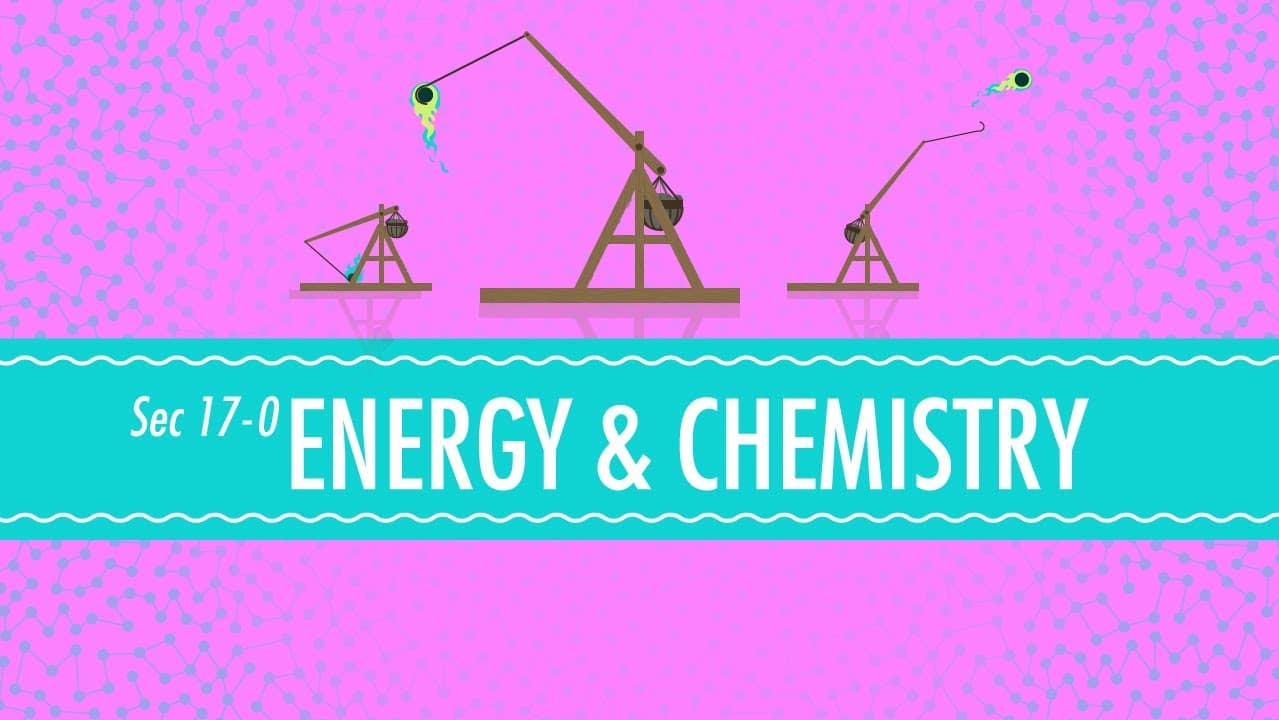
- The trebuchet serves as a metaphor for energy transfer, illustrating concepts of potential and kinetic energy in a tangible way.
Install to Summarize YouTube Videos and Get Transcripts
Explore YouTube Video Summarizer or Get YouTube Transcript Extractor
Questions & Answers
Q: What is the main concept discussed in the video?
The main concept discussed in the video is that everything is energy. Hank challenges the common misconception that everything is composed of chemicals, explaining that energy exists in various forms, including chemical, thermal, and potential energy. He uses a toy trebuchet to illustrate these concepts and their applications in thermodynamics.
Q: What are the different forms of energy mentioned?
The video mentions several forms of energy, including chemical energy, which is stored in molecular bonds, thermal energy, which is related to the temperature of an object, and potential energy, which is energy stored due to an object's position. Each form has unique characteristics and plays a role in energy transfer and transformation.
Q: How is energy transferred between systems?
Energy is transferred between systems in two primary ways: as work and as heat. Work involves force applied over a distance, causing movement, while heat is the transfer of energy through thermal interactions, such as radiation or conduction. These processes result in energy transfer between systems and their surroundings.
Q: What is the law of conservation of energy?
The law of conservation of energy, also known as the first law of thermodynamics, states that energy cannot be created or destroyed. The total amount of energy in the universe remains constant, although it can be transferred or transformed from one form to another. This principle is fundamental to understanding energy dynamics.
Q: How does the trebuchet illustrate energy concepts?
The trebuchet serves as a metaphor for energy transfer, illustrating the principles of potential and kinetic energy. When the trebuchet is set up, it stores potential energy due to its position. Upon release, this energy is converted into kinetic energy, propelling an object. This demonstrates the transformation and transfer of energy in a tangible way.
Q: What is chemical energy and its significance?
Chemical energy is a form of potential energy stored in the bonds between atoms and molecules. It is significant because it plays a crucial role in chemical reactions, where energy is either absorbed or released. Understanding chemical energy is essential for comprehending how reactions occur and how energy is utilized in chemistry.
Q: What role does thermodynamics play in chemistry?
Thermodynamics plays a crucial role in chemistry by studying how energy is transferred and transformed during chemical reactions. It helps explain how energy changes affect reaction rates, equilibrium, and the feasibility of reactions. Understanding thermodynamics is essential for predicting and controlling chemical processes.
Q: Why is the concept of energy important in science?
The concept of energy is fundamental in science because it is central to understanding how systems interact and change. Energy governs the behavior of matter, influences chemical reactions, and drives physical processes. By studying energy, scientists can predict outcomes, design experiments, and develop technologies that harness energy for various applications.
Summary & Key Takeaways
-
Hank explores the idea that everything is energy, using a toy trebuchet to illustrate concepts of thermodynamics. He explains different forms of energy, including chemical and potential energy, and discusses the law of conservation of energy, which states that energy cannot be created or destroyed.
-
The episode delves into how energy is transferred between systems and surroundings, emphasizing the importance of thermodynamics in understanding energy changes. Hank highlights how energy can be transferred as work or heat, with applications in both physics and chemistry.
-
Chemical energy, stored in molecular bonds, is a key focus, illustrating how energy is used in chemical reactions. The trebuchet serves as a metaphor for energy transfer, demonstrating the principles of potential and kinetic energy in a relatable manner.
Read in Other Languages (beta)
Share This Summary 📚
Summarize YouTube Videos and Get Video Transcripts with 1-Click
Try YouTube Summary with ChatGPT & Claude or YouTube Transcript Generator
Explore More Summaries from CrashCourse 📚


Summarize YouTube Videos and Get Video Transcripts with 1-Click
Try YouTube Summary with ChatGPT & Claude or YouTube Transcript Generator