How to localize a proven app to a new market for big growth
TL;DR
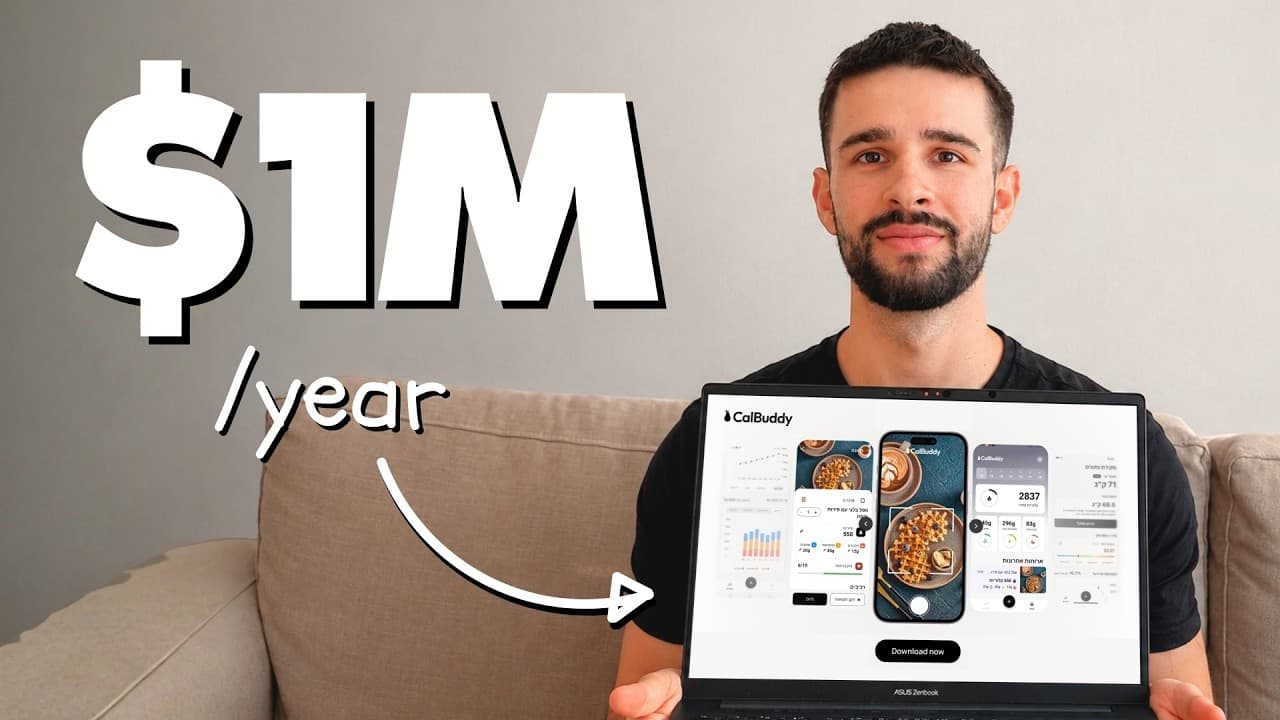
You can clone a successful app idea and adapt it to a new market to gain rapid traction. Start with a proven concept, tailor language and local needs, and use cost effective marketing to reach early revenue. Build a small, fast version, launch on store reviews, and scale with performance based influencer partnerships.
Transcript
What if you didn't need an original idea at all? What if instead you could reverse engineer apps that are already working? Well, that's exactly what our guest did today and within 12 months he built a million-dollar app. >> I launched it a year ago and now it makes over 80K per month. >> Meet Tomer. He saw a successful app, realized it didn't exist... Read More
Key Insights
- Localization is a powerful growth lever, especially in smaller markets where language and cultural relevance matter.
- A proven app idea can be a faster path to revenue than building from scratch if you adapt the product to local needs.
- Speed to market is critical; two months from concept to App Store is feasible with focused effort and efficient tools.
- Brand and distribution outperform the core product when competing for users in a new market.
- Lower regional advertising costs can enable profitable scaling earlier in the lifecycle.
- Performance based influencer partnerships align incentives and accelerate growth when early metrics show traction.
- Obtaining social proof before engaging top influencers improves negotiation terms and outcomes.
- A revenue share model with influencers creates mutual incentives and reduces upfront risk for both parties.
- More videos from this channel:
- More from this channel: Starter Story
Install to Summarize YouTube Videos and Get Transcripts
Explore YouTube Video Summarizer or Get YouTube Transcript Extractor
Questions & Answers
Q: What is the core idea behind Tomer's strategy for growing the app in a new country?
The core idea is to take a proven app concept, localize it for the local market language and eating habits, and then grow through cost effective channels. By focusing on localization and branding, and starting with paid ads before expanding to influencer partnerships, Tomer could reach substantial revenue quickly while maintaining profitability.
Q: How long did it take to build and launch the app from scratch?
From the first line of code to the app being live on the App Store took about two months. The process involved learning and using AI prompting with Cursor, while the delay mostly came from Apple app store reviews and the developer program approval rather than coding itself.
Q: What role did marketing play in the app's growth?
Marketing was the key driver of early growth. Tomer leveraged paid ads in Israel with lower CPMs to reach initial traction, then used insights from US and local fitness content to create effective creatives. Social proof and later influencer collaborations helped push growth from around 20K to over 80K per month.
Q: Why was localization considered essential beyond simply copying an app?
Localization mattered because language, food culture, and local consumer behavior shape how users interact with the app. While the core AI calorie tracking concept remained similar, adapting language, dietary context, and branding created a distinct and more relatable product for Israeli users, enabling better user acquisition and retention.
Q: How did Tomer structure influencer partnerships to scale profits?
Tomer used a revenue share model with influencers, aligning incentives so they earn more as the app earns more in Israel. This approach reduces upfront costs, motivates content creation, and, when paired with social proof from earlier traction, allows negotiating better deal terms and combining two influential faces to strengthen brand presence.
Q: What strategic mindset helped him acquire users efficiently?
The strategic mindset centered on choosing the most efficient channel for the specific market, which in Israel was paid ads due to lower costs. He then built scalable creatives from top performing US and local content, tested quickly, and expanded with influencer collaborations once early traction established a solid foundation.
Q: What are the key differentiators between the app and existing US competitors?
The key differentiators are language, localization, and branding tailored to the Israeli market. Functionally the product is similar, but the user experience, messaging, and ecosystem are adapted to local eating habits and language, which creates a distinct, more relatable product that can outperform competitors in a smaller market.
Q: What is the overall takeaway about launching in a smaller market?
The takeaway is that a proven app idea can succeed in a smaller market if you localize the product and distribution. Start lean with a quick build, validate with initial revenue, and then scale through cost effective marketing and aligned influencer partnerships to achieve substantial monthly income.
Summary & Key Takeaways
-
The video explains reverse engineering a popular app idea and localizing it for Israel to capture a large niche market. It highlights starting with a small budget, moving quickly from concept to live product, and scaling through optimized paid ads before leveraging influencers.
-
The core strategy is to differentiate by language, culture, and branding while keeping the core product experience simple and effective. The creator emphasizes distribution and cost of customer acquisition as levers for growth while maintaining lean development timelines.
-
The interview covers two main phases: product development and growth marketing. It stresses the importance of social proof and performance based influencer deals for accelerating revenue from tens of thousands to over eighty thousand dollars per month.
Read in Other Languages (beta)
Share This Summary 📚
Summarize YouTube Videos and Get Video Transcripts with 1-Click
Try YouTube Summary with ChatGPT & Claude or YouTube Transcript Generator
Explore More Summaries from Starter Story 📚


Summarize YouTube Videos and Get Video Transcripts with 1-Click
Try YouTube Summary with ChatGPT & Claude or YouTube Transcript Generator