Can Trump Legally Enforce His Executive Orders?
TL;DR
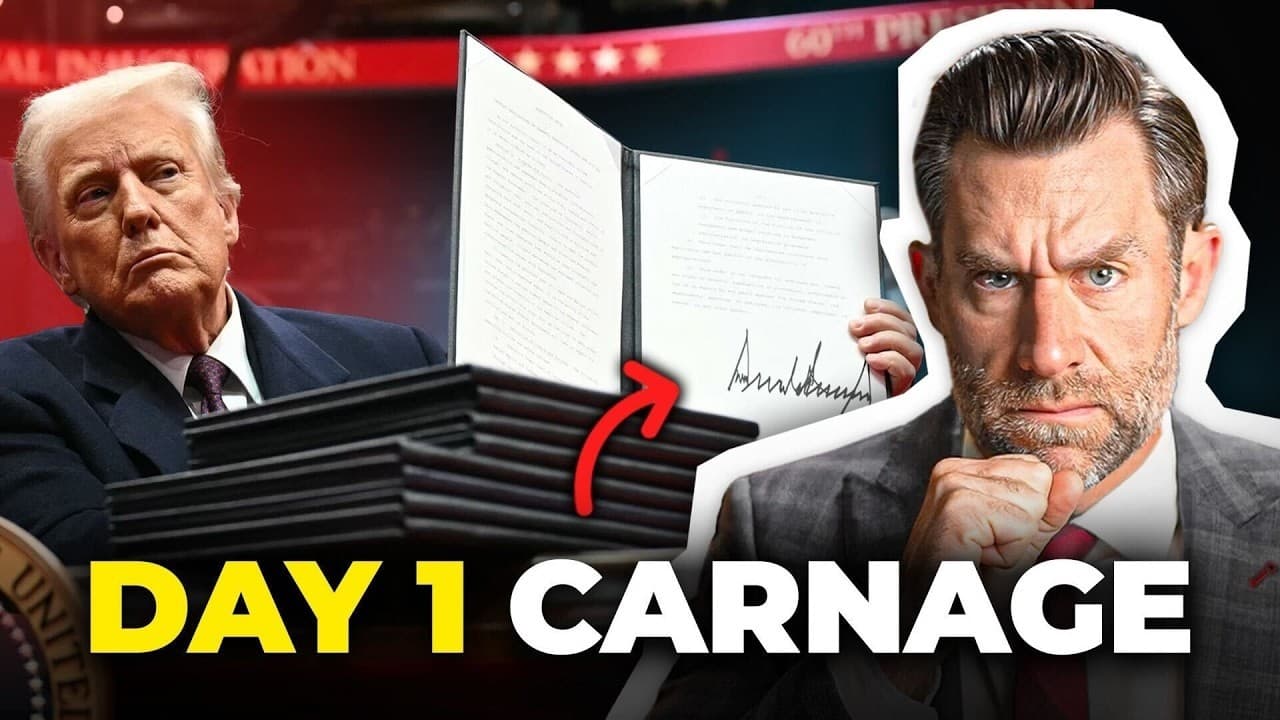
President Trump's executive orders face legal challenges due to questions about their constitutionality and alignment with existing laws. While some actions, like renaming agencies, fall within presidential powers, others, such as altering birthright citizenship, likely exceed them. Legal battles are expected as courts review the legitimacy and scope of these orders.
Transcript
- Everyone is breathlessly reporting on President Trump's flurry of executive orders from his first day in office. Birthright, citizenship, trans rights, TikTok, you name it. But few sources are digging into whether Trump can actually do any of the things that he's trying to do by executive order. So I guess we're gonna do it. Now executive orders ... Read More
Key Insights
- Executive orders are tools for the president to manage federal operations but must align with constitutional and statutory authority.
- Trump's orders, such as those on immigration and birthright citizenship, face legal challenges due to potential conflicts with existing laws.
- The president can issue orders to reorganize federal agencies, as seen with the renaming of the US Digital Service to DOGE.
- Trump's orders on the federal death penalty and Schedule F classification are within executive powers but controversial.
- Withdrawal from international agreements like the Paris Climate Accord is possible without congressional approval if not ratified as treaties.
- The president's authority to declare national emergencies is broad, granting access to numerous statutory powers.
- Trump's directive on architectural styles for federal buildings reflects executive influence over federal projects.
- Legal challenges are expected for orders impacting transgender rights and diversity programs, as they may conflict with civil rights laws.
Install to Summarize YouTube Videos and Get Transcripts
Explore YouTube Video Summarizer or Get YouTube Transcript Extractor
Questions & Answers
Q: How do executive orders work?
Executive orders are official documents through which the president manages federal government operations. They do not require congressional approval but must align with constitutional and statutory authority. Orders can direct the executive branch, enforce laws, or manage emergencies but cannot contradict existing laws or the Constitution.
Q: Can the president change birthright citizenship by executive order?
Changing birthright citizenship through executive order is unlikely to withstand legal scrutiny, as it would conflict with the 14th Amendment, which has been reaffirmed in legal decisions for 150 years. Such a change would likely require a constitutional amendment or new legislation, both of which involve Congress.
Q: What powers does the president have during a national emergency?
During a national emergency, the president can access 137 statutory powers, allowing actions like seizing property, controlling production, and deploying military forces domestically. However, these powers must be exercised within legal and constitutional limits, and their use is subject to judicial review.
Q: Can the president withdraw from international agreements unilaterally?
The president can withdraw from international agreements unilaterally if the agreement was not ratified as a treaty by the Senate. For instance, the Paris Climate Accord was signed but not ratified, allowing the president to withdraw without congressional approval. However, certain agreements may have specific withdrawal procedures.
Q: What is the Schedule F classification for federal employees?
Schedule F is a classification for federal employees that removes civil service protections, making them at-will employees. It was intended to allow greater flexibility in hiring and firing but faced criticism for potentially politicizing the federal workforce. The classification was repealed by President Biden and reinstated by Trump.
Q: Can the president mandate architectural styles for federal buildings?
Yes, the president can influence federal building projects through executive orders. Trump's order mandates classical architectural styles for new federal buildings, citing their sturdiness and embodiment of American ideals. While controversial, such orders fall within executive powers as they relate to federal property management.
Q: How do executive orders impact immigration policy?
Executive orders can significantly impact immigration policy by directing how laws are enforced and managed. Trump's orders aimed to restrict entry, alter asylum procedures, and designate certain groups as terrorist organizations. However, these orders must comply with existing immigration laws and are subject to judicial review.
Q: What are the legal challenges to Trump's executive orders on transgender rights?
Trump's orders on transgender rights, such as mandating binary gender recognition on federal documents, face legal challenges due to potential conflicts with civil rights laws. The Supreme Court's decision in Bostock v. Clayton County protects against discrimination based on gender identity, which could invalidate parts of these orders.
Summary & Key Takeaways
-
President Trump's executive orders are under scrutiny for their legality and alignment with existing laws. While some actions, like agency renaming, are within presidential powers, others, such as altering birthright citizenship, likely exceed them. Legal challenges are expected as courts review these orders.
-
Executive orders allow the president to manage federal operations but must adhere to constitutional and statutory limits. Trump's orders on immigration, death penalty, and international agreements highlight the scope and controversy of executive power.
-
The president's ability to declare national emergencies and influence federal projects, such as architectural styles, demonstrates the broad reach of executive orders. However, orders impacting civil rights and diversity programs face potential legal challenges.
Read in Other Languages (beta)
Share This Summary 📚
Summarize YouTube Videos and Get Video Transcripts with 1-Click
Try YouTube Summary with ChatGPT & Claude or YouTube Transcript Generator
Explore More Summaries from LegalEagle 📚


Summarize YouTube Videos and Get Video Transcripts with 1-Click
Try YouTube Summary with ChatGPT & Claude or YouTube Transcript Generator