What Is Decolonization and How Did It Change Countries?
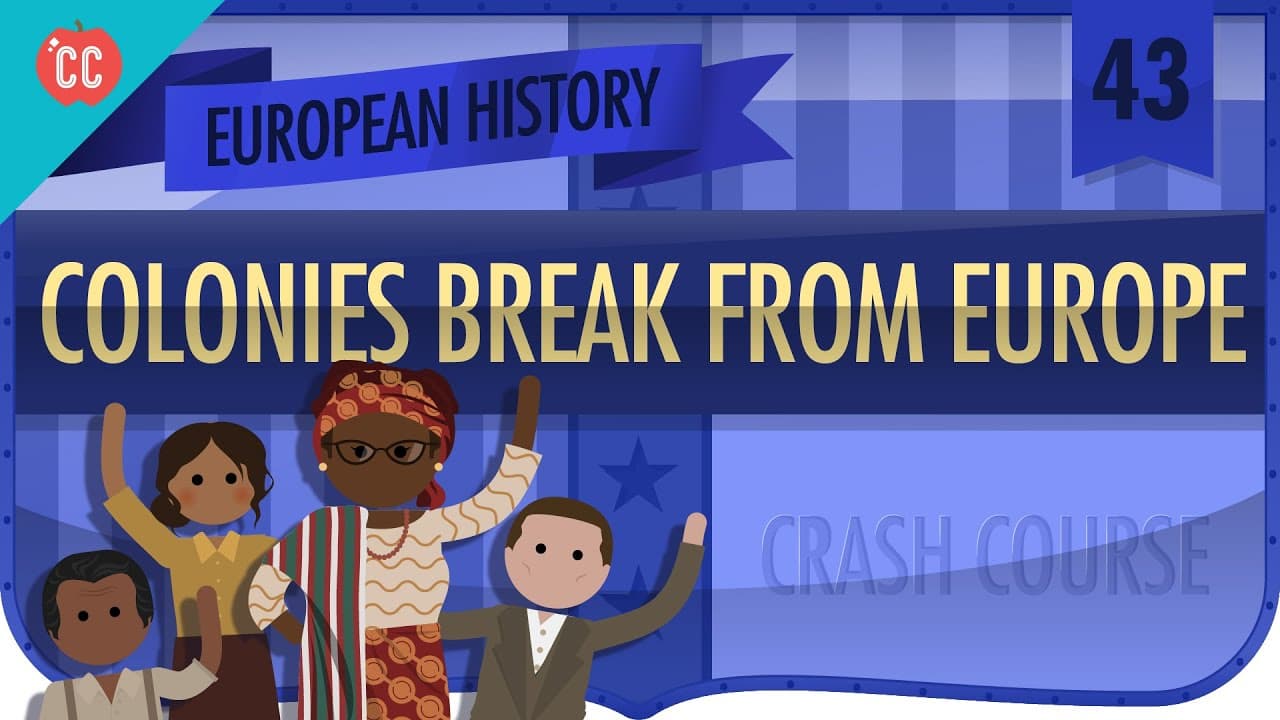
TL;DR
Decolonization refers to the process through which European colonies achieved independence, often through violent or peaceful means. This transformative period led to new nations and complex challenges, including the emergence of neo-imperialism and significant social changes, as former colonies sought to rebuild economies and identities while dealing with the legacies of colonial rule.
Transcript
Hi I’m John Green and this is Crash Course European History. So today we’re talking about the rejection of European rule in colonies, which resulted in a process called decolonization. By the 1970s the majority of Europe’s colonies had gained independence and formed new nations. And areas like China that were less formally controlled but did feel t... Read More
Key Insights
- ❓ Decolonization occurred through both violent and peaceful means, resulting in the independence of former colonies.
- 🥺 The partition of India and Pakistan led to violent conflicts and the deaths of millions of people.
- 🏃 Neocolonialism emerged as experienced advisors and financiers exercised control over newly independent nations.
- 🌍 Immigration from former colonies to Europe benefited receiving countries but also contributed to racism and discrimination.
- 🦻 Aid provided by superpowers during the Cold War aimed to increase dependence and influence, perpetuating conflict and instability.
- 🤫 Decolonization led to increased diversity, cultural exchange, and the sharing of stories from previously silenced voices.
- ❓ The process of decolonization impacted infrastructure development, often prioritizing resource extraction over community improvement.
Install to Summarize YouTube Videos and Get Transcripts
Explore YouTube Video Summarizer or Get YouTube Transcript Extractor
Questions & Answers
Q: How did India and Pakistan achieve independence from British rule?
India and Pakistan gained independence through years of civil disobedience and independence activism, culminating in their formation as separate nations in August 1947. However, the partition resulted in violent conflicts and the deaths of millions of people.
Q: How did China achieve decolonization?
China threw off the grip of European powers and the United States when Mao Zedong and his Communist forces took control in October 1949. China initially aligned with the USSR during the Cold War but aimed to defeat Western European influence in Vietnam and Korea.
Q: What were some examples of peaceful liberation movements during decolonization?
Ghana, Morocco, and Tunisia serve as examples of colonies that achieved comparatively peaceful liberation. Activists in these areas used strikes, civil disobedience, and negotiations to achieve independence.
Q: How did the decolonization process impact infrastructure and society?
While decolonization led to the formation of new nations, infrastructure focused on resource extraction rather than community development. Many former colonies struggled to build infrastructure that addressed social and economic challenges, which remains a problem today.
Summary & Key Takeaways
-
Decolonization was a process that resulted in the majority of Europe's colonies gaining independence and forming new nations.
-
The process of decolonization varied in duration and violence, with some colonies achieving independence quickly while others fought for it for years.
-
The end of European rule led to the loss of skilled workers for former colonies and the development of neo-imperialism.
Read in Other Languages (beta)
Share This Summary 📚
Summarize YouTube Videos and Get Video Transcripts with 1-Click
Try YouTube Summary with ChatGPT & Claude or YouTube Transcript Generator
Explore More Summaries from CrashCourse 📚



Summarize YouTube Videos and Get Video Transcripts with 1-Click
Try YouTube Summary with ChatGPT & Claude or YouTube Transcript Generator