Clear flexible printed circuits - first success
TL;DR
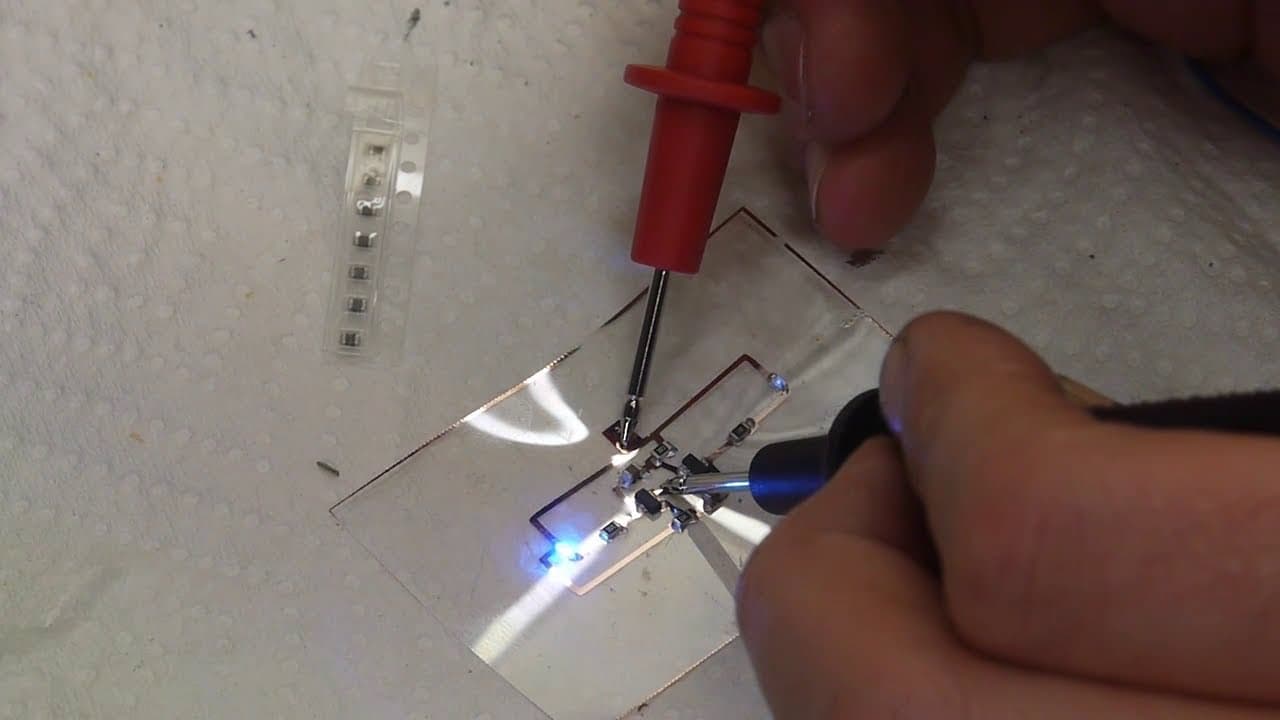
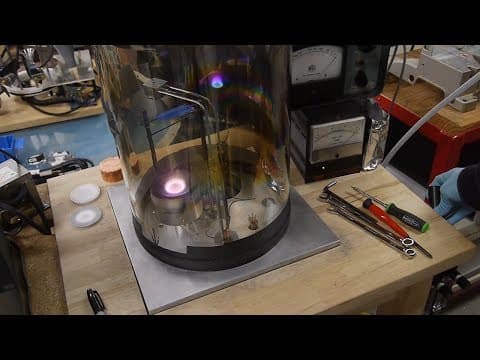
A DIY enthusiast successfully creates a circuit using a vacuum deposition chamber, vinyl cutter, and conductive epoxy glue.
Transcript
hey everyone I've been working on this idea of creating printed circuits with my vacuum deposition chamber and this weekend I finally finished in making the first successful active circuit so you can see it here it's a two LED flasher and for some reason after I took it out of the curing oven to cure the epoxy the flash rate is really fast now I'm ... Read More
Key Insights
- 👻 The vacuum deposition chamber, combined with a vinyl cutter and transfer paper, allows for the creation of printed circuits.
- 🍽️ Using an aluminum backing plate helps maintain the flatness of the substrate during the vacuum deposition process.
- 😘 Copper is preferred over aluminum for better circuit performance due to its lower resistance.
- 🛟 Conductive epoxy glue serves as an alternative to soldering for attaching components onto the printed circuit.
- 👣 Flexibility and durability are desired for future iterations of the printed circuit.
- 🥅 The goal is to integrate the inputs and outputs of the circuit into the deposited layers for more integrated functionality.
- 😎 Various materials such as glass, transparency sheets, and copper are tested to achieve desired characteristics.
Install to Summarize YouTube Videos and Get Transcripts
Explore YouTube Video Summarizer or Get YouTube Transcript Extractor
Questions & Answers
Q: How does the vinyl cutter facilitate the creation of printed circuits?
The vinyl cutter is used to cut out a black vinyl in the shape of a circuit board pattern, which is then transferred onto a substrate using transfer paper.
Q: What is the purpose of using an aluminum backing plate?
The aluminum backing plate helps keep the substrate flat and prevents overheating during the vacuum deposition process.
Q: Why is copper chosen over aluminum for better circuit performance?
Copper has lower resistance compared to aluminum, making it more suitable for achieving low resistance in the circuit.
Q: What is the purpose of conductive epoxy glue in the circuit creation process?
Conductive epoxy glue is used to attach components onto the printed circuit since the printer transparencies used cannot withstand soldering temperatures.
Summary & Key Takeaways
-
The content shares the process of creating a printed circuit using a vacuum deposition chamber and a vinyl cutter.
-
The creator explains the use of transfer paper and aluminum backing plates to deposit the circuit onto a substrate.
-
Different materials like transparency sheets, glass, and copper are experimented with to achieve desired results.
Read in Other Languages (beta)
Share This Summary 📚
Summarize YouTube Videos and Get Video Transcripts with 1-Click
Try YouTube Summary with ChatGPT & Claude or YouTube Transcript Generator
Explore More Summaries from Applied Science 📚


Summarize YouTube Videos and Get Video Transcripts with 1-Click
Try YouTube Summary with ChatGPT & Claude or YouTube Transcript Generator