How does consumption tax cut affect restaurant profits
TL;DR
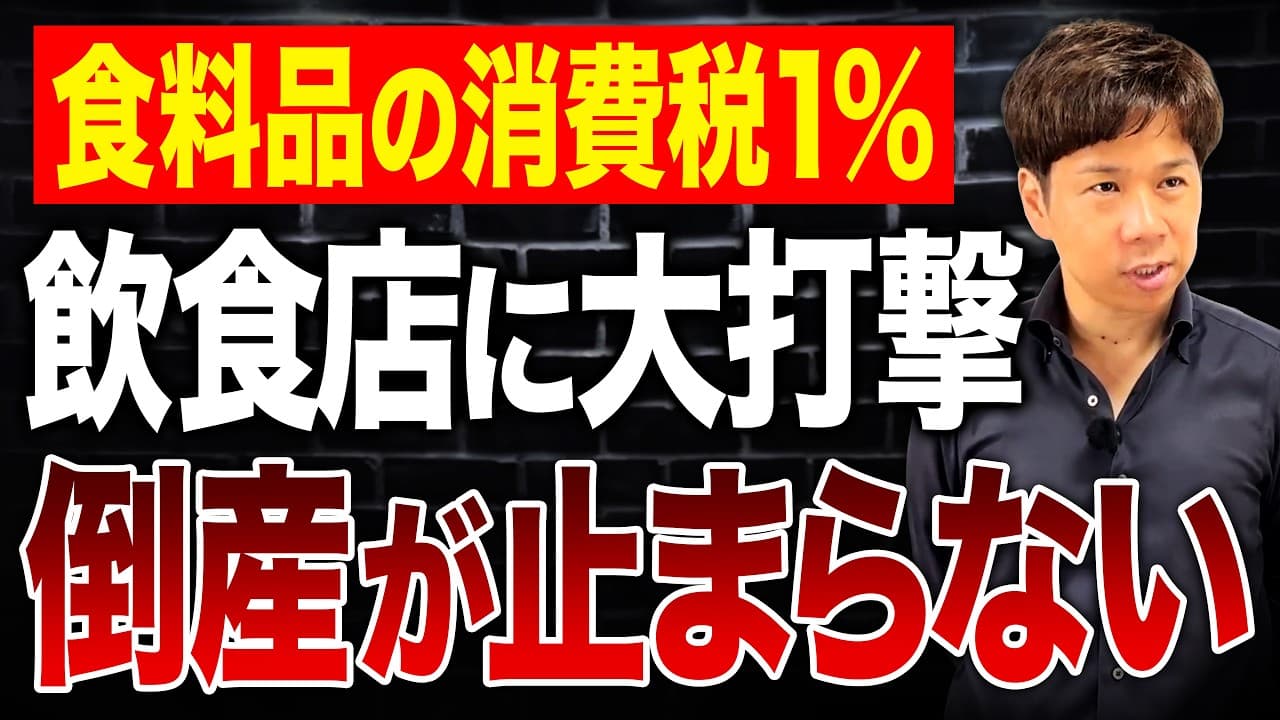
The tax cut is not a simple relief for restaurants. Tax on sales remains large while tax on purchases drops, so overall tax payments can rise, eroding any benefit. The video explains why many restaurants still face higher costs and possible closures despite reductions, and clarifies the difference between bankruptcy and business closure in this context.
Transcript
It's said that restaurants, which won't see tax cuts, will face more bankruptcies and a decline in customers . Opportunistic price hikes are almost guaranteed, so restaurant costs will actually go up instead. So, how can restaurants make a profit? Hello. I'm Sugawara, the tax expert. Mr. Sugawara, starting next April, consumption tax will b... Read More
Key Insights
- Restaurants are currently experiencing record bankruptcy numbers, signaling a fragile market
- The consumption tax changes create a gap between tax on sales and tax on purchases that can affect profitability
- Tax on dining out remains higher than tax on groceries, influencing consumer dining choices
- Purchases tax decreases do not automatically translate into lower overall tax payments for restaurants
- Payroll and other expenses still incur consumption tax, affecting cash flow
- Offsetting savings from lower purchase taxes can be outweighed by higher taxes on sales to customers
- Understanding the difference between bankruptcy and business closure helps assess restaurant risk
- The core principle of consumption tax is the difference between collected tax from customers and paid tax to suppliers
Install to Summarize YouTube Videos and Get Transcripts
Explore YouTube Video Summarizer or Get YouTube Transcript Extractor
Questions & Answers
Q: A real search query question about the video (e.g. 'How to...', 'What is...', 'Why does...', 'When should...'). Question 1
How does the consumption tax cut impact a small restaurant's cash flow in practice, given higher taxes on sales to customers and reduced taxes on purchases? The video explains that while purchases tax can drop, the overall burden does not necessarily decrease because the tax on sales remains substantial, and payroll and other expenses still attract tax. This means many restaurants may not see a relief in net payments, and some may face tighter margins or need to adjust pricing strategies accordingly.
Q: Question 2
What is the difference between bankruptcy and business closure as discussed in the video, and why is it important for restaurant owners to distinguish between them when evaluating tax changes? Bankruptcy means insolvency and no money to pay the bank, whereas business closure is a voluntary stop of operations. Recognizing this distinction helps restaurateurs assess risk, plan contingencies, and understand how tax policy shifts could influence decisions about continuing or winding down a business.
Q: Question 3
Why might a restaurant's tax payments increase after a consumption tax reduction, according to the video, and how does this relate to the flow of money between customers and suppliers? The video shows that while taxes on purchases drop, the net effect can be a higher tax payment due to the retained tax on sales and the way expenses and supplier payments interplay. The calculation demonstrates that higher sales tax collected from customers can exceed savings from lower purchase taxes, raising the overall tax burden.
Q: Question 4
How do changes to the consumption tax influence a restaurant’s pricing decisions and consumer dining behavior, as presented in the video? Since dining out remains taxed at 10% while groceries are taxed differently, customers might adjust their behavior based on perceived price changes. The video emphasizes that price differences alone do not capture the full impact, as back-end tax arrangements and supplier costs also shift, affecting profitability and decisions to stay in the market.
Q: Question 5
What is the key accounting concept behind consumption tax that the video highlights, and why is it crucial for restaurant owners to understand it? The key concept is that consumption tax is the difference between what is collected from customers and what is paid to suppliers. This net result determines the tax obligation, and misreading it can lead to misjudging profitability. Proper understanding helps businesses forecast cash flow and tax planning more accurately.
Q: Question 6
How does the video illustrate the impact of the tax change on restaurant margins when comparing sales tax versus purchases tax? It demonstrates that even with a 1% tax rate on certain items, the overall tax payment could increase because of changes in tax on purchases, payroll, and other expenses. This nuanced effect can offset perceived savings, reinforcing the need for careful margin analysis beyond headline tax cuts.
Q: Question 7
What actionable takeaways does the video offer for someone considering opening a ramen shop in the current tax environment? The dialogue shows that projections of annual sales and margins must account for shifting tax burdens. It suggests re-evaluating business models and possibly exploring alternative concepts if the tax climate makes profitability challenging, underscoring that tax policy can influence industry viability.
Q: Question 8
What is the broader message about tax policy and small business risk conveyed in the video, and how should founders interpret it? The broader message is that tax policy changes can have complex effects on profitability, cash flow, and viability. Founders should not assume relief from cuts will automatically improve outcomes; instead, they should model tax scenarios, compare purchases and sales taxes, and prepare for potential upticks in tax payments even when rates seem favorable.
Summary & Key Takeaways
-
A restaurant business faces high bankruptcy and closure rates, with 701 bankruptcies up to August in 2026, highlighting the sector's fragility.
-
The consumption tax change shifts the burden between sales and purchases, complicating cash flow for restaurants.
-
Even with a tax cut, overall tax payments can increase due to changes in how taxes are applied to supplies, payroll, and other expenses.
Read in Other Languages (beta)
Share This Summary 📚
Summarize YouTube Videos and Get Video Transcripts with 1-Click
Try YouTube Summary with ChatGPT & Claude or YouTube Transcript Generator
Explore More Summaries from 脱・税理士スガワラくん 📚

Summarize YouTube Videos and Get Video Transcripts with 1-Click
Try YouTube Summary with ChatGPT & Claude or YouTube Transcript Generator