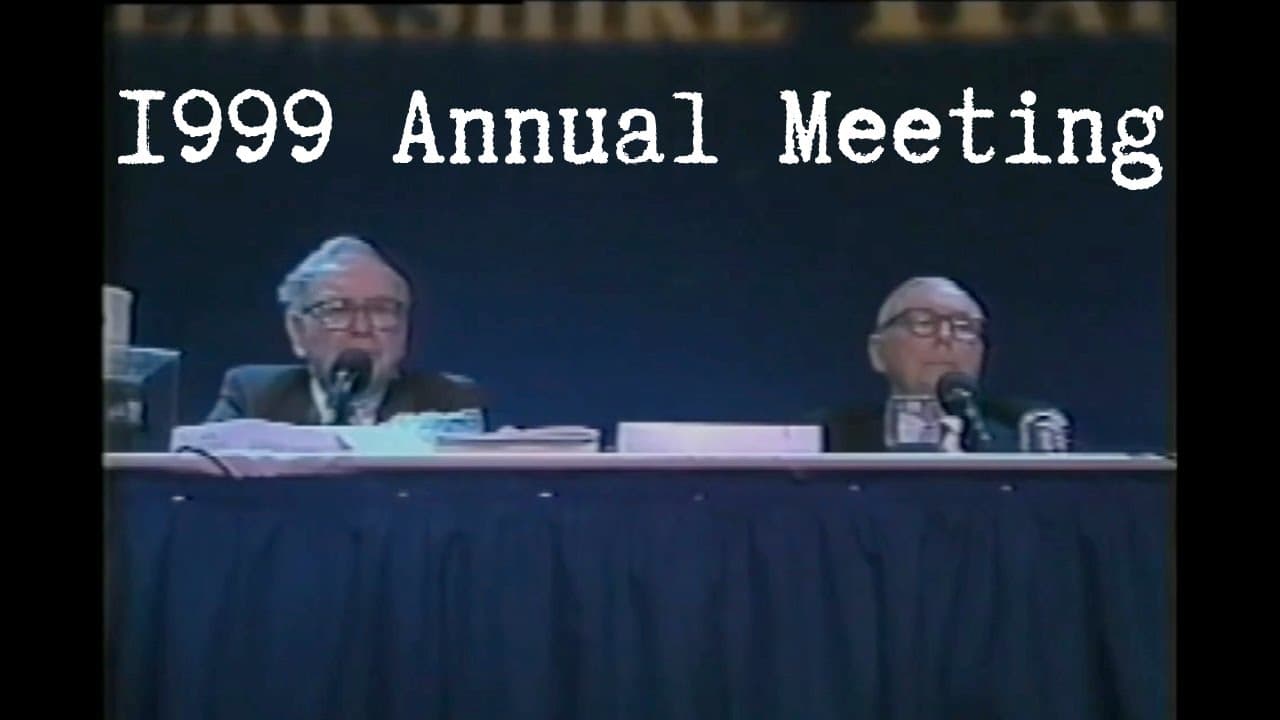
1999 Berkshire Hathaway Annual Meeting (Full Version)
TL;DR
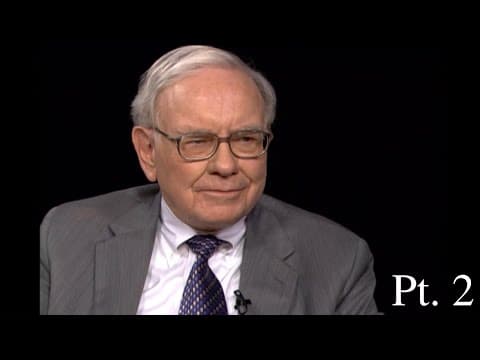
At the 1999 Berkshire Hathaway Annual Meeting, Warren Buffett and Charlie Munger discussed long-term value, intrinsic value, decentralized management, insurance, stock-option accounting, acquisitions, and the internet’s effect on retail. Buffett said they would answer shareholder questions for six hours or until their candy ran out. Read on for their positions on investing, management, technology, and financial reporting.
Transcript
[Applause] good morning really delighted we can have this many people come out for a meeting it says something i think about the way you regard yourself as owners we're going to hustle through the the business meeting and then charlie and i will be here for six hours or until our candy runs out uh to answer any questions you have we have people at ... Read More
Key Insights
- Warren Buffett emphasizes the importance of intrinsic value over market fluctuations.
- Berkshire Hathaway prefers decentralized management, allowing subsidiaries to operate independently.
- The company is cautious about investments in a high-market environment, focusing on long-term value.
- Buffett and Munger criticize the accounting practices surrounding stock options and mergers.
- The internet's impact on retail is significant, with some sectors more affected than others.
- Insurance remains a key area for Berkshire, with a focus on reliable, low-cost float.
- Berkshire Hathaway is open to both full business acquisitions and significant stock market investments.
- Buffett and Munger highlight the importance of working with people they trust and respect.
Install to Summarize YouTube Videos and Get Transcripts
Explore YouTube Video Summarizer or Get YouTube Transcript Extractor
Questions & Answers
Q: What happened at the 1999 Berkshire Hathaway Annual Meeting?
Warren Buffett opened the shareholder meeting, introduced Charlie Munger and Berkshire’s directors, and conducted the formal business of electing directors. Buffett and Munger then addressed shareholder questions about Berkshire’s performance, investing, acquisitions, insurance, management, accounting practices, and the internet’s impact on retail.
Q: How did Berkshire Hathaway approach investing in a high-market environment?
Berkshire focused on intrinsic value and long-term growth rather than short-term market movements. Buffett and Munger remained cautious and looked for businesses with sustainable competitive advantages that could be purchased at fair value.
Q: What did Buffett and Munger say about stock options and accounting practices?
They criticized accounting practices that failed to treat stock options as compensation costs in the income account. Their position was that financial reporting should reflect the economic cost of options transparently.
Q: How did Berkshire Hathaway view the internet’s impact on retail?
Buffett and Munger recognized that the internet was significantly reshaping retail, although some sectors were more exposed than others. Berkshire evaluated whether retail businesses had strong brands and competitive advantages that could withstand or benefit from online competition.
Q: How did decentralized management work at Berkshire Hathaway?
Berkshire generally allowed its subsidiaries to operate independently and retain their own cultures and management styles. This approach relied on capable, trustworthy managers making decisions suited to their individual businesses.
Q: Why was insurance important to Berkshire Hathaway?
Insurance was a key Berkshire business because it could generate reliable, low-cost float. Berkshire’s financial strength and reputation for paying claims provided an advantage, particularly in reinsurance and super-catastrophe coverage.
Q: What was Berkshire Hathaway’s strategy for acquisitions and stock investments?
Berkshire was open to acquiring entire businesses and making significant investments in publicly traded companies. It prioritized opportunities offering long-term value and preferred negotiated purchases of whole businesses when suitable deals were available.
Q: Why did Buffett and Munger avoid serving on many corporate boards?
Buffett said board membership could restrict purchases and sales of stock, including transactions made within a six-month period. He explained that Berkshire had lost significant money because his and Munger’s hands were tied while serving on boards, so they generally joined only when Berkshire had very significant investments.
Summary
Warren Buffett and Charlie Munger host the 1999 annual meeting of shareholders and answer questions on various topics including business, directors, shareholders, and the market. They discuss the collapse of the hedge fund long-term capital, the impact of the internet on retailing, and the division of profits among employees.
Questions & Answers
Q: How do Warren Buffett and Charlie Munger regard themselves during the annual meeting?
Warren Buffett and Charlie Munger regard themselves as owners during the annual meeting, as evidenced by the large turnout of shareholders.
Q: Who are the directors of Berkshire Hathaway?
The directors of Berkshire Hathaway include Warren Buffett, Susan T. Buffett, Howard G. Buffett, Malcolm G. Chase, Charlie Munger, Ronald L. Olson, and Walter Scott Jr.
Q: Who are the auditors of Berkshire Hathaway?
Deloitte and Touch are the auditors of Berkshire Hathaway.
Q: How many shares of class A and class B Berkshire Hathaway common stock are outstanding?
There are 1,343,592 shares of class A Berkshire Hathaway common stock and 5,266,338 shares of class B Berkshire Hathaway common stock outstanding.
Q: What is the purpose of the annual meeting?
The purpose of the annual meeting is to elect directors.
Q: How are directors elected at the annual meeting?
Shareholders can vote for directors by proxy or in person at the meeting. Proxy cards are submitted to the inspectors of election.
Q: What is the report of the secretary on the number of Berkshire shares represented at the meeting?
There are 1,133,684 class A shares and 3,485,885 class B shares represented at the meeting through proxies.
Q: What is the business of the meeting after the election of directors?
After the election of directors, the business of the meeting is adjourned and questions are entertained from shareholders.
Q: What is the effect of the collapse of long-term capital management on the hedge fund industry?
The collapse of long-term capital management has raised concerns about the risk and irresponsible nature of the derivatives market.
Q: How do Warren Buffett and Charlie Munger evaluate the role of derivatives in business?
Warren Buffett and Charlie Munger consider derivatives to be risky and believe that the accounting for derivatives is weak. They have seen how derivatives can lead to financial losses and consider them to be an irresponsible part of the financial system.
Q: How do Warren Buffett and Charlie Munger calculate the intrinsic value of Berkshire Hathaway?
Warren Buffett and Charlie Munger calculate the intrinsic value of Berkshire Hathaway by discounting the future cash flows of the company using an appropriate discount rate. They consider the long-term growth prospects of the company and its ability to reinvest earnings and grow float.
Q: How does the internet impact the retailing industry?
The internet has the potential to revolutionize the retailing industry by offering consumers a wide variety of products and the convenience of online shopping. However, the impact of the internet on different retail sectors may vary, and established brands may still have an advantage over online competitors.
Q: How do Warren Buffett and Charlie Munger evaluate the prospects for the retailing industry?
Warren Buffett and Charlie Munger believe that the internet will have a significant impact on the retailing industry. While certain sectors may be more vulnerable to disruption, they emphasize the importance of brand names and trust in consumer purchasing decisions. They also highlight the potential benefits of the internet for certain businesses, such as jewelry retailing.
Q: How do Warren Buffett and Charlie Munger divide up the profits of Berkshire Hathaway subsidiaries among employees?
Warren Buffett and Charlie Munger do not comment on the specifics of profit sharing at Berkshire Hathaway subsidiaries. However, they encourage shareholders to read Alice Schroeder's comprehensive analysis of Berkshire Hathaway, which may provide insights on the subject.
Q: Do Warren Buffett and Charlie Munger have any suggested reading on profit sharing?
Charlie Munger suggests that the shareholder reads on profit sharing, but no specific titles are mentioned.
Summary & Key Takeaways
-
Buffett and Munger discussed the challenges and strategies of investing in a high-market environment, emphasizing intrinsic value and long-term growth (50 words).
-
They addressed shareholder concerns about stock options, insurance, and the impact of the internet on retail, highlighting Berkshire's decentralized management approach (50 words).
-
The meeting underscored their commitment to ethical accounting practices and cautious investment strategies, focusing on businesses with sustainable competitive advantages (50 words).
Read in Other Languages (beta)
Share This Summary 📚
Summarize YouTube Videos and Get Video Transcripts with 1-Click
Try YouTube Summary with ChatGPT & Claude or YouTube Transcript Generator
Explore More Summaries from Investor Archive 📚


Summarize YouTube Videos and Get Video Transcripts with 1-Click
Try YouTube Summary with ChatGPT & Claude or YouTube Transcript Generator