How Light Technology Influences Human Behavior
TL;DR
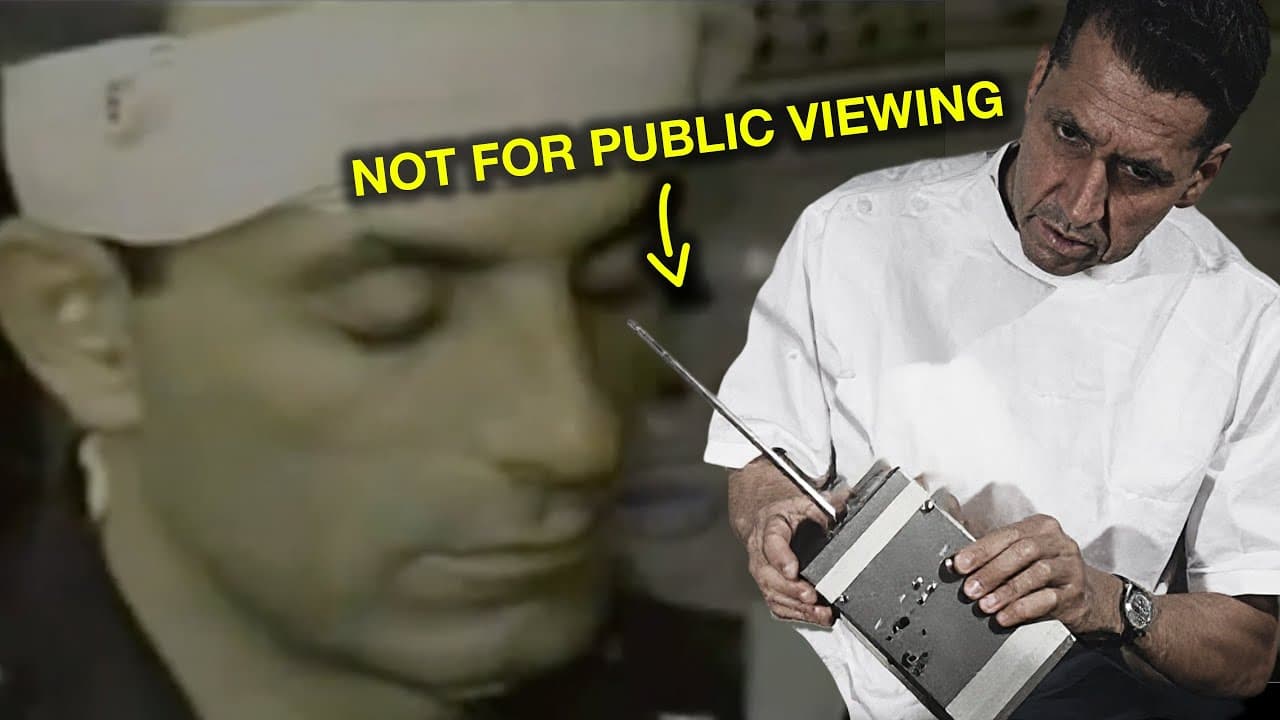
The video explores the concept of using light to control brain activity and behavior. It highlights historical experiments by Jose Delgado and modern advances in optogenetics, which use light-sensitive proteins to manipulate neurons. The discussion raises ethical concerns about the potential for technology to influence human behavior, drawing parallels to past CIA projects.
Transcript
From the outside we could modify the inside. Could we give messages to the inside? But the beauty is that now we are not using electrodes any function in the brain, emotions, intellect, personality. Well, could we perhaps modify by this noninvasive technology? They didn't have to install anything in the brain. No, they did not. But this was the the... Read More
Key Insights
- Jose Delgado demonstrated the ability to control animal behavior using remote signals in the 1960s.
- Delgado's experiments showed that emotions and behaviors could be manipulated through electrical stimulation of the brain.
- Modern optogenetics uses light-sensitive proteins to control neurons with precision, advancing Delgado's concepts.
- Optogenetics allows researchers to activate or silence specific brain cells using pulses of light.
- The video raises ethical concerns about technology's potential to control human behavior, drawing parallels to historical CIA projects.
- Blue light technology, used in modern screens, is linked to influencing brain chemistry and behavior.
- The shift from incandescent to LED lighting has altered the light spectrum people are exposed to, impacting biological functions.
- Defense agencies have explored using light as a non-lethal weapon for crowd control, exploiting the brain's response to visual stimuli.
Install to Summarize YouTube Videos and Get Transcripts
Explore YouTube Video Summarizer or Get YouTube Transcript Extractor
Questions & Answers
Q: How did Jose Delgado control animal behavior?
Jose Delgado controlled animal behavior by using a device called a stimo receiver, which was a small implant connected to the brain. This device allowed him to deliver targeted electrical stimulation, interrupting or redirecting emotions and behaviors. His experiments showed that emotions and behaviors could be manipulated, such as stopping a charging bull with a remote signal.
Q: What is optogenetics and how does it work?
Optogenetics is a technique that uses light-sensitive proteins to control neurons in the brain. By inserting these proteins into specific neurons, researchers can activate or silence them with pulses of light, allowing precise control over brain activity. This method enables the study and manipulation of complex behaviors, advancing neuroscience research significantly.
Q: What ethical concerns are raised by controlling behavior with technology?
Controlling behavior with technology raises ethical concerns about the potential for misuse and manipulation. The ability to influence emotions and behaviors could be exploited for controlling individuals or populations, blurring the lines between medical treatment and coercion. Historical parallels to projects like MK Ultra highlight the need for ethical guidelines and oversight in neuroscience research.
Q: How does blue light affect brain chemistry?
Blue light affects brain chemistry by stimulating retinal cells, which send signals to the brain's reward system. This can increase dopamine release, affecting attention and behavior. Prolonged exposure to blue light, especially from screens, can disrupt natural biological rhythms, potentially leading to issues like sleep disturbances and altered mood or behavior.
Q: Why was the shift from incandescent to LED lighting significant?
The shift from incandescent to LED lighting was significant because it changed the light spectrum people are exposed to. Incandescent bulbs emitted a full spectrum of light, including infrared, which supports cellular repair and healthy biological functions. LED lights, however, concentrate on blue wavelengths, which can disrupt brain chemistry and biological rhythms, impacting health and behavior.
Q: How have defense agencies explored using light as a weapon?
Defense agencies have explored using light as a weapon through research into non-lethal directed energy weapons. These include lasers and strobe lights designed to temporarily blind, disorient, or control crowds by exploiting the brain's response to intense visual stimuli. The potential for using light to influence behavior raises concerns about ethical implications and misuse.
Q: What are the potential medical applications of optogenetics?
Optogenetics has potential medical applications in treating neurological disorders by fine-tuning faulty brain circuits. Researchers hope to use this technology to address conditions like Parkinson's disease, depression, and even blindness. By precisely controlling brain activity, optogenetics offers a promising avenue for developing targeted therapies with fewer side effects than traditional treatments.
Q: What historical parallels exist between modern neuroscience and past CIA projects?
Historical parallels exist between modern neuroscience and past CIA projects like MK Ultra, which explored behavior modification techniques. Both involve manipulating brain activity to influence behavior, raising concerns about ethical boundaries and potential misuse. The evolution from crude experiments to precise techniques like optogenetics highlights the ongoing tension between scientific advancement and ethical considerations.
Summary & Key Takeaways
-
Jose Delgado's experiments in the 1960s demonstrated that animal behavior could be controlled using remote signals, paving the way for modern neuroscience techniques. His work showed that emotions and behaviors are not fixed and can be manipulated through electrical stimulation of the brain.
-
Modern advances in optogenetics have expanded on Delgado's concepts, using light-sensitive proteins to control neurons with precision. This technology allows researchers to activate or silence specific brain cells, raising ethical concerns about the potential for controlling human behavior.
-
The video highlights the influence of blue light technology, used in modern screens, on brain chemistry and behavior. It discusses the shift from incandescent to LED lighting and its impact on biological functions, as well as defense agencies' exploration of light as a non-lethal weapon for crowd control.
Read in Other Languages (beta)
Share This Summary 📚
Summarize YouTube Videos and Get Video Transcripts with 1-Click
Try YouTube Summary with ChatGPT & Claude or YouTube Transcript Generator
Explore More Summaries from Be Inspired 📚






Summarize YouTube Videos and Get Video Transcripts with 1-Click
Try YouTube Summary with ChatGPT & Claude or YouTube Transcript Generator