How Does Consciousness Create Physical Reality?
TL;DR
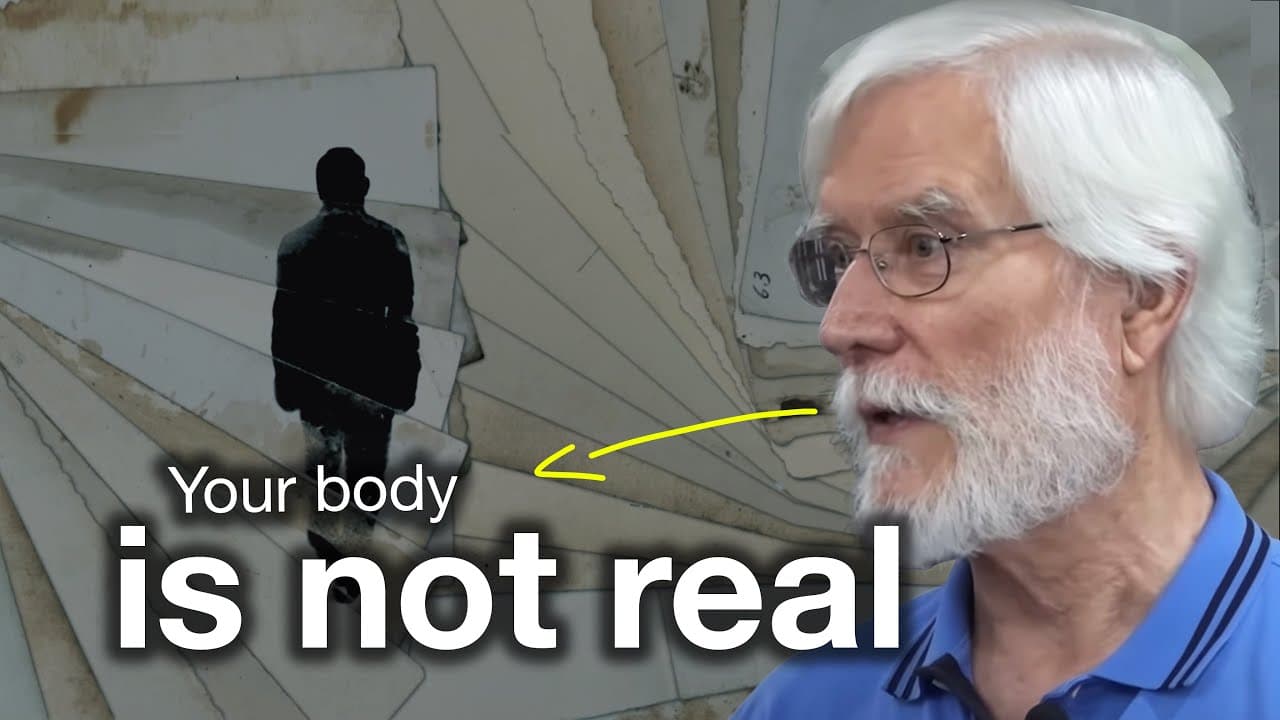
Consciousness, according to Thomas Campbell’s model, is fundamental, while physical reality is an informational environment rendered for individual observers. The body functions as a temporary avatar, choices provide feedback for personal evolution, intent can influence future probabilities, and death ends the physical data stream rather than consciousness itself.
Transcript
You are nonphysical inside of the virtual reality which is your body. So your consciousness is a non-physical thing. All the choices, all the memory, all the thoughts, all the processing goes on in consciousness, not in a brain. There really is no brain. The brain is not even rendered unless somebody is opens a skull and has to look at it. We are p... Read More
Key Insights
- Consciousness is presented as the fundamental reality in Campbell’s model, while the brain and body are rendered components of a physical interface. Thoughts, memories, processing, and choices allegedly occur within nonphysical consciousness rather than being produced by the physical brain.
- Physical reality is described as a multiplayer virtual environment that delivers organized experiences to individual units of consciousness. The body serves as an avatar, physical laws provide consistent constraints, and the surrounding world functions as an informational output rather than the fundamental source of experience.
- Reality is allegedly rendered according to need, much like a game engine computes what a player currently observes. Campbell argues that distant stars may be delivered as points of light until additional information is required, allowing the larger consciousness system to operate efficiently.
- Quantum uncertainty is interpreted as evidence of informational rendering within the proposed model. Unobserved conditions remain as potential data, while measurement requires the system to select and present a specific result from the available probabilities according to its established rule set.
- Intent is described as a factor that can modify future probability without granting complete control over events. The system allegedly evaluates not only observable behavior but also underlying motivation, making honest, compassionate choices functionally different from similar actions driven by fear or manipulation.
- Free will is presented as necessary for consciousness to learn, adapt, and evolve. Time permits change, uncertainty creates meaningful alternatives, and real-time decisions generate information about an individual’s current patterns, especially when conflict, fear, loss, or pressure makes choices difficult.
- Repeated experiences are described as feedback opportunities rather than punishment. When a person continues responding through the same fearful, confused, or divisive patterns, similar circumstances may return and provide another opportunity to choose with greater awareness, cooperation, or compassion.
- Death is characterized as the termination of an avatar’s physical data stream rather than the destruction of consciousness. Campbell’s model proposes that awareness continues within a broader level of the system and may eventually participate in another body, scenario, and collection of learning experiences.
Install to Summarize YouTube Videos and Get Transcripts
Explore YouTube Video Summarizer or Get YouTube Transcript Extractor
Questions & Answers
Q: What is Thomas Campbell’s theory of consciousness and reality?
Thomas Campbell’s model proposes that consciousness is fundamental and that physical reality is a virtual, informational environment. Individuals are units of consciousness receiving experiences through bodies that function as avatars. Space, time, matter, and physics are interface features governed by consistent rules, while choices and their consequences provide feedback that allows consciousness to learn and evolve.
Q: How does the larger consciousness system render reality?
The larger consciousness system, or LCS, allegedly computes and delivers information according to what an observer needs to experience. Campbell compares this process to a game engine rendering what a player sees. When detailed observation is absent, conditions can remain potential data. When interaction requires a definite result, the system selects and presents information consistent with its rules.
Q: Why does Campbell claim that the brain does not create consciousness?
Campbell argues that a person is nonphysical consciousness operating through a virtual body, not a brain producing awareness. In his account, memories, thoughts, processing, and choices occur within consciousness. The brain belongs to the rendered avatar and serves as part of the physical interface, while the conscious observer exists beyond that temporary representation and receives its experiential data stream.
Q: How does Campbell’s model interpret quantum measurement?
Campbell interprets quantum measurement as an example of reality being selected from probabilities when specific information is required. Before observation, a condition can remain undefined potential data rather than a fixed physical object with one definite state. Measurement prompts the system to produce a result that follows its rule set and remains consistent with the observer’s physical environment.
Q: How can intent influence future events in Campbell’s model?
Intent can allegedly make particular future outcomes more or less probable, although it does not give a person total control over circumstances. Campbell distinguishes underlying motivation from outward action, arguing that similar behaviors can carry different significance when driven by compassion, honesty, fear, or manipulation. Intent becomes part of the feedback used to shape future learning experiences.
Q: Why are free will and uncertainty necessary for personal growth?
Free will allows each consciousness unit to choose among uncertain possibilities, producing the information needed for learning and adaptation. Time enables conditions to change, while uncertainty makes choices meaningful. Without alternatives, risk, or responsibility, awareness would remain static. Decisions made under pressure reveal established patterns and create opportunities to respond with greater consciousness instead of automatic fear or reactivity.
Q: Why do difficult experiences repeat according to Campbell?
Difficult experiences may repeat when the patterns behind a person’s responses remain unchanged. The proposed system reintroduces similar conditions as feedback, not as punishment, so the individual can respond differently. Choices motivated by fear, confusion, or separation create friction, while choices supporting awareness, cooperation, and reduced internal conflict indicate movement toward more constructive patterns.
Q: What happens after death in Campbell’s consciousness model?
Death ends the connection between consciousness and its current physical avatar, causing that avatar’s data stream to stop. Consciousness itself allegedly continues and becomes aware within another virtual reality or broader level of the larger system. It may later engage with another body and experience set, making the process an iterative form of learning rather than final extinction or random recycling.
Summary & Key Takeaways
-
Thomas Campbell’s model places consciousness, rather than matter, at the foundation of reality. Each person is described as a unit of consciousness receiving a physical data stream through a temporary body. Space, time, matter, and physical laws function as parts of an informational interface that supports coherent interaction and meaningful experience.
-
The larger consciousness system allegedly renders specific information when observation or interaction requires it, while unobserved conditions remain as potential data. Campbell connects this idea with probability and measurement, arguing that stable physical objects result from consistent rules rather than matter existing independently as the fundamental basis of reality.
-
Life functions as an iterative learning environment in which free choices, intentions, and consequences create feedback. Constructive responses can reduce fear, conflict, and separation, while unchanged patterns may produce similar challenges. Death is presented as a transition that disconnects consciousness from one avatar before it becomes aware within another experiential setting.
Read in Other Languages (beta)
Share This Summary 📚
Summarize YouTube Videos and Get Video Transcripts with 1-Click
Try YouTube Summary with ChatGPT & Claude or YouTube Transcript Generator
Explore More Summaries from Be Inspired 📚

Summarize YouTube Videos and Get Video Transcripts with 1-Click
Try YouTube Summary with ChatGPT & Claude or YouTube Transcript Generator