Cell Membranes EXPLAINED!
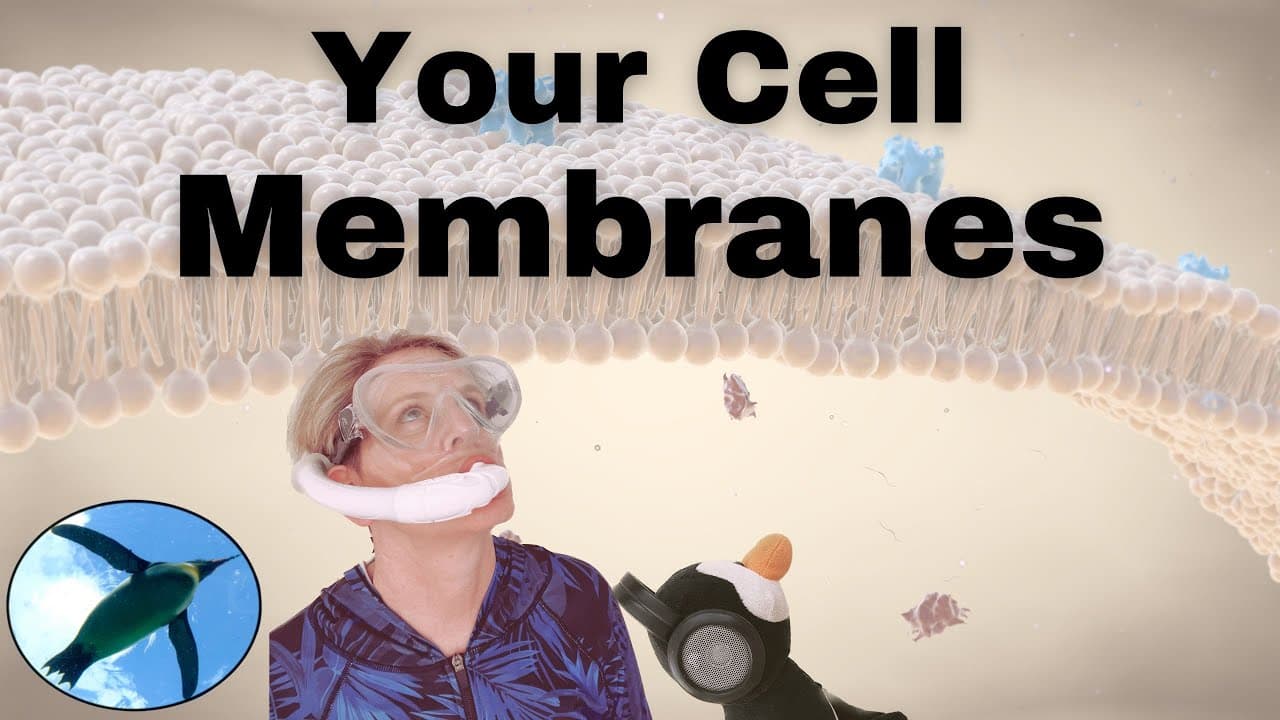
TL;DR
Cell membranes are composed of lipids and proteins, with the lipid bilayer serving as the structural backbone and the proteins adding functionality and flavor to the membrane.
Transcript
let's talk about cell membranes we're going to talk about what they are what they're made of and why they're important first of all you're going to see a number of terms plasma membrane cell membrane plasmalemma all refer to the same thing I'm sorry don't shoot the messenger so first of all how are they built they're built from some pretty amazing ... Read More
Key Insights
- ❓ Cell membranes are essential structures that separate the cell from its surroundings.
- 💁 The structure of the cell membrane is primarily composed of a lipid bilayer, with phospholipids forming the backbone.
- ❓ Proteins embedded in the membrane contribute to its functionality and properties.
- 🤕 Hydrophilic heads and hydrophobic tails of phospholipids play a crucial role in membrane formation.
- 🅰️ Different cell types may have variations in their membrane protein composition.
- 💦 The bilayer structure of phospholipids automatically assembles when placed in a water solution.
- 🎭 Cell membrane proteins perform various functions and give membranes their unique characteristics.
Install to Summarize YouTube Videos and Get Transcripts
Explore YouTube Video Summarizer or Get YouTube Transcript Extractor
Questions & Answers
Q: What are cell membranes made of?
Cell membranes are primarily composed of lipids, specifically phospholipids. These lipids form a bilayer structure, with hydrophilic heads and hydrophobic tails.
Q: How do proteins contribute to the cell membrane?
Proteins embedded in the cell membrane add functionality and flavor. They perform various functions and give the membrane its unique properties.
Q: What is the difference between hydrophilic and hydrophobic?
Hydrophilic means water-loving, while hydrophobic means water-fearing. In the context of the cell membrane, the hydrophilic heads of phospholipids face the water, while hydrophobic tails face each other.
Q: How do cell membranes differ in different cell types?
Cell membranes can vary in their composition of proteins, which gives them different properties. For example, a bone cell membrane may have different proteins than a red blood cell membrane.
Summary & Key Takeaways
-
Cell membranes, also known as plasma membranes or plasmalemma, are comprised of lipids, mainly phospholipids, and proteins.
-
The lipids form a bilayer structure, with hydrophilic heads facing water and hydrophobic tails facing each other.
-
Proteins embedded in the membrane give it its properties and functionality.
Read in Other Languages (beta)
Share This Summary 📚
Summarize YouTube Videos and Get Video Transcripts with 1-Click
Try YouTube Summary with ChatGPT & Claude or YouTube Transcript Generator
Explore More Summaries from ThePenguinProf 📚






Summarize YouTube Videos and Get Video Transcripts with 1-Click
Try YouTube Summary with ChatGPT & Claude or YouTube Transcript Generator