How to Scale Facebook Ads for Ecommerce Success
TL;DR
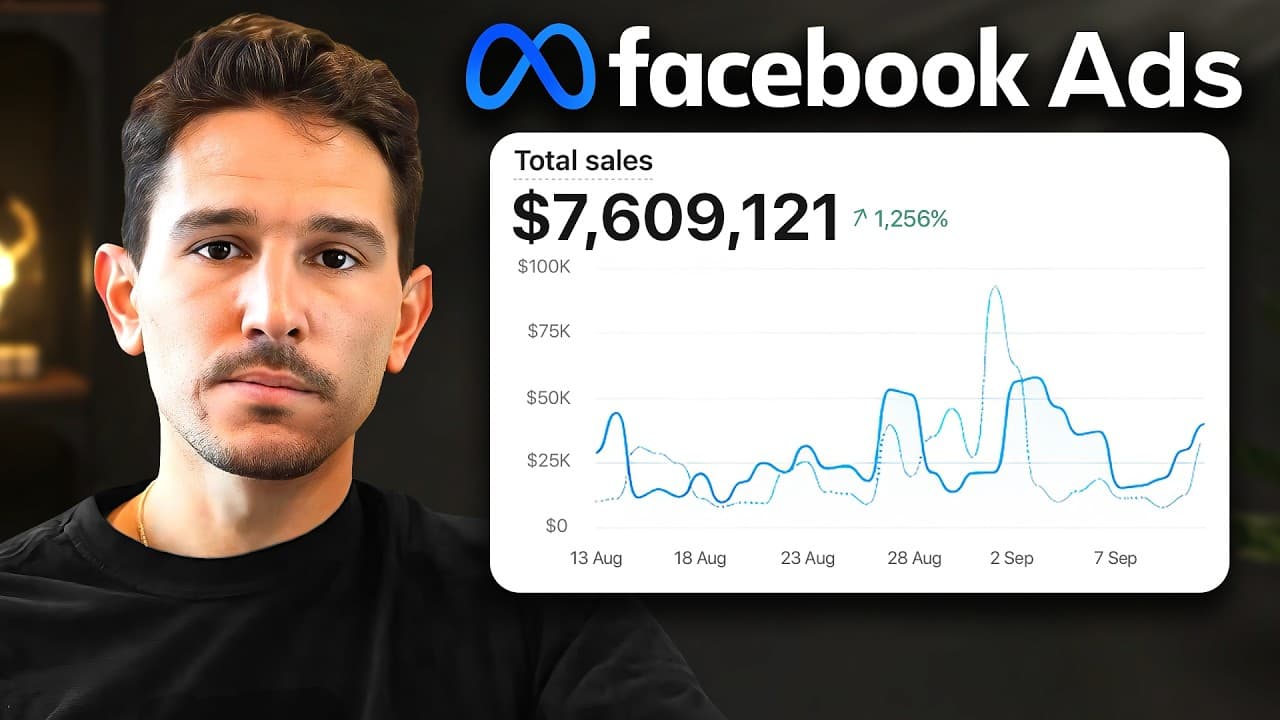
To effectively scale Facebook ads for ecommerce, create distinct audience segments for prospecting, retargeting, and retention. Monitor conversion rates closely and adjust budgets aggressively when performance allows. Avoid overspending on existing customers by setting appropriate exclusions and focus on acquiring new customers while maintaining a profitable return on ad spend.
Transcript
if you want to scale your Shopify store using Facebook ads and Google ads and every time you try to scale you hit a wall when you spend a certain amount or even worse you're focused on the learning phase making 10% improvements every single day because of some arbitrary rule that Facebook ads and Google ads seem to have made up then this video was ... Read More
Key Insights
- Understanding audience segmentation is crucial for scaling Facebook ads effectively.
- Frequency metrics help identify if ads are over-targeting existing customers.
- Creating distinct swim lanes for prospecting, retargeting, and retention maximizes ad spend efficiency.
- Adjusting budgets aggressively when conversion rates are favorable can lead to rapid scaling.
- Monitoring conversion rates by hour helps make informed decisions about budget increases.
- A break-even return on ad spend is essential for determining profitable customer acquisition.
- Using exclusions in ad settings prevents overspending on existing customers.
- Scaling requires a balance between increasing ad spend and maintaining conversion rate stability.
Install to Summarize YouTube Videos and Get Transcripts
Explore YouTube Video Summarizer or Get YouTube Transcript Extractor
Questions & Answers
Q: How to identify if Facebook ads are over-targeting existing customers?
To identify if your Facebook ads are over-targeting existing customers, monitor the frequency metric in your ad manager. Frequency indicates the average number of times your ads are shown to the same user. High frequency on existing customer segments suggests over-targeting. Implement exclusions in your ad settings to prevent ads from being shown repeatedly to the same audience, ensuring more budget is allocated to acquiring new customers.
Q: What is the importance of audience segmentation in scaling Facebook ads?
Audience segmentation is crucial for scaling Facebook ads as it allows advertisers to target different customer types effectively. By creating distinct segments for new prospects, retargeting, and existing customers, advertisers can tailor their strategies to each group's needs. This ensures that ad spend is used efficiently, preventing oversaturation of ads to existing customers and maximizing the acquisition of new customers, ultimately leading to a more profitable ad campaign.
Q: How can conversion rates guide budget adjustments in Facebook ad campaigns?
Conversion rates can guide budget adjustments by indicating the effectiveness of current ad spend. By monitoring conversion rates closely, advertisers can identify when their ads are performing well and are above the break-even point. During such periods, increasing the budget can capitalize on favorable conditions, leading to more conversions. Conversely, if conversion rates drop, it may signal the need to reassess or reduce spending to maintain profitability.
Q: What role does the break-even return on ad spend play in Facebook advertising?
The break-even return on ad spend (ROAS) is a critical metric that helps advertisers determine the minimum performance needed to cover costs. Knowing this threshold allows advertisers to set realistic goals for their campaigns and make informed decisions about scaling. If the ROAS is above the break-even point, it indicates that the campaign is profitable, justifying increased ad spend to acquire more customers. This metric ensures that scaling efforts do not compromise profitability.
Q: How can exclusions improve Facebook ad campaign performance?
Exclusions improve Facebook ad campaign performance by preventing ads from being shown to users who are unlikely to contribute to campaign objectives, such as existing customers who have already converted. By setting exclusions, advertisers can focus their budget on acquiring new customers, ensuring that ad spend is used more efficiently. This strategy helps in reducing ad fatigue among existing customers and increases the chances of reaching new audiences who are more likely to convert.
Q: What strategies can be used to scale Facebook ads rapidly?
To scale Facebook ads rapidly, advertisers should monitor conversion rates closely and adjust budgets aggressively when performance is favorable. Implementing audience segmentation and setting exclusions ensures efficient budget use. Additionally, using tools like conversion rate reports and budget simulators can provide insights for making data-driven decisions. By focusing on acquiring new customers and maintaining a profitable return on ad spend, advertisers can achieve rapid scaling while ensuring sustainable growth.
Q: Why is it important to monitor conversion rates by hour in Facebook ad campaigns?
Monitoring conversion rates by hour is important as it provides real-time insights into ad performance, allowing advertisers to make timely adjustments to their budgets. This granular level of analysis helps identify peak performance times, enabling advertisers to capitalize on favorable conditions by increasing ad spend during those periods. Conversely, it also allows for quick pullbacks if conversion rates decline, helping to maintain profitability and optimize ad spend efficiency.
Q: How does creating swim lanes in ad accounts aid in scaling efforts?
Creating swim lanes in ad accounts aids in scaling efforts by clearly delineating the different stages of the customer journey: prospecting, retargeting, and retention. This structure ensures that ad spend is allocated appropriately across each segment, preventing overspending on existing customers and maximizing the acquisition of new customers. By maintaining distinct swim lanes, advertisers can optimize their strategies for each audience type, leading to more efficient scaling and improved overall campaign performance.
Summary & Key Takeaways
-
To scale Facebook ads effectively, it's essential to segment your audience into new, retargeting, and existing customers. This segmentation helps in managing ad frequency and budget distribution, ensuring you're not overspending on existing customers. By closely monitoring conversion rates and adjusting budgets when performance is favorable, you can achieve rapid scaling while maintaining profitability.
-
The video emphasizes the importance of understanding your break-even return on ad spend to make informed decisions about customer acquisition costs. It also highlights the use of frequency metrics and exclusions to prevent overspending on existing customers, allowing for a more efficient allocation of ad spend towards acquiring new customers.
-
By using tools like conversion rate reports and budget simulators, advertisers can make data-driven decisions to scale their ecommerce businesses effectively. The key is to balance aggressive budget increases with maintaining stable conversion rates, ensuring that scaling efforts lead to sustainable growth and increased revenue.
Read in Other Languages (beta)
Share This Summary 📚
Summarize YouTube Videos and Get Video Transcripts with 1-Click
Try YouTube Summary with ChatGPT & Claude or YouTube Transcript Generator
Explore More Summaries from Sam Piliero 📚




Summarize YouTube Videos and Get Video Transcripts with 1-Click
Try YouTube Summary with ChatGPT & Claude or YouTube Transcript Generator