How to Organize Your AI Operating System Efficiently
TL;DR
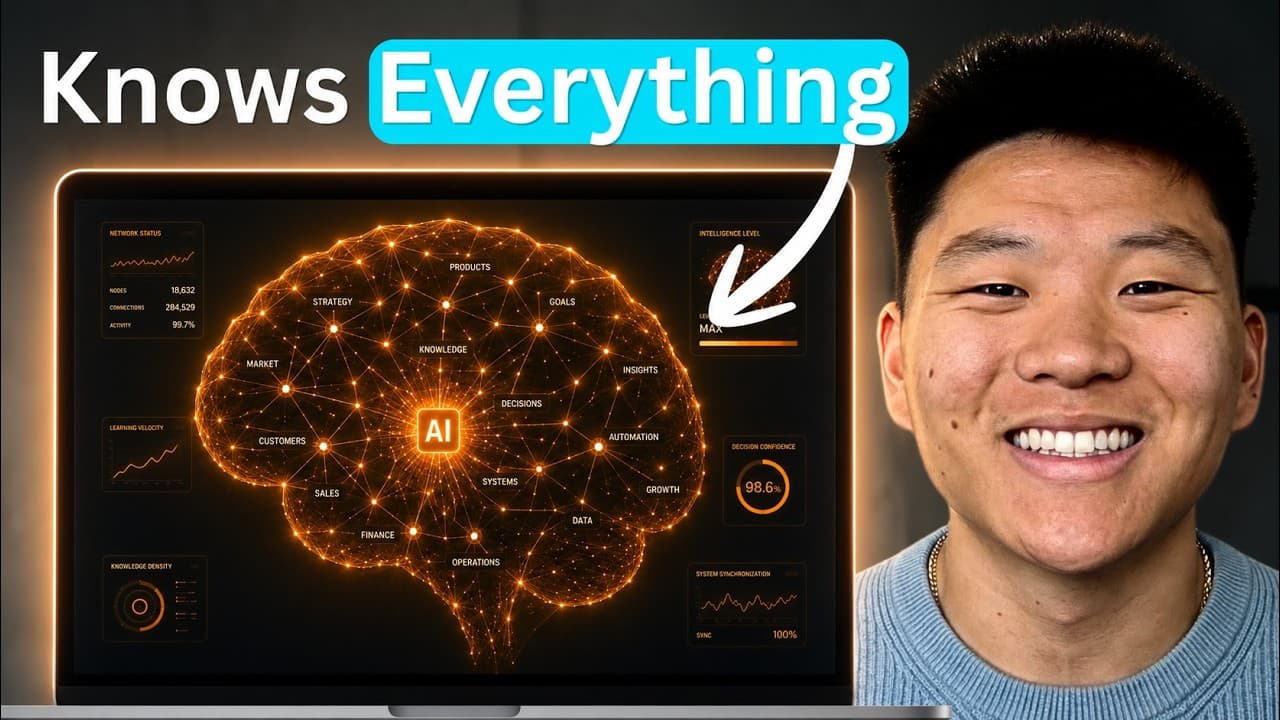
To keep your AI operating system organized and efficient, implement five key strategies: use CloudMD as a routing file, conduct regular AI audits, automate data updates, segment knowledge, and encourage backtracking to identify errors. These methods help prevent context failures like poisoning, bloat, confusion, and clash, ensuring your AI system remains accurate and up-to-date.
Transcript
The number one most common question I've been getting lately is about how I have my AI operating system organized. Questions about how I should be routing files and how I should have wikis organized and folders organized and where do I put client projects and so many questions around the organization of it. Because the problem is if you don't have ... Read More
Key Insights
- AI operating systems require effective organization to prevent hallucinations and maintain accuracy.
- Four context failure modes are poisoning, bloat, confusion, and clash.
- CloudMD can be used as a routing file to efficiently direct AI to relevant data.
- Regular AI audits help identify and correct stale data and broken routing.
- Automating data updates ensures that frequently needed information is always current.
- Segmenting knowledge into distinct categories reduces bloat and improves search efficiency.
- Encouraging AI to backtrack helps identify and correct routing errors.
- Expertise context is pre-loaded information, while situational context is needed just in time.
Install to Summarize YouTube Videos and Get Transcripts
Explore YouTube Video Summarizer or Get YouTube Transcript Extractor
Questions & Answers
Q: How to prevent context failures in an AI operating system?
Prevent context failures by understanding and addressing the four modes: poisoning, bloat, confusion, and clash. Ensure data is accurate to avoid poisoning, manage data volume to prevent bloat, clarify missing or irrelevant facts to reduce confusion, and resolve conflicting data to avoid clash. Regular audits and organized data structures help mitigate these issues.
Q: What is the role of CloudMD in AI organization?
CloudMD serves as a routing file in an AI operating system, directing the AI to relevant data efficiently. By acting as a master table of context, it helps the AI locate necessary information quickly, reducing search time and improving accuracy. This setup prevents context failures by ensuring data is easily accessible and well-organized.
Q: Why is automating data updates important in AI systems?
Automating data updates is crucial in AI systems to ensure that frequently needed information is always current. By setting up automated routines to pull in data at regular intervals, you reduce the risk of outdated information causing context failures. This automation enhances efficiency and reliability, allowing the AI to provide accurate and timely responses.
Q: How does segmenting knowledge improve AI efficiency?
Segmenting knowledge into distinct categories reduces data bloat and improves search efficiency in AI systems. By organizing information into specific segments, the AI can quickly locate relevant data without sifting through excessive unrelated information. This approach enhances the AI's ability to provide accurate responses and reduces processing time.
Q: What is the difference between expertise and situational context?
Expertise context refers to pre-loaded information that the AI needs all the time, such as business goals and policies. Situational context involves data that is required just in time for specific tasks or queries. Understanding this distinction helps optimize AI performance by ensuring it has the right information at the right time, reducing errors and improving efficiency.
Q: How can AI backtracking help improve system accuracy?
AI backtracking involves reviewing previous actions to identify and correct errors in data retrieval or routing. By analyzing where it went wrong, the AI can adjust its processes to prevent similar mistakes in the future. This practice enhances system accuracy by ensuring the AI learns from its errors and continuously improves its data handling capabilities.
Q: What are the benefits of regular AI audits?
Regular AI audits help maintain system accuracy by identifying stale data, broken routing, and other inefficiencies. By systematically reviewing the AI's operations, audits ensure that the system is up-to-date and functioning optimally. This proactive approach prevents context failures and enhances the AI's ability to provide accurate and reliable responses.
Q: Why is it important to have a well-organized AI operating system?
A well-organized AI operating system is crucial to prevent hallucinations and maintain accuracy in data processing. Proper organization ensures that the AI can quickly access relevant information, reducing search time and minimizing errors. This setup enhances the system's efficiency and reliability, allowing it to handle complex tasks and large volumes of data effectively.
Summary & Key Takeaways
-
To maintain an efficient AI operating system, organize your files using CloudMD as a routing file, which directs the AI to relevant data efficiently. Conduct regular AI audits to identify stale data and broken routing, and automate data updates to ensure frequently needed information is always current.
-
Segmenting knowledge into distinct categories reduces bloat and improves search efficiency. Encourage AI to backtrack to identify and correct routing errors, and understand the difference between expertise and situational context to enhance AI's responsiveness.
-
Prevent context failures by understanding the four modes: poisoning, bloat, confusion, and clash. Expertise context involves pre-loaded information, while situational context requires just-in-time data retrieval, ensuring accurate and efficient AI operations.
Read in Other Languages (beta)
Share This Summary 📚
Summarize YouTube Videos and Get Video Transcripts with 1-Click
Try YouTube Summary with ChatGPT & Claude or YouTube Transcript Generator
Explore More Summaries from Nate Herk | AI Automation 📚






Summarize YouTube Videos and Get Video Transcripts with 1-Click
Try YouTube Summary with ChatGPT & Claude or YouTube Transcript Generator