How are AI dev tools changing daily coding in 2025
TL;DR
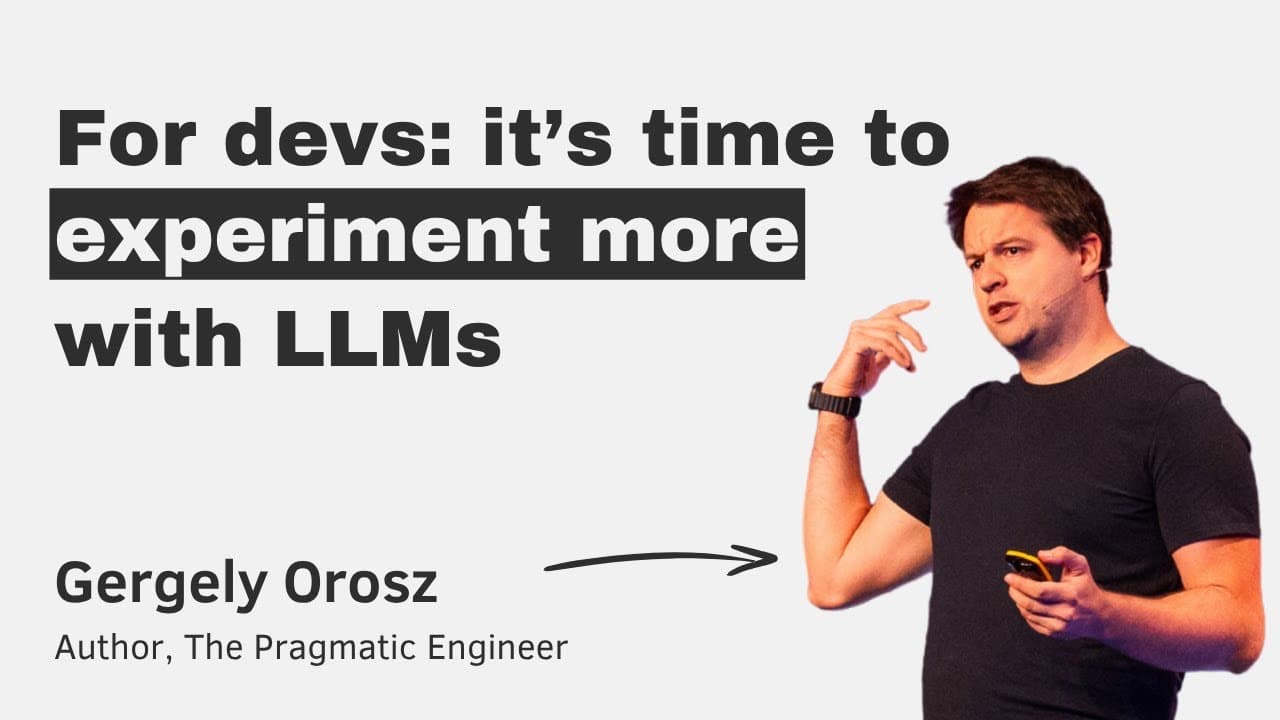
AI is making mixed progress in real world coding. Executives hype AI as a major shift, while engineers report limited accuracy and bugs, though some tools show strong adoption like cloud code and internal Google tooling. The talk surveys startups and big tech to map real usage and concerns, highlighting practical infra and governance needs.
Transcript
Good morning. It's uh great to be back in in London. I I was supposed to be here five years ago, but finally we made it happen. These days when when I look around, AI is all across the headlines. I just collected a few of the things when I search for you know what is going on and some of that honestly just kind of triggered me. So here's this one f... Read More
Key Insights
- AI predictions by executives often contrast with ground reality in software engineering, showing a disconnect between hype and practical outcomes.
- Cloud code and MCP are seeing strong internal adoption, with large reported usage shares and growing ecosystem support from major players.
- Google engineers report extensive internal AI integration in Cider and Notebook LM, indicating AI adoption can be gradual and carefully managed in large orgs.
- Microsoft and other big tech examples are used to illustrate dogfooding and real world trials, including tool transparency and production learning curves.
- Dev tools startups report rapid user adoption after release, with significant early gains in usage and perceived value in coding tasks.
- The ground reality includes bugs and long tails of failure that tools struggle to handle, underscoring the need for robust testing and governance.
- AI tooling is shaping infrastructure needs, with beefed up deployment pipelines, feature flagging, and improved code review processes
- The landscape combines broad interest from executives with pragmatic engineering outcomes across startups and incumbents, suggesting a measured, multi-vendor approach to AI adoption
Install to Summarize YouTube Videos and Get Transcripts
Explore YouTube Video Summarizer or Get YouTube Transcript Extractor
Questions & Answers
Q: What is the main tension discussed between executive predictions and engineering reality?
The talk contrasts optimistic statements from executives about vast percentages of code being generated by AI with concrete examples from engineers showing limited accuracy, bugs, and real world challenges. It suggests a gap between headline claims and day to day usefulness, highlighting the need for practical evaluation and caution in adoption.
Q: How is MCP described and what role does it play in AI dev tooling?
MCP is described as a model context protocol that enables MCP clients to act as IDEs or agents connected to various data sources like databases and GitHub. It allows integrating tools and services in a standardized way, and its adoption by major players indicates a growing ecosystem that supports cross tool interoperability in AI powered development.
Q: What do AI dev tool startups report about cloud code usage?
Startups report that when cloud code was introduced internally, engineers began using it daily and that about 90 percent of the product's code was written with cloud code. They also note a positive adoption trajectory after public release, with substantial increases in usage and engagement signaling strong demand.
Q: What is the observed impact of AI tools at Google according to the talk?
Google engineers describe extensive internal AI integration in Cider, Notebook LM, and other tooling. They report features like autocomplete, chat based development, and advanced code search, with a cautious, gradual approach to ensure reliability. The emphasis is on building trustworthy internal systems that engineers will actually use.
Q: How is Windsurf described in the context of the talk?
Windsurf is presented as an AI coding tool whose usage is claimed to account for a large share of code being created either by the tool or by its assisted input. This example underscores how some products can achieve very high reported influence in real world coding tasks, though it also invites scrutiny about measurement.
Q: What does the talk say about Microsofts approach to AI tooling in production?
The talk notes that Microsoft demonstrated copilot agents in a complex codebase and shared an example where engineers struggled to land fixes, with agents sometimes introducing issues. This illustrates the practical challenges and learning curve that accompany transparent attempts to integrate AI into production code.
Q: What themes emerge about AI tooling at large organizations like Amazon and Google?
Themes include widespread internal experimentation, emphasis on tool integration with existing workflows, and the need for robust infrastructure to support increased code movement and deployment. Engineers describe strong internal ecosystems while acknowledging variability in tool maturity and the importance of governance and careful rollout.
Q: What open questions does the talk raise about the future of AI dev tools?
The talk raises questions about the reliability of AI generated code, the best ways to scale tooling across teams, and how to balance speed with safety. It also asks how to design governance, testing, and deployment processes that can absorb rapid tool evolution while maintaining software quality and developer trust.
Summary & Key Takeaways
-
The talk surveys AI dev tool startups and big tech to map current usage and expectations, noting both high enthusiasm and notable gaps. It emphasizes practical adoption trends and the need for reliable infrastructure and governance as AI tooling scales.
-
It highlights specific products and protocols like MCP, Windsurf, and codesearch related tools, showing how engineers integrate AI into their workflows while remaining cautious about reliability and bugs.
-
It discusses cultural and organizational aspects at Google and Amazon, including internal tooling, code review, and deployment considerations that influence how AI is adopted in large engineering teams.
Read in Other Languages (beta)
Share This Summary 📚
Summarize YouTube Videos and Get Video Transcripts with 1-Click
Try YouTube Summary with ChatGPT & Claude or YouTube Transcript Generator
Explore More Summaries from The Pragmatic Engineer 📚

Summarize YouTube Videos and Get Video Transcripts with 1-Click
Try YouTube Summary with ChatGPT & Claude or YouTube Transcript Generator