What Does the Integumentary System Do for Your Body?
TL;DR
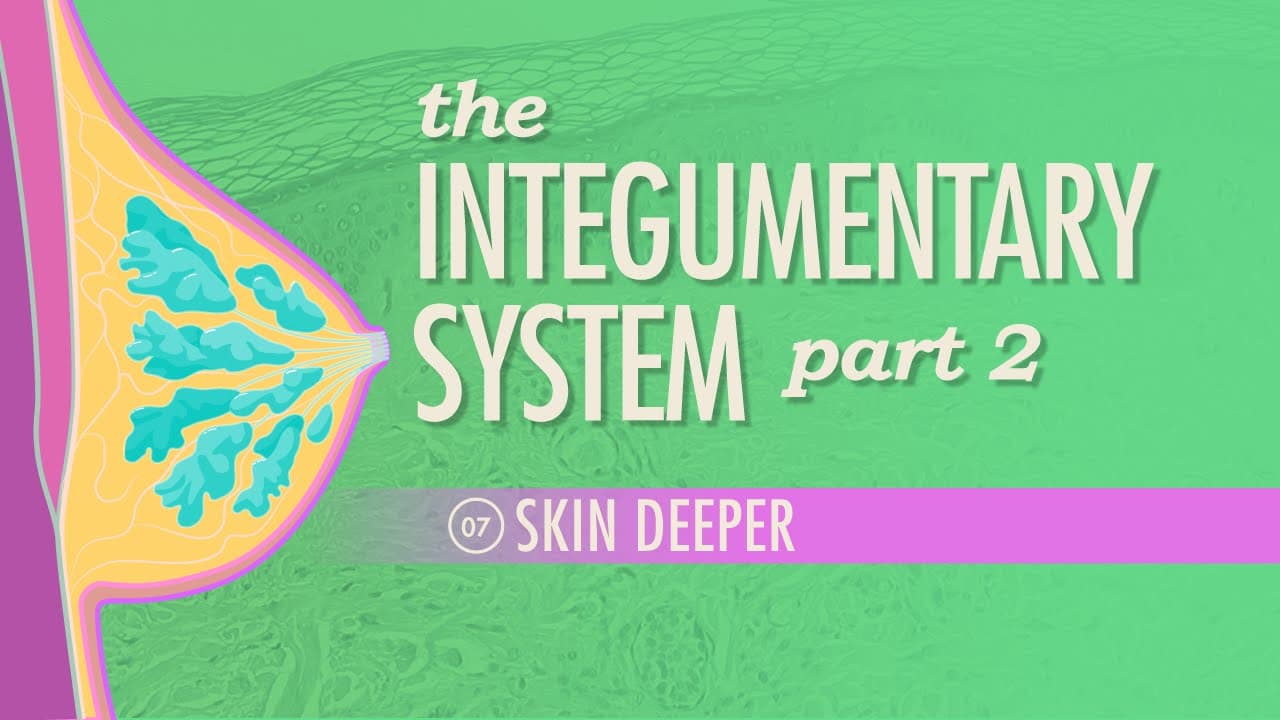
The integumentary system protects the body as a barrier against environmental threats, facilitates sensory perception, regulates temperature through sweat, and indicates health through skin color changes. It also plays a minor role in waste excretion and helps produce vitamin D, making it essential for overall well-being.
Transcript
Look at all this stuff! Soaps, lotions, conditioners, polishes -- all from that huge section of your local store that’s dedicated solely to the grooming of your skin, hair, and nails. Some might see these things as the trappings of vanity. But me? I see them as the tools for the care, maintenance, and -- sure, sometimes decoration -- of the integum... Read More
Key Insights
- The integumentary system includes skin, hair, nails, and glands, serving as a protective barrier against environmental hazards like infections and abrasions.
- Cutaneous sensory receptors in the skin help sense the environment, registering touch, pressure, and other tactile sensations.
- Sweat glands play a minor role in waste excretion but are crucial for regulating body temperature and maintaining homeostasis.
- Skin color changes can indicate health issues, such as cyanosis for respiratory problems or jaundice for liver disorders.
- Melanin, produced by melanocytes, protects against UV rays and influences skin tone, which historically varied based on geographical solar exposure.
- Hair and nails grow from follicles and nail beds, with keratinization occurring as cells move outward and harden.
- Eccrine and apocrine sweat glands differ in location and function, with apocrine glands contributing to body odor due to bacterial activity.
- Sebaceous glands secrete sebum to lubricate skin and hair, though often leading to acne, highlighting the balance between natural oils and hygiene products.
Install to Summarize YouTube Videos and Get Transcripts
Explore YouTube Video Summarizer or Get YouTube Transcript Extractor
Questions & Answers
Q: What is the primary function of the integumentary system?
The primary function of the integumentary system is to act as a protective barrier for the body. It shields against environmental hazards such as excessive sunlight, infections, and abrasions. Additionally, it plays roles in sensation, temperature regulation, and waste excretion, making it vital for maintaining overall health and homeostasis.
Q: How do sweat glands contribute to body regulation?
Sweat glands contribute to body regulation primarily by controlling body temperature. Eccrine glands produce sweat that evaporates to cool the body, while apocrine glands, active post-puberty, secrete a thicker sweat that can lead to body odor. Together, these glands help maintain a stable internal environment, especially during physical exertion.
Q: What role does melanin play in the integumentary system?
Melanin, produced by melanocyte cells in the epidermis, plays a crucial role in protecting the skin from ultraviolet (UV) radiation. It determines skin color, with variations historically linked to geographical solar exposure. Melanin absorbs and dissipates UV radiation, reducing the risk of DNA damage and skin cancer, while also influencing vitamin D synthesis.
Q: How do hair and nails grow in the integumentary system?
Hair and nails grow through a process called keratinization, where new cells form at the base of hair follicles and nail beds. These cells push older cells outward, hardening as they move away from the nutrient-rich base. Hair and nails are composed of keratin, a tough protein that provides structural integrity and protection.
Q: What are the differences between eccrine and apocrine sweat glands?
Eccrine sweat glands are more abundant and found mainly on the palms, forehead, and soles. They produce a watery sweat for thermoregulation. Apocrine glands, located in the armpits and groin, become active at puberty and secrete a thicker sweat containing fats and proteins. This sweat can lead to body odor when broken down by bacteria.
Q: How does the integumentary system indicate health issues?
The integumentary system can signal health issues through changes in skin color. Cyanosis, a bluish tint, may indicate respiratory or circulatory problems. Jaundice, a yellowing, suggests liver disorders. Reddened skin, or erythema, can signal inflammation or allergies. These changes help diagnose underlying conditions, emphasizing the skin's role as a health indicator.
Q: What is the function of sebaceous glands in the skin?
Sebaceous glands secrete sebum, an oily substance that lubricates and softens the skin and hair. This secretion helps prevent water loss in dry environments and maintains skin flexibility. However, excessive sebum production can lead to acne. Despite this, sebum plays a crucial role in maintaining the skin's protective barrier and overall health.
Q: Why is vitamin D important, and how is it produced in the skin?
Vitamin D is vital for bone health, as it aids in calcium absorption and bone cell production. The skin produces vitamin D when exposed to UV light, converting a precursor molecule into vitamin D3. This is then activated in the liver and kidneys into calcitriol, the active form, which circulates to support various bodily functions, including immune response.
Summary & Key Takeaways
-
The integumentary system, comprising skin, hair, nails, and glands, serves as a protective barrier and sensory interface with the environment. It regulates body temperature, excretes waste, and stores blood, while also indicating health through skin color changes.
-
Melanin in the skin protects against UV rays and influences skin tone, with historical variations based on solar exposure. Hair and nails grow through keratinization, and sweat glands regulate temperature, with eccrine and apocrine glands differing in function.
-
Sebaceous glands produce sebum for lubrication, though they can cause acne. The balance between natural oils and hygiene products is crucial, as many products remove and then replace these oils. Overall, the system's functions are vital for protection and interaction with the world.
Read in Other Languages (beta)
Share This Summary 📚
Summarize YouTube Videos and Get Video Transcripts with 1-Click
Try YouTube Summary with ChatGPT & Claude or YouTube Transcript Generator
Explore More Summaries from CrashCourse 📚




Summarize YouTube Videos and Get Video Transcripts with 1-Click
Try YouTube Summary with ChatGPT & Claude or YouTube Transcript Generator