How AI Impacts Jobs, Warfare, and Global Politics
TL;DR
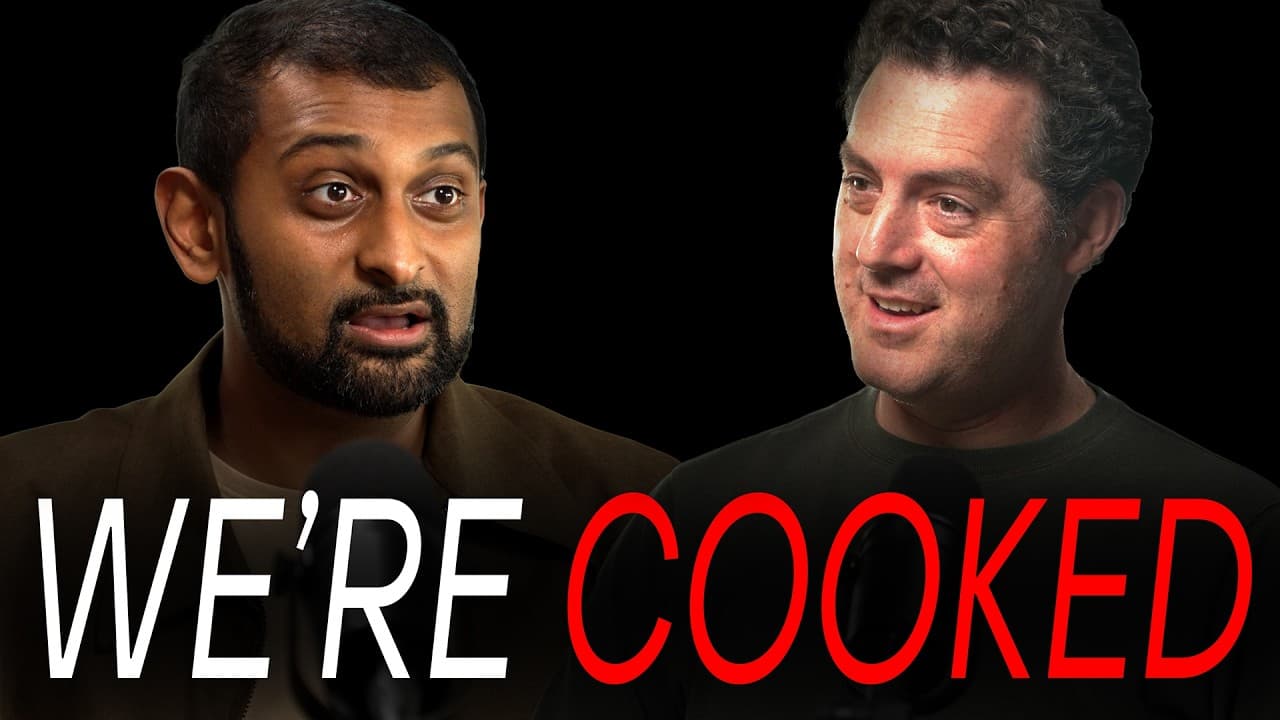
AI is reshaping industries, affecting job markets, and influencing global politics. The technology's rapid advancement is leading to significant changes in the workforce, with AI tools enhancing productivity but also threatening traditional job roles. As AI becomes more integrated into military and governmental operations, geopolitical tensions are rising, particularly between the U.S. and China over AI capabilities.
Transcript
Now with like cloud code, I think we move 10 times the speed of any of our competitors. All the executives, all these major companies watch podcasts like yours. They listen to these things because it's like, well, this is how I listen to the people that like matter. Hey, if a nuclear missile is heading from China to America, we can use AI to stop i... Read More
Key Insights
- AI is transforming job markets, with tools like cloud code increasing productivity but threatening traditional roles.
- Geopolitical tensions are rising as AI becomes integral to military operations, particularly between the U.S. and China.
- The U.S. government is concerned about AI's potential for mass surveillance and autonomous weapons.
- Anthropic and OpenAI are key players in the AI race, with differing approaches to government collaboration.
- AI's rapid advancement is causing societal anxiety, with fears of job loss and increased inequality.
- There is a growing debate over the ethical implications of AI, particularly in terms of surveillance and privacy.
- The AI industry is experiencing a shift, with closed-source models gaining more traction than open-source ones.
- Capital allocation is increasingly favoring AI development, impacting traditional industries and markets.
Install to Summarize YouTube Videos and Get Transcripts
Explore YouTube Video Summarizer or Get YouTube Transcript Extractor
Questions & Answers
Q: How is AI affecting job markets?
AI is significantly impacting job markets by increasing productivity through tools like cloud code, which automate and enhance various tasks. However, this also leads to job displacement, particularly in roles that are easily automated. The technology is creating a divide between those who can leverage AI for increased efficiency and those whose jobs are threatened by automation.
Q: What are the geopolitical implications of AI?
AI's integration into military operations is escalating geopolitical tensions, particularly between the U.S. and China. The U.S. is concerned about AI's potential for mass surveillance and autonomous weapons, leading to strategic maneuvers in AI capabilities. This technological race is influencing global politics and national security strategies.
Q: Why is the U.S. government concerned about AI?
The U.S. government is concerned about AI's potential for mass surveillance and the development of autonomous weapons. These technologies pose ethical and security challenges, as they could lead to privacy invasions and uncontrolled military applications. The government is navigating these issues while balancing innovation and regulation.
Q: How are Anthropic and OpenAI approaching government collaboration?
Anthropic and OpenAI have differing approaches to government collaboration. Anthropic is perceived as more principled and cautious, focusing on ethical considerations, while OpenAI is seen as more opportunistic, willing to engage in government contracts to advance its capabilities. These strategies impact their market positions and public perceptions.
Q: What societal anxieties are associated with AI?
AI is causing societal anxieties related to job security, economic inequality, and ethical implications. As AI automates more tasks, there is fear of widespread job loss and increased inequality. Ethical concerns focus on AI's potential for surveillance and manipulation, raising questions about privacy and human rights.
Q: What is the debate between open-source and closed-source AI models?
The debate between open-source and closed-source AI models centers on accessibility and innovation. Open-source models promote transparency and collaboration, but closed-source models are gaining traction due to their superior capabilities and commercial viability. This shift is influencing the AI landscape and development strategies.
Q: How is capital allocation shifting towards AI?
Capital allocation is increasingly favoring AI development as companies recognize its transformative potential. This shift is impacting traditional industries, as resources are redirected towards AI research and infrastructure. The focus on AI is driving innovation but also contributing to market disruptions and changes in employment landscapes.
Q: What are the ethical implications of AI in surveillance?
AI's role in surveillance raises significant ethical concerns, particularly regarding privacy and civil liberties. The technology's ability to monitor and analyze vast amounts of data poses risks of misuse and abuse, leading to potential invasions of privacy and restrictions on free expression. These issues are central to ongoing debates about AI regulation and governance.
Summary & Key Takeaways
-
AI is rapidly transforming industries, leading to increased productivity but also significant job displacement. The integration of AI into military operations is heightening geopolitical tensions, especially between the U.S. and China. As AI technology advances, concerns about surveillance and ethical implications are growing.
-
The U.S. government is navigating the complexities of AI's potential for mass surveillance and autonomous weapons, with companies like Anthropic and OpenAI at the forefront of AI development. These companies have differing strategies in their collaboration with the government, impacting their market positions.
-
AI's impact on society is profound, with increased anxiety over job security and economic inequality. The debate over open-source versus closed-source AI models continues, with closed-source gaining more traction. Capital allocation is shifting towards AI, affecting traditional industries and markets.
Read in Other Languages (beta)
Share This Summary 📚
Summarize YouTube Videos and Get Video Transcripts with 1-Click
Try YouTube Summary with ChatGPT & Claude or YouTube Transcript Generator
Explore More Summaries from Matthew Berman 📚






Summarize YouTube Videos and Get Video Transcripts with 1-Click
Try YouTube Summary with ChatGPT & Claude or YouTube Transcript Generator