How to Anticipate the Future of AI Technology
TL;DR
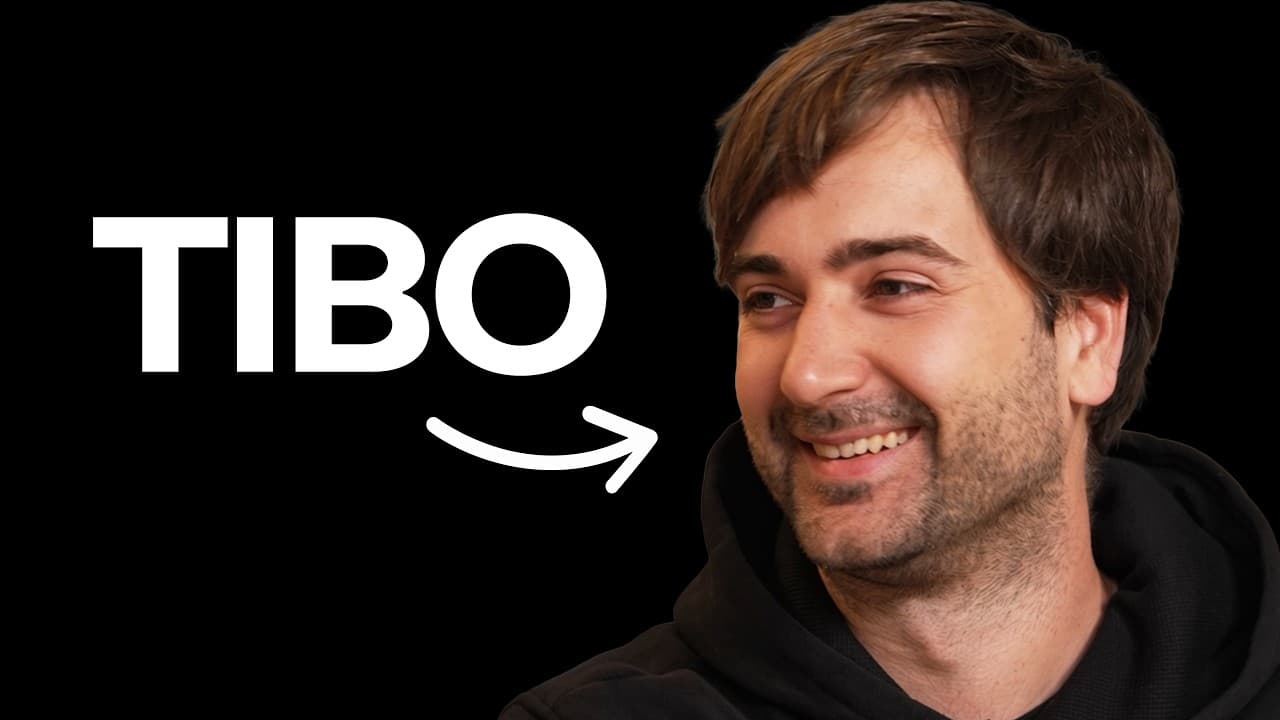
OpenAI is advancing AI capabilities through efficient model training and product development. Tibo discusses the merging of ChatGPT and Codex, emphasizing a user-friendly, personalized AI experience. The focus is on making AI accessible and beneficial for everyone, with future models expected to operate faster than current technology constraints allow.
Transcript
I can press the button whenever I want, whenever it feels right. I don't tend to look at the competition that much. Like I really look at, you know, what can we do uniquely well and what are our values and like, you know, how do we maximally accelerate towards that? You know, maybe a year or two these speeds will become, you know, maybe if not the ... Read More
Key Insights
- OpenAI prioritizes a collaborative and empowering culture, allowing rapid product development and innovation.
- The merging of ChatGPT and Codex aims to create a seamless, personalized AI experience for users across different technical backgrounds.
- OpenAI's focus is on building highly efficient models, making AI accessible and useful for a broad audience.
- Ultra-fast AI speeds enhance productivity by allowing real-time interactions and rapid prototyping.
- OpenAI's recursive self-improvement approach uses advanced models to optimize infrastructure and enhance efficiency.
- AI's future involves ambient, natural interactions, integrating voice and non-textual communication for a more human-like experience.
- OpenAI's reset policy builds goodwill by compensating users for service disruptions, fostering community trust.
- AI technology is expected to become more efficient and accessible, with future models likely operating at ultra-fast speeds as a standard.
Install to Summarize YouTube Videos and Get Transcripts
Explore YouTube Video Summarizer or Get YouTube Transcript Extractor
Questions & Answers
Q: How does OpenAI foster a culture of innovation?
OpenAI fosters a culture of innovation by encouraging collaboration and empowering employees to rapidly develop and ship new products. This approach minimizes barriers to creativity and emphasizes a bottom-up culture where ideas can be quickly tested and implemented, ensuring that the organization remains at the forefront of AI development.
Q: What is the significance of merging ChatGPT and Codex?
Merging ChatGPT and Codex aims to create a unified AI experience that is highly personalized and adaptable to users' needs, regardless of their technical background. This integration allows for a seamless interaction with AI, providing users with a versatile tool that can assist with a wide range of tasks, from coding to general inquiries.
Q: How is OpenAI improving AI efficiency?
OpenAI is improving AI efficiency by leveraging advanced models to optimize their infrastructure and gain significant performance gains. This includes enhancing token efficiency and inference speeds, allowing models to operate faster and more effectively. These improvements make AI technology more accessible and cost-effective for a broader audience.
Q: What are ultra-fast AI speeds, and why are they important?
Ultra-fast AI speeds allow for real-time interactions and rapid prototyping, significantly enhancing productivity. These speeds enable users to stay in the flow of their tasks without interruptions, making AI a more powerful tool for creative and technical work. This advancement is crucial for developing applications that require immediate feedback and quick iterations.
Q: How does OpenAI's reset policy benefit users?
OpenAI's reset policy benefits users by providing compensation for any disruptions in service, demonstrating a commitment to user satisfaction and community trust. By resetting usage limits when issues occur, OpenAI shows that it values its users and is dedicated to maintaining a high-quality experience, which helps build goodwill and loyalty.
Q: What is recursive self-improvement in AI?
Recursive self-improvement in AI involves using advanced models to optimize and enhance the infrastructure and processes that support AI development. This approach allows for continuous improvements in efficiency and performance, enabling AI systems to become more capable over time. It is a form of self-optimization that leverages AI to refine its own operations.
Q: What future interactions are envisioned for AI?
Future interactions with AI are envisioned to be more ambient and natural, incorporating voice and non-textual communication to create a human-like experience. This approach aims to make AI a seamless extension of human capabilities, allowing for intuitive and efficient interactions that enhance productivity and creativity without requiring users to adapt to the technology.
Q: How is OpenAI addressing concerns about AI's impact?
OpenAI addresses concerns about AI's impact by focusing on making AI technology efficient, accessible, and beneficial for everyone. The organization is committed to providing broad access to AI, ensuring that it enhances daily life and productivity. OpenAI's efforts to push for efficiency and cost-effectiveness aim to alleviate apprehensions about AI's environmental and economic impact.
Summary & Key Takeaways
-
OpenAI is focused on creating a culture that fosters rapid innovation and collaboration, which is key to developing advanced AI products. The merging of ChatGPT and Codex exemplifies this approach, aiming to deliver a personalized AI experience that adapts to individual user needs.
-
The development of ultra-fast AI speeds is set to revolutionize workflows, enabling real-time interactions and more efficient multitasking. This advancement is part of OpenAI's broader strategy to enhance model efficiency and accessibility, making AI technology more widely available and beneficial.
-
OpenAI is committed to building AI that is rooted in human communication, with future models designed to interact naturally through voice and other non-textual means. This approach aims to make AI a seamless extension of human capabilities, enhancing productivity and creativity.
Read in Other Languages (beta)
Share This Summary 📚
Summarize YouTube Videos and Get Video Transcripts with 1-Click
Try YouTube Summary with ChatGPT & Claude or YouTube Transcript Generator
Explore More Summaries from Matthew Berman 📚






Summarize YouTube Videos and Get Video Transcripts with 1-Click
Try YouTube Summary with ChatGPT & Claude or YouTube Transcript Generator