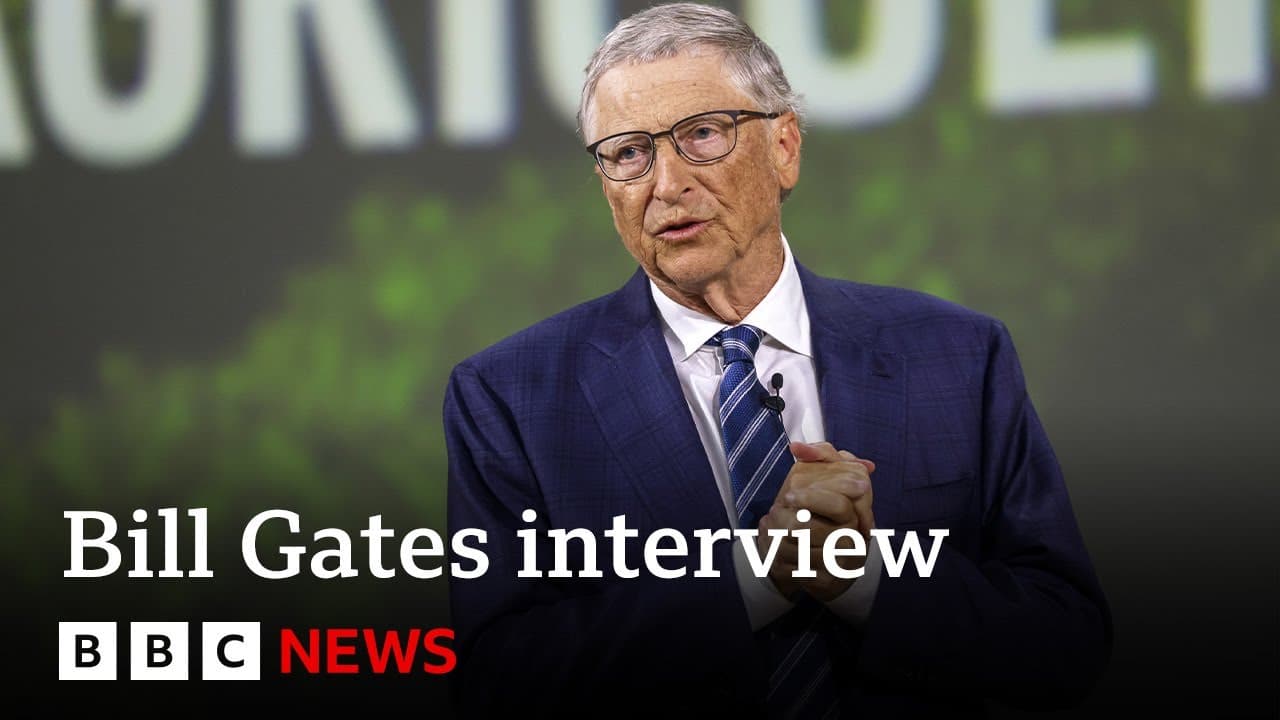
Bill Gates on climate optimism and adaptation
TL;DR
Gates argues the poorest suffer most from climate change and emphasizes adaptation through agricultural innovation. He announces a $200 million pledge to reach 500 million farmers by the end of the decade, focusing on drought tolerant crops, weather information, and broader seed improvements to boost resilience and nutrition.
Transcript
Bill Gates thank you for speaking with us you've always been a problem solver personal computers fighting tropical diseases now you're working to solve climate change what's the biggest challenge facing you in that fight well climate change is uh very unjust because the most of the suffering will be the poor uh particularly who have to farm uh to g... Read More
Key Insights
- Climate injustice is a core concern, with the poor bearing the brunt of crop failures and malnutrition, which Gates highlights as a driving reason for urgent action and innovation.
- Adaptation is essential even if mitigation progresses, because warming will persist and affect farming livelihoods, especially in Africa and other vulnerable regions.
- Seed technology and agro inputs can dramatically improve resilience, as shown by past Green Revolution gains and ongoing work to broaden crops used in Africa.
- Weather information and advisory services are crucial tools that help farmers time planting and reduce losses during extreme conditions.
- Investments in agriculture, including drought tolerant crops and better seeds, can yield large global benefits by reducing hunger and supporting economic development.
- There is a clear emphasis on practical, scalable solutions rather than relying solely on future technologies to solve climate challenges.
- Gates advocates for a broader set of crops and improved agricultural practices to adapt to higher temperatures and irregular rainfall patterns.
- The approach includes collaboration with governments, NGOs, and the private sector to accelerate deployment and ensure affordability and accessibility of innovations.
- More videos from this channel:
- More from this channel: BBC News
Install to Summarize YouTube Videos and Get Transcripts
Explore YouTube Video Summarizer or Get YouTube Transcript Extractor
Questions & Answers
Q: What is Bill Gates's view of the biggest challenge in fighting climate change, and who does it affect most?
Gates states that climate change is very unjust because the most suffering will be borne by the poor, especially those who farm to obtain food and are vulnerable to crop failures. He emphasizes that the speed of action is crucial, as delays worsen malnutrition and disease among the world’s poorest populations. This framing ties climate risk directly to development and equity concerns, underscoring the need for rapid, targeted adaptation and support.
Q: Why is Gates attending COP 28 in Dubai, and what is the focus of his involvement?
Gates is at COP 28 to advocate for funding more innovations that reduce carbon emissions and make clean energy affordable, while also helping people in poor countries survive and thrive in a warming world and continue progress against disease and poverty. His emphasis is on practical, scalable solutions that can be implemented in developing regions to improve resilience and reduce vulnerability to climate impacts.
Q: What is the significance of the $200 million pledge mentioned in the interview?
The pledge is intended to reach 500 million farmers by the end of the decade by supporting agricultural innovation, crop improvement, and adaptation strategies. This includes drought tolerant crops, better seeds, and access to weather information and advice. The goal is to scale proven interventions to a large number of farmers, particularly in Africa and other regions most affected by climate variability.
Q: How does Gates describe the role of seeds and agricultural innovation in adapting to climate change?
Gates describes seeds as whizbang and highlights their potential to cope with higher temperatures and droughts. He points to past success with the Green Revolution as a model and argues that expanding the range of crops and incorporating genetic improvements can meaningfully boost productivity and resilience for farmers facing climate stress.
Q: What does Gates say about the balance between mitigation and adaptation in climate strategy?
Gates acknowledges the need to accelerate mitigation through renewable energy and grid improvements, but he stresses that adaptation will still be necessary as some warming remains inevitable. He argues for investing in both fronts, emphasizing that adaptation is particularly critical for subsistence farmers in poorer regions who have contributed little to emissions.
Q: What role does Gates see for weather information in helping farmers adapt?
Weather information and advisory services are highlighted as essential tools that help farmers know when to plant and how to respond to problems. By providing accurate climate and agricultural guidance, farmers can better manage risks, reduce crop losses, and improve food security, particularly under increasing climate variability.
Q: How does Gates address the political aspect of climate action and the potential for pushback?
Gates notes that climate policy is political in many countries, and investments in climate solutions span 20 to 30 years, which can lead to political shifts and resistance. He argues for communicating human impacts and suffering to build broad support, and for keeping focus on the needs of vulnerable populations to sustain long term commitment.
Q: What responsibility does Gates attribute to the world’s wealthiest individuals regarding climate action?
Gates suggests that wealthy individuals bear responsibility to fund and drive climate solutions because their actions can have outsized global impact. He emphasizes contributions to innovation, adaptation, and alleviating suffering in poorer regions, arguing that generosity and investment in practical, scalable climate interventions are essential to reducing vulnerability and promoting development.
Summary & Key Takeaways
-
Gates frames climate change as an unequal burden on the poor and stresses the need for rapid adaptation through improved seeds, crop varieties, and farmer support to protect nutrition and livelihoods.
-
The Gates Foundation finances seed research and dissemination, emphasizing drought tolerance, higher yields, and better weather data for farmers in developing regions to reduce vulnerability to climate shocks.
-
The plan to help 500 million farmers by decade end demonstrates a large-scale effort to accelerate practical adaptation, improve agricultural productivity, and enable faster economic and health gains in vulnerable communities.
Read in Other Languages (beta)
Share This Summary 📚
Summarize YouTube Videos and Get Video Transcripts with 1-Click
Try YouTube Summary with ChatGPT & Claude or YouTube Transcript Generator
Explore More Summaries from BBC News 📚
Summarize YouTube Videos and Get Video Transcripts with 1-Click
Try YouTube Summary with ChatGPT & Claude or YouTube Transcript Generator