What Regulates Urine Production and Excretion in Humans?
TL;DR
Urine production is regulated primarily by the kidneys through glomerular filtration, affected by blood pressure and hormones like antidiuretic hormone (ADH). The urinary system also involves the ureters for transport and the bladder for storage, with the brain's pons managing voluntary control over urination. Understanding these processes is crucial for diagnosing health issues like diabetes and urinary tract infections.
Transcript
It has filled countless diapers, caused discomfort for any number of airline passengers, and it totally ruined the Dude’s rug, which really tied the room together, man. Anatomists call it micturition and I don’t know why because the rest of us know it as urination, which seems like a fine word. All mammals, and most animals urinate to remove toxins... Read More
Key Insights
- Urination, technically known as micturition, is essential for removing toxins and maintaining water-volume homeostasis in mammals.
- Historical urine analysis techniques, though primitive, laid the groundwork for modern diagnostic tests that assess urine's chemical composition.
- Glomerular filtration rate is crucial for urine production, with the kidneys regulating it despite blood pressure changes.
- Hormones like antidiuretic hormone (ADH) significantly influence urine concentration and frequency of urination.
- The ureters are muscular tubes that actively transport urine from the kidneys to the bladder using peristalsis.
- The bladder's structure allows it to expand and store urine until micturition is socially appropriate.
- The nervous system, particularly the pons in the brainstem, plays a critical role in controlling voluntary and involuntary urination.
- Understanding the urinary system's regulation helps in comprehending conditions like diabetes and urinary tract infections through urine analysis.
Install to Summarize YouTube Videos and Get Transcripts
Explore YouTube Video Summarizer or Get YouTube Transcript Extractor
Questions & Answers
Q: What is the historical significance of urine analysis?
Historically, urine analysis has been a diagnostic tool for thousands of years. Ancient physicians, including those from Sumerian and Babylonian times, observed urine to diagnose ailments. Although methods like tasting urine were misguided, these early practices laid the foundation for modern diagnostic tests that analyze urine's color, smell, clarity, and chemical composition to detect various health conditions.
Q: How do the kidneys regulate the glomerular filtration rate?
The kidneys regulate the glomerular filtration rate through a process called autoregulation. When blood pressure increases, the arterioles leading to the glomeruli stretch, and the smooth muscles in their walls constrict in response, reducing blood flow into the glomeruli. This intrinsic control helps maintain a steady filtration rate despite changes in blood pressure, ensuring efficient urine production.
Q: What role does the antidiuretic hormone (ADH) play in urine production?
Antidiuretic hormone (ADH) plays a crucial role in regulating water retention and urine concentration. Secreted by the posterior pituitary gland, ADH facilitates the movement of aquaporins to the apical side of cells in the nephron, enhancing water reabsorption from urine. This process helps the body retain water, but substances like caffeine and alcohol inhibit ADH, leading to increased urination and potential dehydration.
Q: How does the urinary bladder store and expel urine?
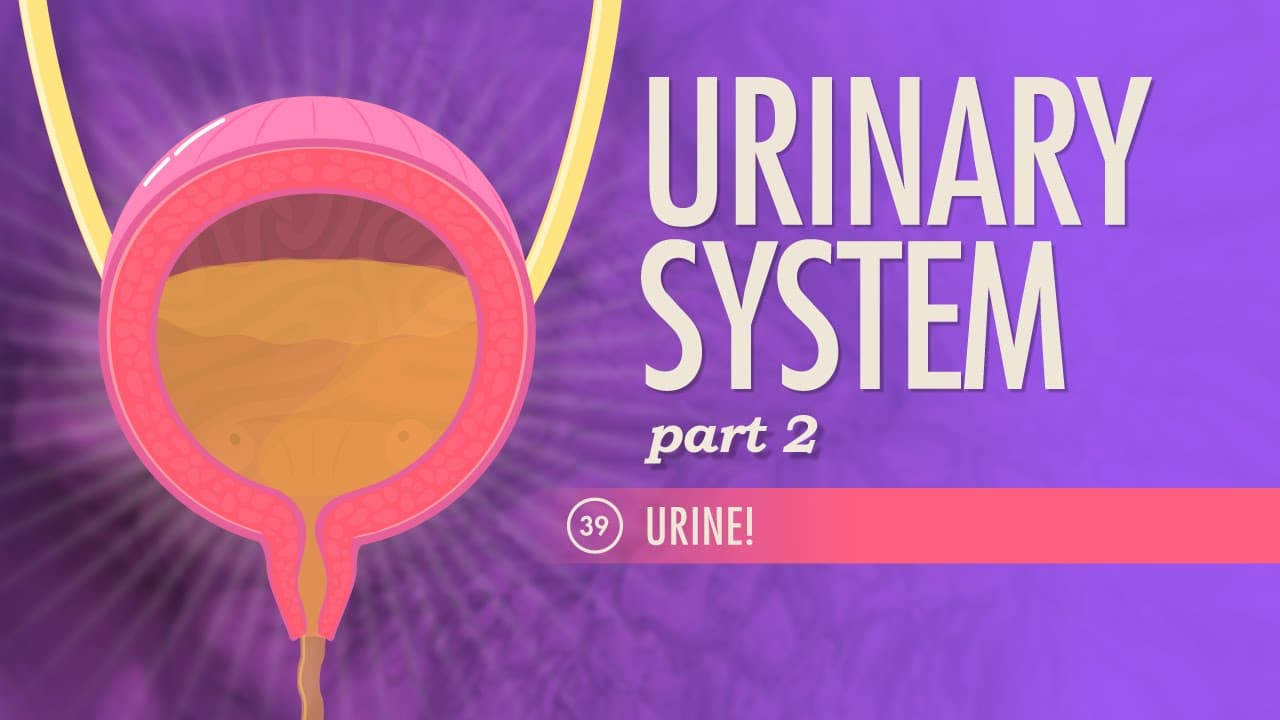
The urinary bladder is a hollow, collapsible sac that stores urine temporarily. Its wall comprises three layers, including an inner mucosa that allows expansion. As urine accumulates, the bladder expands from a triangular to a pear shape. When it's time to urinate, the bladder contracts, and urine passes through the urethra, controlled by the internal and external urethral sphincters, the latter being under voluntary control.
Q: What is the role of the ureters in urine transportation?
The ureters are muscular tubes that actively transport urine from the kidneys to the bladder. Unlike passive tubes, the ureters use peristalsis, a wave-like muscle contraction, to move urine efficiently. This process ensures that urine reaches the bladder regardless of body position, and valves prevent backflow, maintaining a one-way route for urine movement.
Q: How does the nervous system control urination?
The nervous system controls urination through the coordination of the autonomic nervous system and the pons in the brainstem. The pons contains the pontine storage area and the pontine micturition center, which manage urination by inhibiting or allowing the process. As the bladder fills, stretch receptors send signals to the brain, and the pons decides whether to store or release urine based on external conditions and bladder fullness.
Q: What are the potential health implications of urine analysis?
Urine analysis can reveal significant health information, such as the presence of glucose indicating diabetes, white blood cells suggesting a urinary tract infection, or proteins signaling pregnancy or potential heart failure. Analyzing urine's chemical composition, color, and clarity provides valuable insights into a person's health status and can aid in diagnosing and monitoring various medical conditions.
Q: Why is understanding the urinary system important?
Understanding the urinary system is crucial for diagnosing and managing health conditions related to urine production and excretion. Knowledge of how the kidneys, hormones, and nervous system regulate urine helps in identifying issues like dehydration, infections, and chronic diseases. It also informs lifestyle choices that impact urinary health, such as hydration and the consumption of substances like caffeine and alcohol.
Summary & Key Takeaways
-
The video explores the complexity of urine production and excretion, highlighting the roles of the kidneys, hormones, and the nervous system. It discusses the historical and modern significance of urine analysis in diagnosing medical conditions. The anatomy and physiology of the urinary system, including the ureters, bladder, and urethra, are detailed.
-
Hormones such as antidiuretic hormone (ADH) are explained in relation to their effect on urine concentration and frequency. The video also covers the glomerular filtration rate, a key process in urine production, and how the kidneys regulate it despite variations in blood pressure.
-
The nervous system's involvement in urination is discussed, focusing on the brainstem's pons which manages voluntary urination control. The video concludes by emphasizing the importance of understanding urinary system regulation for diagnosing medical conditions and maintaining overall health.
Read in Other Languages (beta)
Share This Summary 📚
Summarize YouTube Videos and Get Video Transcripts with 1-Click
Try YouTube Summary with ChatGPT & Claude or YouTube Transcript Generator
Explore More Summaries from CrashCourse 📚






Summarize YouTube Videos and Get Video Transcripts with 1-Click
Try YouTube Summary with ChatGPT & Claude or YouTube Transcript Generator