How to Edit YouTube Videos for Higher Retention
TL;DR
Improve viewer retention by matching each audience drop-off zone with a specific editing response: open a short curiosity loop, show the promised substance before lengthy context, and refresh attention throughout the middle. Fast payoffs build trust, while deliberate visual movement, varied footage, guided eye lines, and selective sound effects keep the screen active without creating exhausting, wall-to-wall stimulation.
Transcript
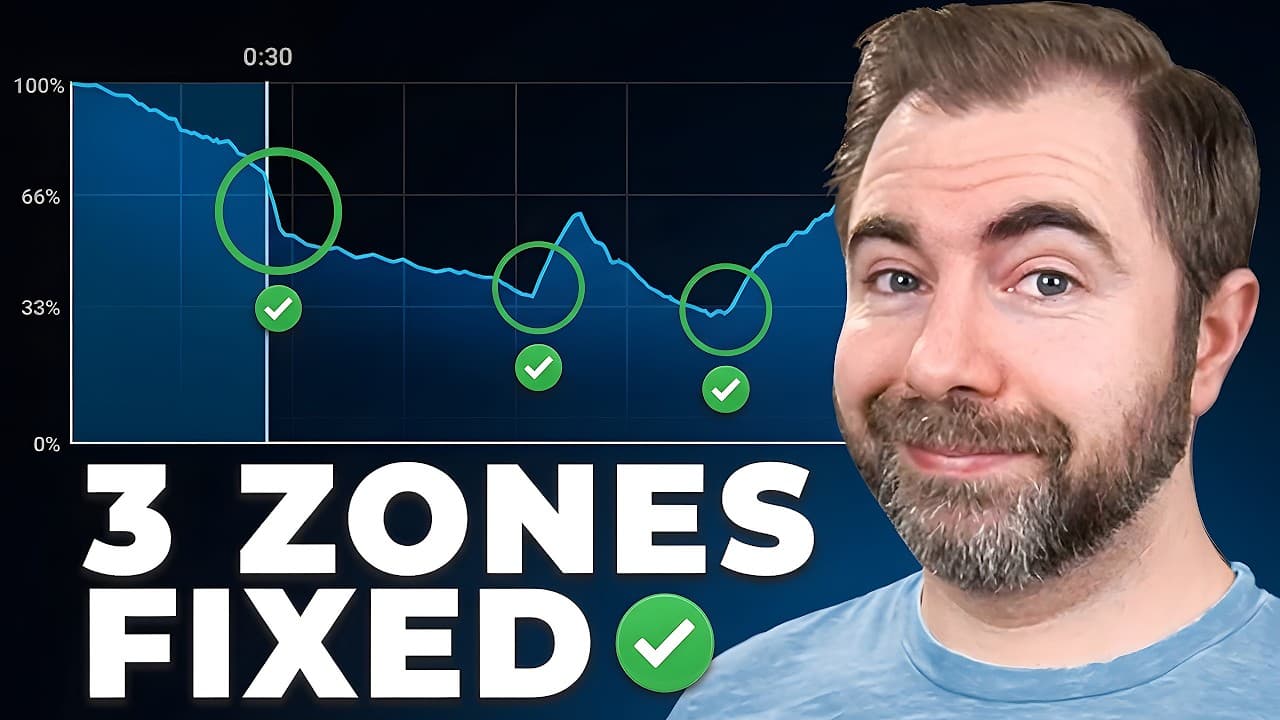
Your retention graph is probably losing viewers in three predictable zones. Altogether, they can look like one unavoidable decline, but they're actually three different problems, and each one has a specific edit that you can use to fix it. So, give me about 10 minutes, and I'll show you where each drop happens, how to spot it in your own graph, and... Read More
Key Insights
- Retention graphs are second-by-second indicators of audience response, with dips showing where viewers leave and spikes identifying moments they replay or find especially valuable. Creators can use these patterns to locate editing problems and recognize which formats or demonstrations deserve greater emphasis.
- Demonstrated value is a stronger retention tool than constant stimulation. Screen recordings, walkthroughs, and step-by-step demonstrations can create retention spikes because they show viewers the substance they clicked to receive instead of relying only on jump cuts, graphics, or faster delivery.
- The first 30 seconds are commonly the largest viewer-loss zone. Beginning louder and faster can create an unsustainable intensity spike, while a focused curiosity loop offers a more controlled way to secure attention and establish confidence in the promised payoff.
- A short loop works by raising a question and answering at least part of it quickly. An early payoff does not sacrifice retention, it builds trust by proving that the creator will deliver what the title and thumbnail led the viewer to expect.
- A visual hook can attract attention before any words are spoken. An unusual opening image, restrained push-in, held musical beat, and moment of near silence can raise a question even when autoplay begins with the viewer's sound turned off.
- Excessive setup is often a greater retention problem than detailed substance. Viewers clicked because they want to see something happen, so creators can begin mid-action or promise a near-term payoff, then introduce background, caveats, and context after earning attention.
- New curiosity loops should open every 60–90 seconds during the middle of a video. Introducing the next question before resolving the previous one keeps the narrative one step ahead of the audience while allowing each smaller promise to receive an individual payoff.
- Purposeful visual change keeps footage alive without making it frantic. Slow scaling, panning, animated still images, rotation among A-roll, B-roll, and motion graphics, controlled eye-line emphasis, and selective sound effects can renew attention at appropriate moments.
Install to Summarize YouTube Videos and Get Transcripts
Explore YouTube Video Summarizer or Get YouTube Transcript Extractor
Questions & Answers
Q: How can I improve YouTube audience retention?
Improve retention by treating audience loss as several location-specific problems instead of one unavoidable decline. Use the retention graph to find dips and spikes, open the video with a short curiosity loop, show the promised action before lengthy setup, and introduce new questions every 60–90 seconds. Keep visuals active with restrained movement, varied footage, and emphasis that directs the viewer's eyes.
Q: What do dips and spikes mean on a YouTube retention graph?
A dip marks a point where viewers left, while a spike identifies a moment that people replayed or considered worth revisiting. These signals help creators diagnose particular sections instead of guessing about the whole video. If demonstrations, screen recordings, or walkthroughs repeatedly create spikes, that pattern suggests the audience values seeing the process performed step by step.
Q: How should a YouTube video begin to retain viewers?
A strong opening should raise one clear question, create restrained visual movement, and use a held beat or brief near-silence to invite attention. The creator should then close a small loop quickly by delivering part of the answer. This early payoff builds trust and confirms that the video will fulfill the promise communicated through its title and thumbnail.
Q: Why should creators answer an opening question quickly?
A quick answer demonstrates reliability rather than giving viewers a reason to leave. When a creator raises a question and supplies a meaningful payoff within a few seconds, the audience sees that the video will not delay substance merely to increase watch time. That earned trust can help retain attention through later explanations, context, and larger unresolved questions.
Q: Why does too much setup cause viewers to leave?
Too much setup delays the substance that motivated the click. Viewers generally want to see a person perform, test, explain, or reveal the promised thing, but creators often frontload background, caveats, and context before earning trust. A better structure begins with action or a credible promise, then introduces the necessary background after viewers have decided to continue watching.
Q: How can talking-head footage maintain visual momentum?
Talking-head footage can gain momentum through a cut in and cut back. The cut in moves closer on an important word or phrase, signaling that viewers should pay attention, while the cut back restores the wider composition. During explanations, creators can also replace narration-only shots with footage of the actual action the audience came to see.
Q: How often should a video open a new curiosity loop?
A new curiosity loop can be opened every 60–90 seconds during the middle of the video, where attention may begin to drift. The next question should appear before the current loop fully closes, leaving the narrative consistently one open question ahead of the audience. Each smaller loop still needs a payoff so that curiosity continues to build trust.
Q: How can editors keep visuals active without overstimulating viewers?
Editors can use slow, deliberate movement instead of continuous graphics and effects. A gradual push-in can build tension, a pullout can support a reveal, and a gentle pan can prevent a shot from feeling lifeless. Still images can scale by about 15–20 percent while visible, and footage can rotate among A-roll, B-roll, and motion graphics.
Summary & Key Takeaways
-
Viewer retention graphs reveal how audiences respond second by second: dips mark departures, while spikes indicate moments people value or replay. For an education channel, spikes often appear during demonstrations, screen recordings, and walkthroughs. The central editing principle is therefore to deliver useful substance, because genuine value can hold attention more effectively than constant jump cuts.
-
The first 30 seconds often produce the largest audience decline. A strong opening raises a clear question, uses a visual that creates curiosity, adds restrained movement, and provides a quick partial payoff. Closing a small loop early demonstrates that the title and thumbnail promise will be honored, earning trust for the remaining video.
-
Later retention improves when creators show the desired action before adding extensive background, open fresh loops every 60–90 seconds, and vary the screen deliberately. Slow pushes, pullouts, pans, animated stills, A-roll, B-roll, motion graphics, visual emphasis, and matched sound effects can maintain energy without overwhelming viewers with continuous noise.
Read in Other Languages (beta)
Share This Summary 📚
Summarize YouTube Videos and Get Video Transcripts with 1-Click
Try YouTube Summary with ChatGPT & Claude or YouTube Transcript Generator
Explore More Summaries from vidIQ 📚


Summarize YouTube Videos and Get Video Transcripts with 1-Click
Try YouTube Summary with ChatGPT & Claude or YouTube Transcript Generator