How Can We Make Deep Learning Interpretable for Genomics?
TL;DR
Deep learning models can be made interpretable for genomics by using approaches like the DeepLift method, which analyzes neuron contributions to provide importance scores for individual bases. This allows researchers to identify significant motifs and predict transcription factor binding, enhancing our understanding of complex genomic sequences.
Transcript
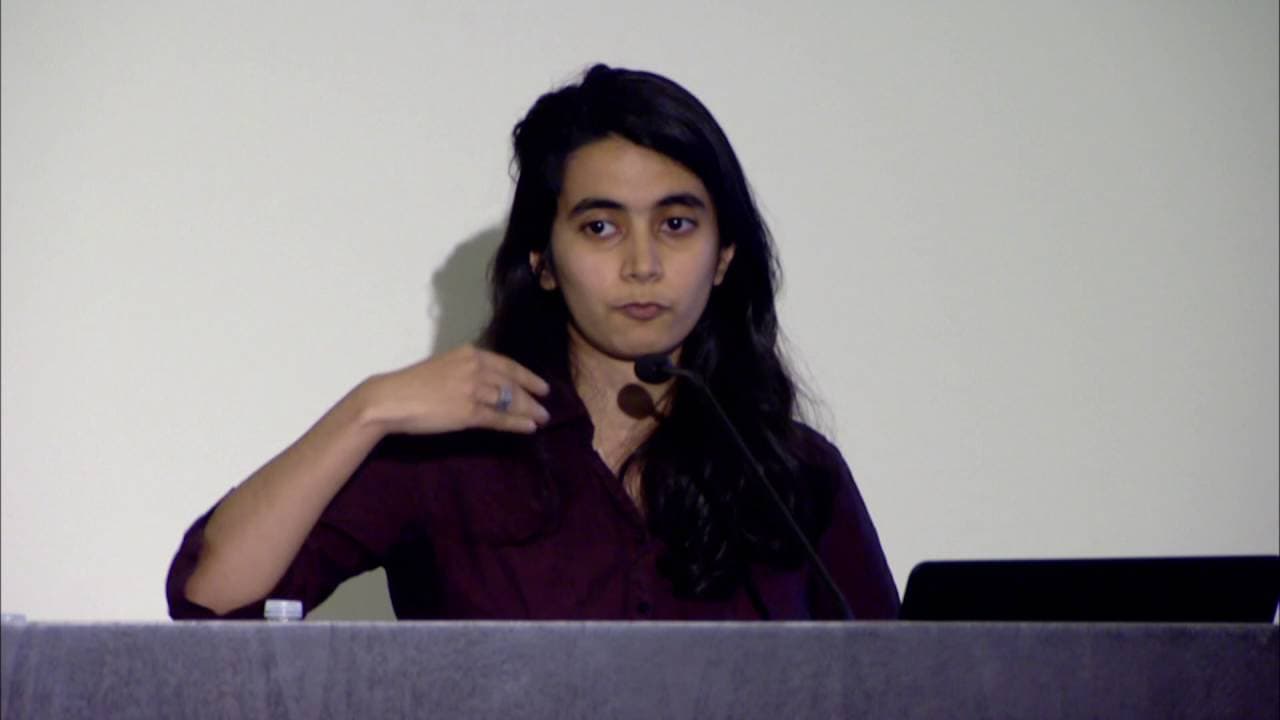
thanks for the introduction just waiting for the slides to come up but in the meantime I have a lot of materials so I'll just say that yeah thank you for the introduction so what I'm going to show you is methods that we've been developing in the Kindle app to take deep learning models which are traditionally these very powerful models that are just... Read More
Key Insights
- 🖤 Traditional deep learning models are considered black box predictors in genomics, but methods like deep lift can make them interpretable.
- 🧑🏭 Deep learning models can be adapted for genomic analysis, where they can predict transcription factor binding from DNA sequence data.
- 👻 The deep lift method provides importance scores for individual bases or neurons in the network, allowing for the discovery of important motifs and patterns.
- 🏋️ Deep lift's analysis can help identify heterogeneous sequences, sequence grammars, and homotypic or heterotypic binding patterns in genomics.
- 💁 By analyzing neuron contributions, deep lift can provide precise information on where binding may occur, boosting positional accuracy in genomics.
- 💯 Deep lift can also be used to analyze contact-specific reuse of regulatory motifs, providing context-specific importance scores.
- 🥺 Deep learning models can be made more interpretable by analyzing the contributions of individual neurons and motifs, leading to a better understanding of the underlying biological mechanisms.
Install to Summarize YouTube Videos and Get Transcripts
Explore YouTube Video Summarizer or Get YouTube Transcript Extractor
Questions & Answers
Q: How do deep learning models traditionally work in image classification?
Deep learning models consist of multiple layers of artificial neurons that work together to describe patterns in images. Each layer of neurons picks out increasingly complex features, such as edges and shapes, to classify images.
Q: How can deep learning models be adapted for genomics?
In genomics, deep learning models can be used to predict transcription factor binding. The models take DNA sequence data and represent it as an image, allowing for the application of deep learning techniques from computer vision.
Q: How can deep learning models be made interpretable in genomics?
The deep lift method, or linear importance feature tracker, can provide scores for individual bases or neurons within the network, allowing for the interpretation of which motifs and patterns are important. Contributions of neurons in the network can be recursively analyzed to understand their role in the prediction.
Q: How does the deep lift method compute importance scores efficiently?
Unlike other methods like in silico mutagenesis, which require multiple perturbations and predictions, deep lift takes a single forward and backward path through the network, making it more computationally efficient. The method provides a linear breakdown of the contribution of each input to its immediate outputs.
Summary & Key Takeaways
-
Deep learning models are traditionally used for image classification but can also be adapted for genomics, where they can be used to predict transcription factor binding.
-
The interpretability of deep learning models can be improved by analyzing the contributions of individual neurons and motifs within the network.
-
The deep lift method, a linear feature tracker, can provide predictive importance scores for individual bases or neurons within the network, allowing for the identification of important motifs and patterns in genomic sequences.
Read in Other Languages (beta)
Share This Summary 📚
Summarize YouTube Videos and Get Video Transcripts with 1-Click
Try YouTube Summary with ChatGPT & Claude or YouTube Transcript Generator
Explore More Summaries from Stanford 📚

Summarize YouTube Videos and Get Video Transcripts with 1-Click
Try YouTube Summary with ChatGPT & Claude or YouTube Transcript Generator