Special Relativity | Lecture 4
Transcript
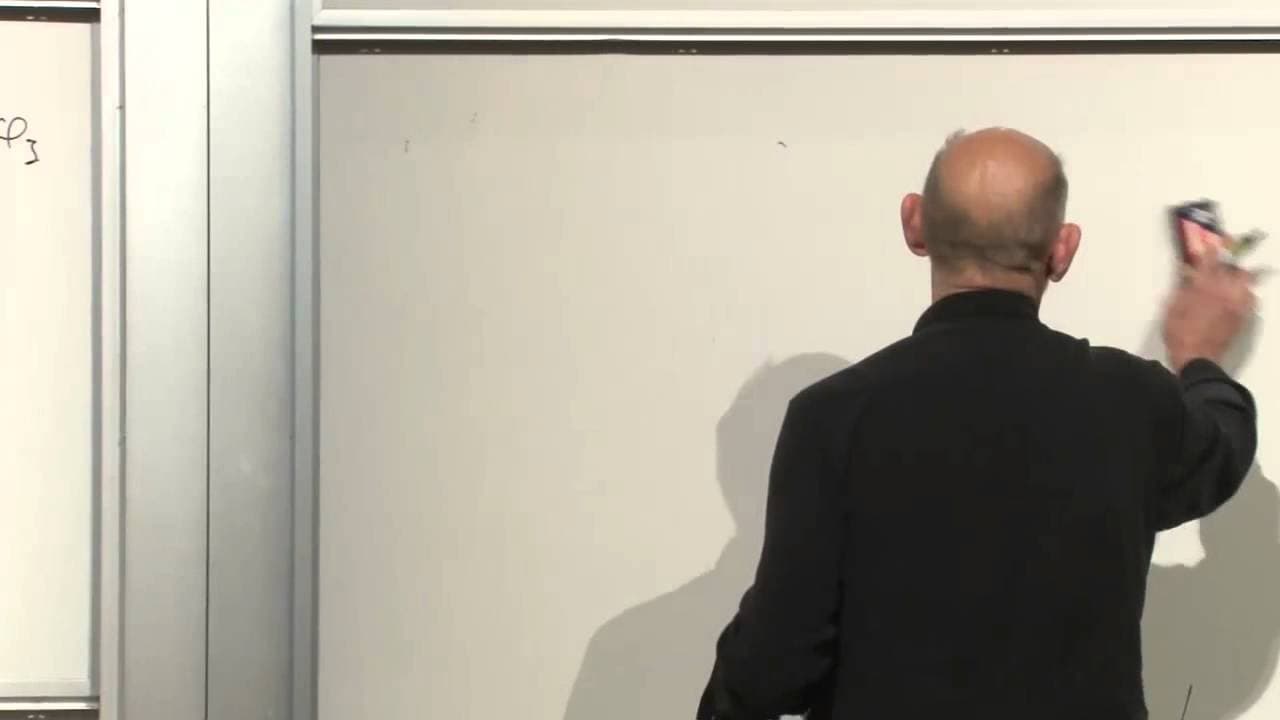
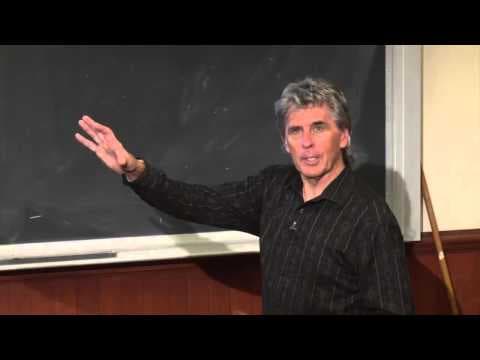
Stanford University today we'll go we studied particles last time the action for particles we compared it with nonrelativistic physics today we're gonna study fields fields have you taken all of that down well begin studying field theory not quantum field theory but classical field theory from time to time I might look at an equation and say you kn... Read More
Install to Summarize YouTube Videos and Get Transcripts
Explore YouTube Video Summarizer or Get YouTube Transcript Extractor
Summary
This video introduces the concept of classical field theory, which is different from quantum field theory, and focuses on the study of fields in the context of space and time. The professor explains that fields are observable quantities that vary across space and time, and provides examples such as temperature and wind velocity. The professor then discusses the action principle, which is a powerful principle that governs the behavior of fields, similar to how it governs the behavior of particles in classical mechanics. The action principle states that the trajectory or configuration of the field that minimizes the action is the one that describes its behavior. The professor also introduces the Lagrangian, which is a function that characterizes the field's behavior within a certain region of space and time. The Lagrangian depends on the field and its derivatives with respect to time and space. By minimizing the action, the professor explains that the equations of motion for the field can be derived, similar to the Euler-Lagrange equations in classical mechanics.
Questions & Answers
Q: What is classical field theory?
Classical field theory is the study of fields in the context of space and time, where fields are observable quantities that vary across space and time.
Q: Can you provide examples of fields?
Some examples of fields include temperature, which varies across space and time, and wind velocity, which also varies in direction and magnitude across space and time.
Q: What is the action principle?
The action principle is a powerful principle that governs the behavior of fields, similar to how it governs the behavior of particles in classical mechanics. It states that the trajectory or configuration of the field that minimizes the action is the one that describes its behavior.
Q: What is the Lagrangian?
The Lagrangian is a function that characterizes the behavior of the field within a certain region of space and time. It depends on the field and its derivatives with respect to time and space.
Q: How can the equations of motion for the field be derived?
By minimizing the action, the equations of motion for the field can be derived, similar to the Euler-Lagrange equations in classical mechanics. These equations describe the behavior of the field in space and time.
Q: Does classical field theory involve relativity?
Classical field theory can involve relativity, but it can also be studied without considering relativity. The relativity comes into play when considering the behavior of the field in terms of space-time dimensions.
Q: How do fields in classical field theory vary across space and time?
Fields in classical field theory vary across space and time by having different values at different points in space and different points in time. This variation can be described by the field's dependence on space and time coordinates.
Q: Can fields in classical field theory have more than one component?
Yes, fields in classical field theory can have more than one component. For example, a vector field has multiple components, while a scalar field only has one component.
Q: How does the action principle relate to the behavior of fields in classical field theory?
The action principle states that the trajectory or configuration of the field that minimizes the action is the one that describes its behavior. By minimizing the action, the equations of motion for the field can be determined.
Q: What is the bridge between classical field theory and quantum field theory?
The bridge between classical field theory and quantum field theory is the study of fields as they relate to the behavior of particles. Quantum field theory builds upon classical field theory and incorporates the principles of quantum mechanics.
Read in Other Languages (beta)
Share This Summary 📚
Summarize YouTube Videos and Get Video Transcripts with 1-Click
Try YouTube Summary with ChatGPT & Claude or YouTube Transcript Generator
Explore More Summaries from Stanford 📚

Summarize YouTube Videos and Get Video Transcripts with 1-Click
Try YouTube Summary with ChatGPT & Claude or YouTube Transcript Generator