James Reinhart on ThredUP and Thrifting with Guy Raz | How I Built This | NPR
TL;DR
ThredUP remained resilient during the pandemic because its online model, affordable secondhand inventory, and established remote-work practices matched changing consumer needs. Demand initially contracted as shoppers prioritized groceries, but sales steadily recovered, while a surge of closet cleanouts created the operational challenge of safely processing incoming clothing across distribution centers.
Transcript
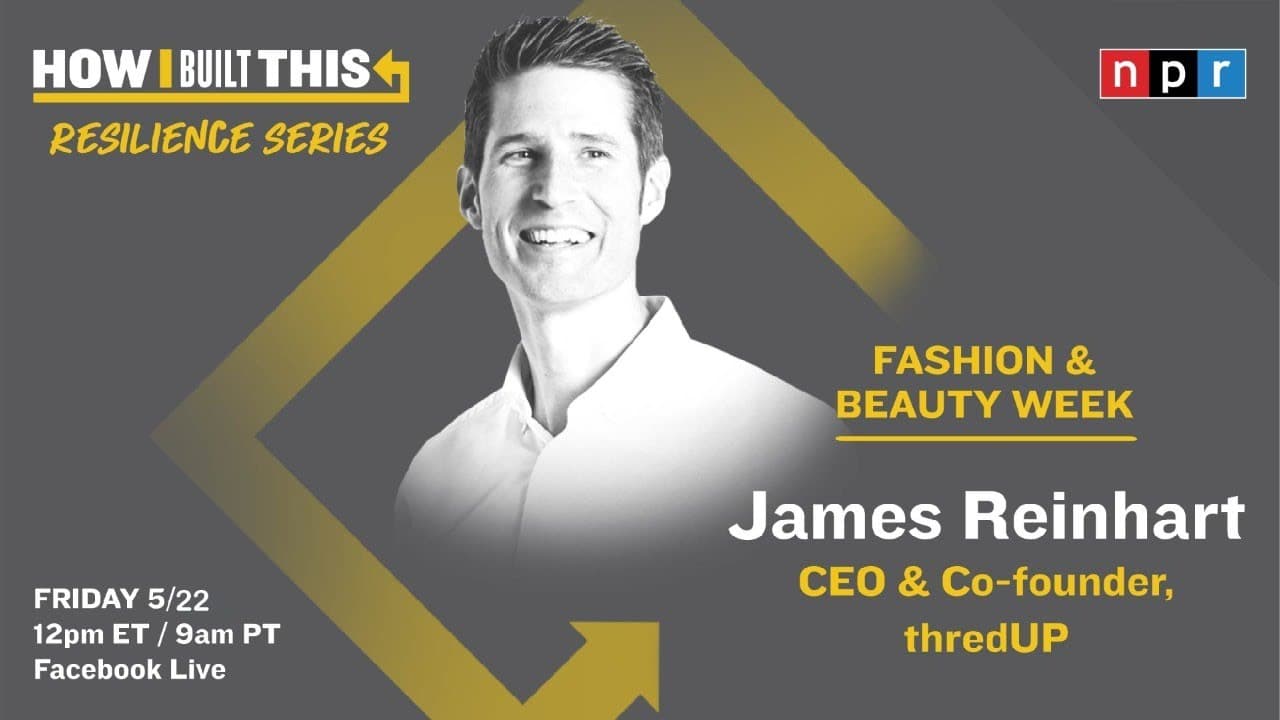
Hello everyone and welcome to How Built This: Resilience Edition. how is everybody doing? as you know all this week we've been talking fashion and beauty here on the show and we are taking your questions right now on Twitter Facebook and YouTube for James Reinhardt of thread up thread up is the world's largest online thrift store and consignment s... Read More
Key Insights
- ThredUP is an online thrift store and consignment business that primarily sells secondhand clothing for women and children, allowing customers to send unwanted closet items to the company for evaluation, processing, and possible resale.
- Affordable pricing supported ThredUP’s resilience because customers facing economic uncertainty could still justify a low-cost top or children’s garment even when they were reluctant to purchase a much more expensive item from another retailer.
- Sales initially contracted when pandemic uncertainty caused consumers to prioritize groceries, but the business later experienced a steady recovery and continued growing compared with the prior year, although it remained below its original plan.
- Closet cleanouts created a large surge in incoming clothing because people spending more time at home reviewed what they owned and decided to send away items they no longer needed, creating additional inventory and processing demands.
- Distribution-center management was the company’s hardest operational challenge because leaders had to keep employees safe, interpret different regional guidelines, and maintain clear communication while facilities processed large volumes of submitted clothing at reduced capacity.
- Physical distancing was manageable inside ThredUP’s large facilities because workers were already spaced apart, while varying government rules, employee childcare needs, and other personal circumstances created more significant constraints on staffing and operating speed.
- Previous remote-work experience prepared ThredUP’s office employees for shelter-in-place conditions because the company had practiced working from home regularly, giving its teams established habits for continuing operations outside the office.
- Permanent remote work may weaken community and company culture because Reinhart believes shared workplaces help create teams and attract employees, even though working from home may lead some people to reconsider living in expensive employment centers.
Install to Summarize YouTube Videos and Get Transcripts
Explore YouTube Video Summarizer or Get YouTube Transcript Extractor
Questions & Answers
Q: How did ThredUP remain resilient during the pandemic?
ThredUP benefited from being an online-only retailer with affordable secondhand products. Sales contracted when uncertainty pushed consumers toward groceries, but demand then recovered steadily. Reinhart attributed this resilience primarily to the value offered to customers. Shoppers hesitant to buy an expensive dress could still consider a low-cost top that made them feel good without requiring a large discretionary purchase.
Q: Why did customers send more clothing to ThredUP?
People spending more time at home began sorting through their closets and identifying clothing they no longer needed. That behavior produced a large surge in submissions through ThredUP’s closet cleanout process. The influx was positive for inventory and encouraged a different approach to unwanted clothing, but it also created the difficult operational task of receiving, evaluating, and processing all those items.
Q: How does ThredUP's clothing resale process work?
Customers receive a closet cleanout bag, fill it with clothing they no longer want, and send it to ThredUP. The company’s distribution centers then sort through the submitted garments to determine what can be resold. Because a large volume of clothing must be evaluated and processed, increased submissions can create a substantial backlog even when customer interest and inventory supply are strong.
Q: What challenged ThredUP's distribution centers most?
The central challenge was managing people safely while responding to different government guidelines across the regions where facilities operated. The buildings were large and employees were spaced apart, so physical distancing itself was not the primary problem. Management instead had to address regulatory differences, communicate with workers, accommodate childcare and family obligations, and operate with fewer available employees.
Q: Why did affordable pricing help ThredUP recover?
Affordable secondhand clothing fit a period when consumers felt uncertain about their economic futures. Reinhart argued that a shopper might avoid an expensive dress while remaining comfortable purchasing a modestly priced top. ThredUP’s value proposition therefore allowed some discretionary spending to continue, and its online-only model removed the need for customers to visit physical retail stores during the crisis.
Q: How did ThredUP prepare employees for remote work?
ThredUP’s office teams had already practiced working from home regularly before shelter-in-place rules took effect. Reinhart reminded employees that they had been preparing for a broader remote transition through those established routines. That prior experience helped the team rally around the belief that it was better prepared than many organizations, although full-time remote work still created different demands from occasional home working.
Q: Why did ThredUP reduce its office workweek?
The company introduced a furlough that reduced the office schedule to a shorter workweek. The decision helped rationalize expenses, but it also gave employees additional time to handle responsibilities outside work. Reinhart specifically connected the extra day with the pressure facing parents who were simultaneously managing their jobs, children, household demands, and the disruption caused by widespread closures and remote routines.
Q: Why was James Reinhart skeptical of permanent remote work?
Reinhart believed broad declarations about working from home forever were premature. In his view, employees join companies partly for community, culture, teamwork, and personal connection, all of which can be harder to build from separate home offices. He acknowledged that remote work could prompt questions about living near major employment centers, but argued that people choose cities for lifestyle reasons as well as jobs.
Summary
In this video, James Reinhardt, the founder of thredUP, discusses how his business has been impacted by the COVID-19 crisis. He talks about the challenges his company has faced, from ensuring the safety of employees at distribution centers to adapting to changing consumer behaviors. James also discusses how thredUP is remaining resilient during this time and the importance of sustainability in the fashion industry.
Questions & Answers
Q: How has thredUP been impacted by the COVID-19 crisis, and what challenges have you faced?
During the crisis, thredUP has seen a surge in people sending in their clothing to sell, as people have been cleaning out their closets while staying at home. However, this surge has created a challenge in processing all of the clothes. Additionally, thredUP has faced the challenge of keeping their employees safe at the distribution centers and navigating the various guidelines and regulations across different regions.
Q: Have you had to lay off any employees as a result of the crisis?
thredUP has only had to do a small handful of layoffs, and they implemented a furlough a couple of months ago to reduce hours. The main challenge has been ensuring the safety and well-being of the employees at the distribution centers while still abiding by the guidelines. Managing through the complexity of the situation has been the most challenging part for thredUP.
Q: Has there been an increase in people sending clothing to thredUP during this time?
Yes, thredUP has seen a huge surge in people sending in their clothing during the COVID-19 crisis. With people spending more time at home and cleaning out their closets, there has been a higher volume of clothing being sent in for resale. This surge has been great for thredUP, but it has also posed challenges in processing all of the items.
Q: How are the distribution centers operated during this time?
The distribution centers are laid out in a way that allows for social distancing and the safety of employees. The challenge comes from managing the complexity of the shelter-in-place regulations and guidelines, as they vary across different regions. thredUP has had to navigate these differences to ensure the safety of their employees while still operating at a reduced rate.
Q: How have sales been affected by the crisis?
Initially, there was a contraction in sales during the mid to late March period when people were uncertain about the situation. However, thredUP has seen a steady recovery since then and the business is doing well overall. While they may not be at the expected level, thredUP is still experiencing double-digit growth. The affordability and value that thredUP offers to consumers have contributed to their resilience during this time.
Q: How does thredUP handle clothing that is not suitable for resale?
thredUP rejects about half of the clothing they receive due to quality reasons. They work with domestic thrift stores to recycle some of the rejected items. Additionally, there is a repurposed market where companies use the clothing to create things like rags. The goal is to ensure that nothing ends up in a landfill and to promote sustainability and reuse.
Q: Why should someone choose to send their clothes to thredUP instead of donating them to organizations like Salvation Army?
While donating clothes to organizations like Salvation Army may offer a tax write-off, most people choose to send their clothes to thredUP because of the convenience and simplicity. thredUP offers free pick-up of clothing and provides an easy way to get rid of items cluttering up their homes. Additionally, thredUP gives customers the option to donate their proceeds to charities through their platform.
Q: Does thredUP sell men's clothing?
Currently, thredUP does not sell men's clothing. The market for men's clothing is different, as men tend to wear the same things repeatedly and wear out their clothes at a higher rate. thredUP primarily focuses on women's and children's clothing.
Q: How are you keeping your teams running efficiently during this time of remote work?
Prior to the crisis, thredUP already had work-from-home days twice a week, which helped in transitioning to full-time remote work. However, thredUP also implemented a furlough, reducing the workweek to four days to provide employees with more flexibility, especially for those with children. The transparency of the organization and maintaining a sense of trust among the employees have also played a key role in keeping things running smoothly.
Q: How are you thinking about reaching consumers and marketing during this time when physical marketing is limited?
thredUP is being creative with its messaging and utilizing the assets it has, such as the clothing it sells. They have launched campaigns like "Choose Used" and "Closet of Celebrities," where they repurpose clothing and partner with influencers and celebrities to promote reuse and sustainability. By leveraging partnerships with retailers like JC Penney and Macy's, thredUP can utilize their large distribution networks to reach a wider audience.
Takeaways
The COVID-19 crisis has presented both challenges and opportunities for thredUP. While the surge in clothing sent for resale has been positive, processing the increased volume has posed a challenge. Safety measures at distribution centers and navigating guidelines across different regions have been complex. Sales have seen a steady recovery, attributed to thredUP's affordability and value proposition. The company remains focused on sustainability and is creatively marketing its message through partnerships and campaigns. As a leader, James Reinhardt has prioritized providing perspective, maintaining transparency, and guiding his team through these difficult times. In the long term, thredUP aims to separate itself from competitors and continue making a positive impact on the fashion industry.
Summary & Key Takeaways
-
ThredUP entered the pandemic with an online-only resale model focused mainly on secondhand clothing for women and children. After an initial sales contraction, demand steadily recovered as economically uncertain shoppers sought affordable discretionary purchases. The company’s low average prices helped it perform better than many fashion peers during the crisis.
-
Closet cleanouts produced a major increase in clothing submissions, but processing that inventory became difficult. Distribution centers operated at reduced capacity while management addressed varying regional regulations, employee safety concerns, childcare responsibilities, and other personal constraints. Facilities were physically spacious, so regulatory and workforce complexity presented greater challenges than distancing itself.
-
ThredUP had practiced remote work before shelter-in-place orders, which made the transition easier for its office teams. The company also reduced the workweek through a furlough, helping control expenses and giving employees more time for family responsibilities. Reinhart nevertheless questioned permanent remote work because workplace community, culture, and collaboration remain valuable.
Read in Other Languages (beta)
Share This Summary 📚
Summarize YouTube Videos and Get Video Transcripts with 1-Click
Try YouTube Summary with ChatGPT & Claude or YouTube Transcript Generator
Explore More Summaries from NPR 📚





Summarize YouTube Videos and Get Video Transcripts with 1-Click
Try YouTube Summary with ChatGPT & Claude or YouTube Transcript Generator