How to Optimize Learning with Science-Based Tools
TL;DR
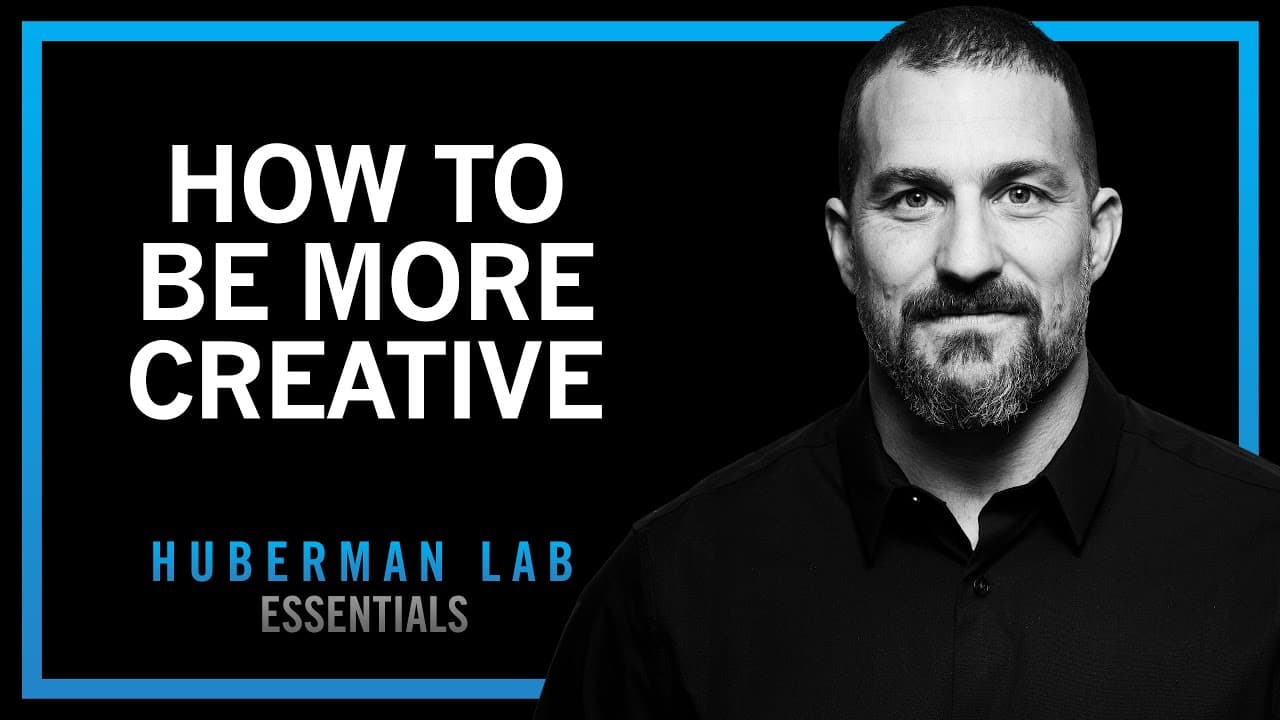
Neuroplasticity allows the brain to change itself through conscious effort, unlike other organs. To optimize learning and creativity, align with natural rhythms and use specific tools like sunlight, delayed caffeine, and exercise. Creativity involves both exploration and implementation, requiring different states of alertness. Tailor strategies to your biological rhythms for improved focus and productivity.
Transcript
welcome to hubman lab Essentials where we revisit past episodes for the most potent and actionable science-based tools for mental health physical health and performance my name is Andrew huberman and I'm a professor of neurobiology and Opthalmology at Stanford School of Medicine let's talk about neuroplasticity more specifically let's talk about ho... Read More
Key Insights
- Neuroplasticity is the brain's ability to change itself through conscious effort.
- Short-term plasticity involves temporary changes, like using caffeine for alertness.
- Medium-term plasticity involves learning skills for temporary use, like navigating a new city.
- Long-term plasticity involves permanent changes, like learning a new language.
- Morning sunlight exposure and delayed caffeine intake enhance alertness.
- Exercise early in the day boosts energy and sets a neurochemical context for focus.
- Creativity involves two stages: exploration and implementation, requiring different alertness levels.
- Align daily activities with biological rhythms to optimize learning and creativity.
Install to Summarize YouTube Videos and Get Transcripts
Explore YouTube Video Summarizer or Get YouTube Transcript Extractor
Questions & Answers
Q: How does neuroplasticity differ from other organ functions?
Neuroplasticity is unique to the brain as it allows the nervous system to change itself through conscious thought and feedback, unlike other organs like the liver or spleen which cannot consciously direct changes. This ability enables the brain to adapt and optimize itself for better performance and learning.
Q: What are the different types of neuroplasticity?
Neuroplasticity is categorized into short-term, medium-term, and long-term. Short-term plasticity involves temporary changes for immediate needs, medium-term plasticity involves learning skills for temporary use, and long-term plasticity involves permanent changes, such as acquiring a new language or skill.
Q: Why is morning sunlight exposure important?
Morning sunlight exposure is crucial because it helps reset the circadian clock, enhances alertness, and prepares the brain for optimal performance throughout the day. It triggers the release of cortisol, which wakes us up, and sets the stage for improved focus and learning.
Q: How does delaying caffeine intake affect alertness?
Delaying caffeine intake for about two hours after waking allows the natural adenosine system to clear, enhancing the effectiveness of caffeine later in the morning. This strategy helps maintain natural alertness and leverages caffeine to boost focus and energy when it's most needed.
Q: Why is early morning exercise beneficial?
Early morning exercise is beneficial because it triggers the release of epinephrine and other neuromodulators, increasing arousal and mental acuity. This sets a neurochemical context for enhanced focus and energy, making it easier to engage in productive activities throughout the day.
Q: What are the two stages of creativity?
Creativity involves two stages: exploration and implementation. Exploration is the creative discovery mode where ideas are freely shuffled and rearranged in novel ways. Implementation is the linear mode where ideas are concretely developed. These stages require different states of alertness and focus.
Q: How can biological rhythms be optimized for learning?
Biological rhythms can be optimized by aligning activities with natural alertness and sleep patterns. Morning sunlight and exercise enhance alertness, while evening light exposure helps regulate the sleep-wake cycle. Tailoring tasks to these rhythms improves focus, learning, and creativity.
Q: What role do food and hydration play in brain optimization?
Food and hydration play crucial roles in brain optimization. Hydration prevents headaches and enhances focus, while meal composition affects alertness. Low carbohydrate meals promote alertness, while carbohydrate-rich meals facilitate calmness and sleepiness, aligning with the body's needs at different times of the day.
Summary & Key Takeaways
-
Neuroplasticity enables the brain to change itself, unlike other organs. Aligning with natural rhythms and using tools like sunlight and delayed caffeine intake can optimize learning and creativity. Creativity involves exploration and implementation, requiring different alertness levels.
-
Short-term plasticity involves temporary changes for immediate needs, while medium-term plasticity is for skills needed only temporarily. Long-term plasticity focuses on permanent changes. Morning sunlight and delayed caffeine intake enhance alertness, while early exercise boosts energy.
-
Aligning daily activities with biological rhythms, such as timing creative work during relaxed states and implementing strategies during alert states, optimizes learning and creativity. Tailoring strategies to individual biological rhythms improves focus and productivity.
Read in Other Languages (beta)
Share This Summary 📚
Summarize YouTube Videos and Get Video Transcripts with 1-Click
Try YouTube Summary with ChatGPT & Claude or YouTube Transcript Generator
Explore More Summaries from Andrew Huberman 📚


Summarize YouTube Videos and Get Video Transcripts with 1-Click
Try YouTube Summary with ChatGPT & Claude or YouTube Transcript Generator