How to Build Intentional Agentic Design Workflows
TL;DR
Start agentic design work with clarified intent and precise context, because AI accelerates execution but does not create clarity. Design systems, reusable components, Code Connect, and Figma’s MCP server can translate specifications into production terms, helping agents produce leaner, more complete code with less manual cleanup and lower AI usage.
Transcript
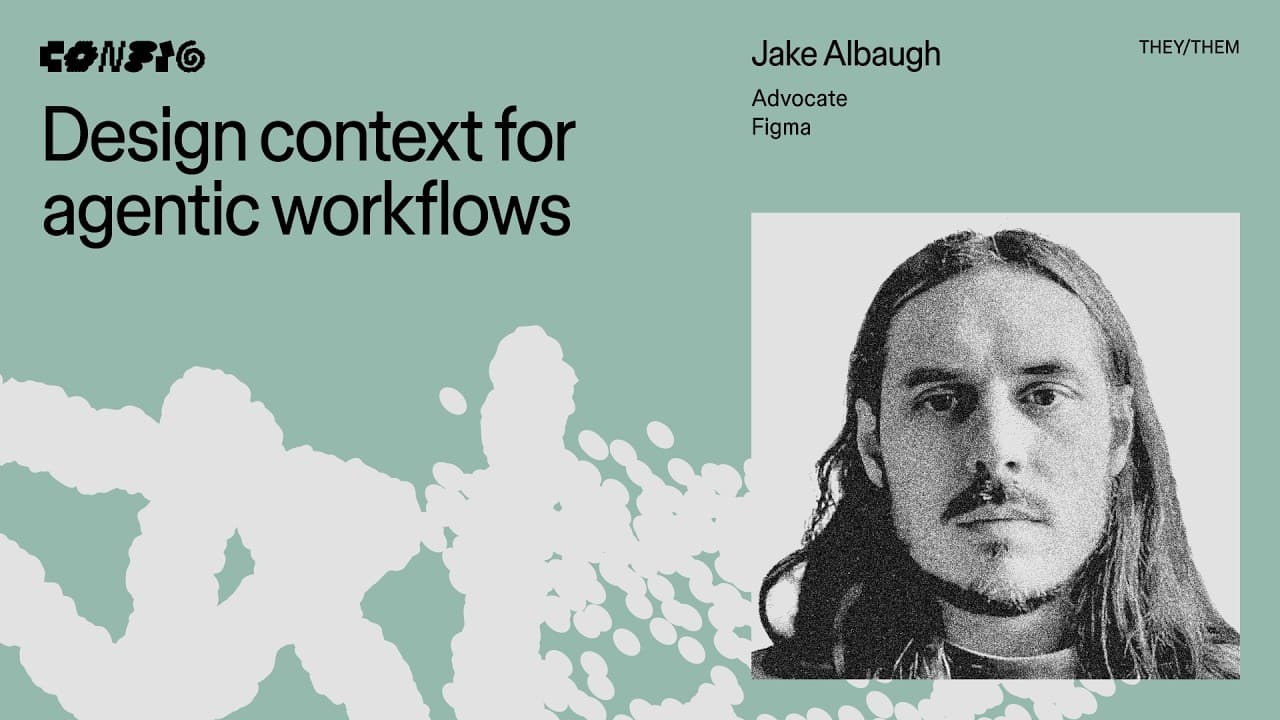
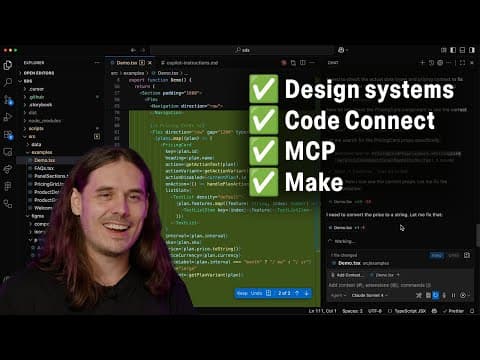
How's it going everyone? Doing good? Today we're going to be talking about the importance of good design context. We're going to see this across design systems, Figma's MCP server and design agent, code connect, make, and even FigJam. It's a lot to cram into 30 minutes, but before we dive in, let's align on why any of this is worthwhile. Good thing... Read More
Key Insights
- Clarified intent is the foundation of successful agentic work because AI accelerates execution rather than clarity. When teams begin with an unclear target, faster generation merely produces more output without ensuring that the result solves the right problem or represents a distinct point of view.
- Cognitive surrender is the adoption of an LLM’s judgment as one’s own, which removes the burden of validation and weakens independent consideration. It can arise from doubts about personal ideas, fear of falling behind, or a desire to fit into rapidly changing AI practices.
- Polished output is not evidence of thoughtful design because an LLM can create high-fidelity results without considering the surrounding problem. Historically, reaching polish required many decisions, but generated polish can be built from averages and omit important factors that have not yet been examined.
- The biggest design risk is shipping the wrong thing, not merely producing code inefficiently. A productive process first explores what could exist, then converges on what should exist, and finally translates that intent into what does exist in production.
- Design systems are a precise language that compresses intent into reusable structures. Tokens can encode related modes, while components can encapsulate appearance and interaction behavior, allowing a short component reference to communicate more useful information than a long collection of isolated raw values.
- Design is a specification rather than only a preview, and spec-driven development improves work with LLMs. A useful design specification precisely identifies intended components, content, states, and relationships so an agent can translate decisions into production while preserving the designer’s intent.
- Code Connect provides production component context through Figma’s MCP server. Its templates can specify the correct code component, supply representative labels or structured data, and stub event handlers so the agent understands that generated code still requires application-specific logic.
- Precise agent context produces leaner results than verbose visual descriptions. When reusable elements are expressed in production terms, agents can write more of the shippable implementation, generate less total code, require less human completion, use less AI, and create less technical debt.
Install to Summarize YouTube Videos and Get Transcripts
Explore YouTube Video Summarizer or Get YouTube Transcript Extractor
Questions & Answers
Q: Why does clarified intent matter in agentic design workflows?
Clarified intent gives an agent a meaningful target before execution begins. AI can rapidly generate polished artifacts, but it cannot independently supply the judgment that determines what should exist. By investing in consideration first, teams can explore possible directions, converge on the right outcome, and reduce the risk of efficiently building and shipping the wrong thing.
Q: What is cognitive surrender when working with an LLM?
Cognitive surrender occurs when a person adopts an LLM’s judgment as their own and stops doing the validation required to form a distinct point of view. It may feel easier because it reduces the immediate burden of consideration, but it can cause creators to wait for generated clarity instead of examining their own goals, ideas, and convictions.
Q: Why can polished AI output lead designers in the wrong direction?
Polished AI output can appear considered even when the system lacks essential context about the problem. People have learned to associate visual fidelity with careful decision-making, yet an LLM can generate that fidelity from averages. The apparent completeness can seduce a team into accepting a direction that differs from the result they would reach through deliberate exploration.
Q: How should teams move from an idea to a production outcome?
Teams should begin by pursuing what could exist through divergent thinking, then collaborate to refine their intent and decide what should exist. That decision becomes a specification that guides execution into what does exist in production. The process preserves room for exploration while making the later translation from design intent to working software more efficient and reliable.
Q: How do design systems improve the context given to AI agents?
Design systems express intent through precise, reusable language. Tokens can represent connected values such as light and dark modes, while components can encapsulate appearance, structure, and interactive behavior. Instead of sending an agent many disconnected visual details, teams can reference established system concepts that communicate more information in less space and better reflect production decisions.
Q: How does Code Connect help agents translate Figma designs into code?
Code Connect supplies production component context through Figma’s MCP server. A template can identify the component an agent should import, describe how properties or structured data should be passed into it, and include representative content. It can also stub unfinished behavior, such as an event handler, to show that the snippet represents intent rather than a complete application implementation.
Q: Why is precise context better than a verbose design description?
Precise context focuses an agent on the reusable production concepts that matter. A verbose description of a table may include extensive React, Tailwind, and visual styling details while failing to identify the actual production component. A concise Code Connect snippet can instead specify the table, its columns, its data shape, and how those inputs connect to the established code component.
Q: How can precise design context reduce AI usage and technical debt?
Precise context enables an agent to generate a larger share of the code needed to ship a feature while producing less code overall. Because the output aligns with existing components and production structures, people have less missing work to complete. The workflow can therefore require less AI iteration, remain more affordable, and avoid unnecessary generated code that becomes technical debt.
Summary & Key Takeaways
-
Effective agentic workflows begin by defining what should exist before asking AI to execute. Without clear intent, polished output can disguise weak reasoning and pull a project away from its ideal direction. Designers must preserve their judgment, explore possibilities, refine their goals, and treat consideration as an essential part of creation.
-
Design serves as a specification, not merely a visual preview. Design systems provide a precise language of tokens, reusable components, interaction states, and structured content. This compact context communicates more meaning than raw visual values, allowing an agent to understand both the intended interface and the established system behind it.
-
Figma’s MCP server can provide agents with context from Figma design, Make, and FigJam, while Code Connect describes design components using production-oriented code. Precise snippets identify the correct components, properties, data structures, and unfinished application logic, helping agents write leaner code that requires less human completion and creates less technical debt.
Read in Other Languages (beta)
Share This Summary 📚
Summarize YouTube Videos and Get Video Transcripts with 1-Click
Try YouTube Summary with ChatGPT & Claude or YouTube Transcript Generator
Explore More Summaries from Figma 📚
![How to Create a Responsive Button in Figma, Figma Design for Beginners [6 of 13] thumbnail](/_next/image?url=https%3A%2F%2Fi.ytimg.com%2Fvi%2FPZaBmmI0s4M%2Fhqdefault.jpg&w=750&q=75)

Summarize YouTube Videos and Get Video Transcripts with 1-Click
Try YouTube Summary with ChatGPT & Claude or YouTube Transcript Generator