Why Is Human Interstellar Travel So Difficult?

TL;DR
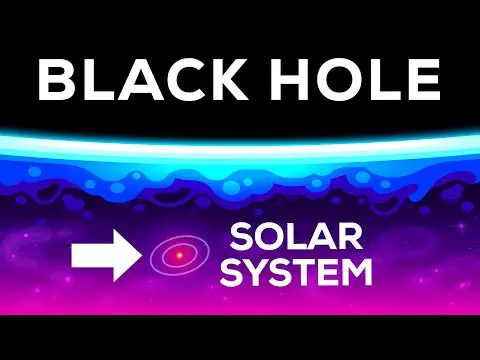
Interstellar travel may remain impractical because immense distances, hazardous collisions, and a likely speed limit near 20% of light speed make even nearby stars difficult to reach safely. Alpha Centauri would still require about 20 years of travel, while potentially habitable worlds could demand journeys lasting hundreds or thousands of years, making a connected star-spanning civilization hard to sustain.
Transcript
The latest limited Edition Pin is here. Now available on the kurzgesagt Shop. You will never leave the solar system. Nobody alive today will. And maybe no human ever. Locked in by an invisible barrier, impossible to overcome for carbon based animals like us. And not just us – there may be millions of alien civilizations in the universe, none of t... Read More
Key Insights
- Space is too large for familiar human intuitions about distance. A spacecraft traveling as fast as the Parker Solar Probe, 635,000 km/h, could reach Pluto in about a year but would still need approximately 2,500 years to cross the Oort cloud.
- The Parker Solar Probe gains speed by repeatedly using the gravity well of Venus as it approaches the Sun. After seven years, it travels at 635,000 km/h, enough to circle Earth in four minutes or cross the Earth-Moon distance in 36 minutes.
- A spacecraft traveling at 20% of light speed could reach Alpha Centauri in about 20 years. Fusion or antimatter propulsion might make such a velocity physically possible, although the required systems and their unresolved technical problems are not addressed in detail.
- Interstellar space is not completely empty. Energetic particles, gas, dust, and larger objects become severe collision hazards at relativistic speeds, so increasing velocity also increases the damage that ordinary matter can inflict on a spacecraft and its protective shielding.
- A single iron atom traveling into a spacecraft at 20% of light speed can carve a damage track tenths of a millimeter deep. Repeated impacts would gradually riddle an unprotected hull with microscopic holes, requiring a shield that absorbs or slows incoming matter.
- A grain of dust striking at 20% of light speed behaves like a grenade because it explosively evaporates and erodes the shield. A golf-ball-sized rock is far worse, releasing more than twice the energy of the nuclear bomb dropped over Hiroshima.
- A 40-year human journey at 20% of light speed can cover only about eight light years. Within that distance, none of the available targets may justify decades inside a small spacecraft while crossing one of the deadliest environments imaginable.
- A connected interstellar civilization remains difficult to envision without science-fiction technology. Future humans might overcome aging, send AI spacecraft carrying embryos, or use better telescopes to avoid empty systems, but journeys to promising worlds could still last hundreds or thousands of years.
Install to Summarize YouTube Videos and Get Transcripts
Explore YouTube Video Summarizer or Get YouTube Transcript Extractor
Questions & Answers
Q: Why is interstellar travel so difficult for humans?
Interstellar travel is difficult because the distances between useful destinations are enormous, while traveling faster creates increasingly destructive collisions with matter in space. Even at 20% of light speed, Alpha Centauri requires about 20 years to reach. Potentially worthwhile worlds may be much farther away, turning expeditions into journeys lasting hundreds or thousands of years through a hazardous environment.
Q: How long would the Parker Solar Probe take to leave the solar system?
A hypothetical crewed spacecraft matching the Parker Solar Probe's speed of 635,000 km/h could pass the heliopause after roughly three years, but that would not put it beyond the solar system's full extent. Reaching the outer edge of the Oort cloud, described as the true boundary where open space begins, would take approximately 2,500 years at that speed.
Q: How fast could a physically possible interstellar spacecraft travel?
Fusion or antimatter propulsion might allow a future spacecraft to travel at around 20% of light speed, according to the video's optimistic assumption. That is approximately 60,000 kilometers per second or 216 million kilometers per hour. At this velocity, a craft could cross the outer edge of the Oort cloud in eight years and reach Alpha Centauri in about 20 years.
Q: Why does space dust become dangerous at high speeds?
Space dust becomes dangerous because collision energy grows severe when a spacecraft travels at 20% of light speed. A single dust grain would act like a grenade, producing a small detonation as it explosively evaporates and erodes the protective shield. Larger debris is even more dangerous, with a golf-ball-sized rock releasing more than twice the energy of the Hiroshima bomb.
Q: Can shielding protect a spacecraft traveling at 20% of light speed?
Shielding could absorb or slow many atoms and molecules that strike a fast spacecraft, making a journey safer. It would still suffer repeated damage from microscopic impacts, however, and dust grains would explosively evaporate against it. The video suggests that sufficient shielding might permit travel to nearby stars at roughly 20% of light speed, but larger unseen objects remain a major danger.
Q: Could humans reach Alpha Centauri within one lifetime?
Humans could theoretically reach Alpha Centauri within one lifetime if a spacecraft sustained about 20% of light speed. The trip would take approximately 20 years, followed by another four years before a message from the arriving crew reached Earth. The destination could still prove deadly and uninhabitable, leaving scientific research as the mission's main reward.
Q: Are nearby planets likely to be habitable for humans?
Nearby planets offer no guarantee of habitability. Within a stellar neighborhood about 25 light years in diameter, there are 34 stars and six brown dwarfs, while only three stars are described as similar to the Sun, including the Sun itself and Alpha Centauri A. Even planets in habitable zones may be hostile, just as Mars lies in the Sun's habitable zone but remains unsuitable.
Q: How might future humans overcome the limits of interstellar travel?
Future humans might make long voyages more tolerable by solving biological aging, allowing travel times of several hundred years to seem manageable. Another possibility is sending AI-controlled spacecraft carrying embryos or a similar system. More advanced telescopes could also identify promising destinations before departure, reducing the risk of spending a lifetime traveling to a deadly or empty star system.
Summary & Key Takeaways
-
Space is so large that even extraordinary human-made speeds accomplish little on interstellar scales. A spacecraft matching the Parker Solar Probe at 635,000 km/h could reach Mars in two weeks and Pluto in about a year, yet crossing the Oort cloud to the true edge of the solar system would take roughly 2,500 years.
-
Fusion or antimatter propulsion might theoretically accelerate a spacecraft to about 20% of light speed. That would shorten the Alpha Centauri journey to 20 years, but collisions become devastating. Individual atoms damage the hull, dust grains act like grenades, and a golf-ball-sized rock releases more than twice the energy of the Hiroshima bomb.
-
Useful destinations compound the transportation problem. A 40-year journey at 20% of light speed reaches only eight light years, and nearby worlds may be deadly or uninhabitable. More promising planets could lie dozens or thousands of light years away, requiring radical solutions such as ending biological aging or sending AI spacecraft with embryos.
Read in Other Languages (beta)
Share This Summary 📚
Summarize YouTube Videos and Get Video Transcripts with 1-Click
Try YouTube Summary with ChatGPT & Claude or YouTube Transcript Generator
Explore More Summaries from Kurzgesagt – In a Nutshell 📚





Summarize YouTube Videos and Get Video Transcripts with 1-Click
Try YouTube Summary with ChatGPT & Claude or YouTube Transcript Generator