How Does Circuit Switching Work in Networks?
TL;DR
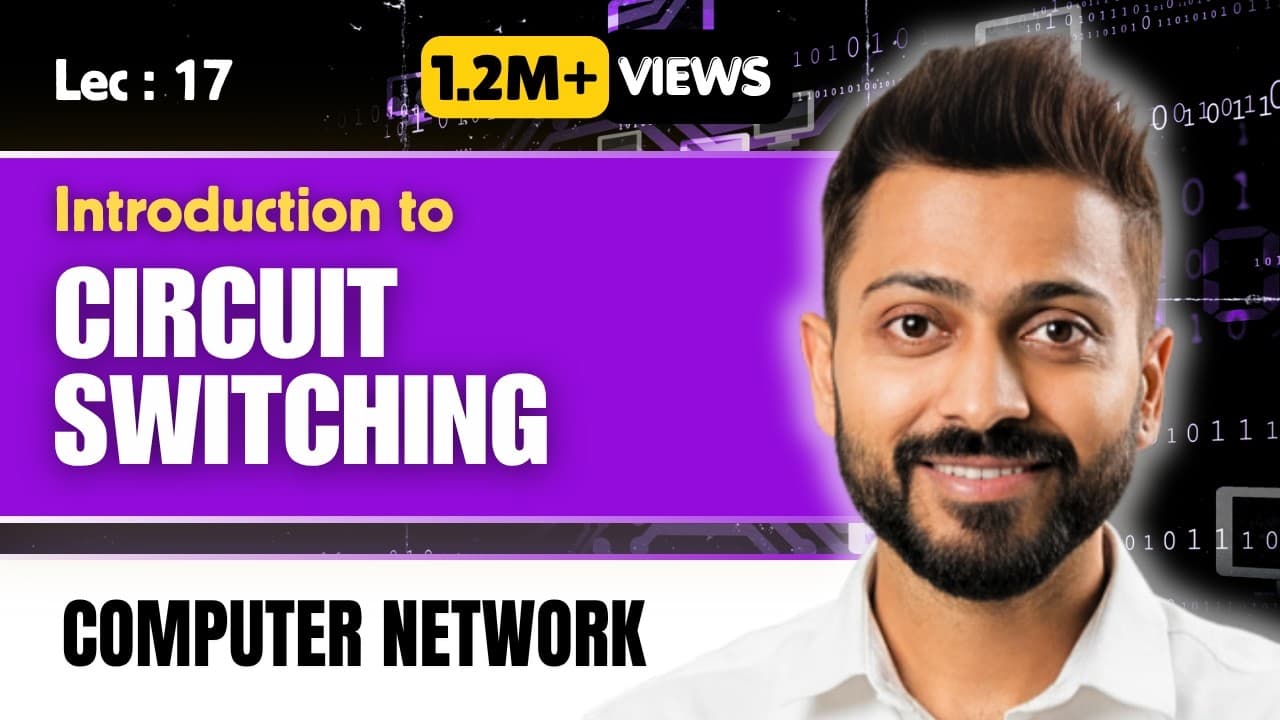
Circuit switching establishes a dedicated communication path between two devices, ensuring a continuous data flow without headers. This method is efficient for telephone networks but less so for modern data networks due to resource reservation and potential inefficiencies during idle periods.
Transcript
Hello friends welcome to gate smashers. today we are going to discuss about circuit switching. circuit switching is very important from GATE and UGC NET point of view. and in this video I am going to discuss such facts. which will help you a lot In the exam, first of all, circuit switching, which was generally designed for telephone network, circu... Read More
Key Insights
- Circuit switching establishes a dedicated path for communication between two devices.
- This method operates on the physical layer, connecting devices directly.
- Once a connection is set up, data flows continuously without the need for headers.
- Resource reservation in circuit switching can lead to inefficiencies during idle periods.
- Circuit switching is less efficient for modern data networks compared to packet switching.
- There is minimal delay in circuit switching as data flows directly without intermediate storage.
- The setup time for circuit switching can be significant but eliminates the need for headers.
- Circuit switching is ideal for voice communication in traditional telephone networks.
Install to Summarize YouTube Videos and Get Transcripts
Explore YouTube Video Summarizer or Get YouTube Transcript Extractor
Questions & Answers
Q: How does circuit switching establish a connection?
Circuit switching establishes a connection by creating a dedicated communication path between two devices. This involves setting up a physical path on the physical layer, ensuring that data can flow continuously without interruptions. Once the connection is established, it remains active until terminated, allowing for uninterrupted communication.
Q: What is the role of headers in circuit switching?
In circuit switching, headers are not required once the connection is established. The dedicated communication path ensures that data flows directly between the devices without needing to specify source or destination addresses. This contrasts with packet switching, where headers are necessary to route data through various network nodes.
Q: Why is circuit switching less efficient for modern data networks?
Circuit switching is less efficient for modern data networks because it reserves resources for the duration of the communication, even during idle periods. This can lead to inefficiencies, as the reserved bandwidth and resources cannot be utilized by others. In contrast, packet switching dynamically allocates resources, optimizing network efficiency.
Q: What is the primary advantage of circuit switching in telephone networks?
The primary advantage of circuit switching in telephone networks is its ability to provide a continuous, uninterrupted communication path. This ensures that voice data is transmitted in real-time without delays or interruptions, making it ideal for traditional voice communication where maintaining a consistent connection is crucial.
Q: How does circuit switching handle data flow?
Circuit switching handles data flow by establishing a dedicated path where data can flow continuously and contiguously. Once the connection is set up, data is transmitted in a steady stream, ensuring that information is received in the correct order. This method avoids packet reordering issues common in other switching techniques.
Q: What are the setup and teardown times in circuit switching?
Setup time in circuit switching refers to the time taken to establish the dedicated communication path between devices. Teardown time is the period required to release the reserved resources once the communication ends. Both times contribute to the overall communication delay but ensure a stable and continuous data flow during the session.
Q: Why is there minimal delay in circuit switching?
There is minimal delay in circuit switching because data flows directly between the connected devices without intermediate storage or processing. Unlike packet switching, which involves routers storing and forwarding packets, circuit switching maintains a continuous path, ensuring that data is transmitted in real-time with minimal latency.
Q: Can circuit switching be used for data services like email or messaging?
Circuit switching is not ideal for data services like email or messaging due to its resource reservation model. These services benefit from packet switching, which dynamically allocates resources and allows data to be transmitted in smaller, independent packets. Circuit switching's continuous path model is better suited for real-time voice communication.
Summary & Key Takeaways
-
Circuit switching creates a dedicated path for communication, ensuring continuous data flow without headers. This method is primarily used in telephone networks, where a direct connection is established between devices. Despite its low delay, circuit switching is less efficient for data networks due to resource reservation and potential idle periods.
-
Operating on the physical layer, circuit switching connects devices directly, allowing data to flow in a contiguous manner. While this method minimizes delays by avoiding intermediate storage, it requires significant setup time. The absence of headers simplifies communication but limits its efficiency in modern data networks.
-
Resource reservation in circuit switching can lead to inefficiencies when the connection is idle. Although ideal for voice communication in traditional networks, circuit switching's efficiency is compromised in data networks, where packet switching offers better resource utilization. Its low delay and direct communication path remain advantageous for specific applications.
Read in Other Languages (beta)
Share This Summary 📚
Summarize YouTube Videos and Get Video Transcripts with 1-Click
Try YouTube Summary with ChatGPT & Claude or YouTube Transcript Generator
Explore More Summaries from Gate Smashers 📚





Summarize YouTube Videos and Get Video Transcripts with 1-Click
Try YouTube Summary with ChatGPT & Claude or YouTube Transcript Generator