How to Solve Claude Code's Memory Issue
TL;DR
Graphify addresses Claude Code's memory problem by creating a knowledge graph from any repository, allowing for more accurate answers with fewer tokens. It traverses the codebase, mapping connections, and is open source and free. Graphify works in three passes: parsing code, transcribing media, and analyzing documents, creating a comprehensive map for AI coding assistants.
Transcript
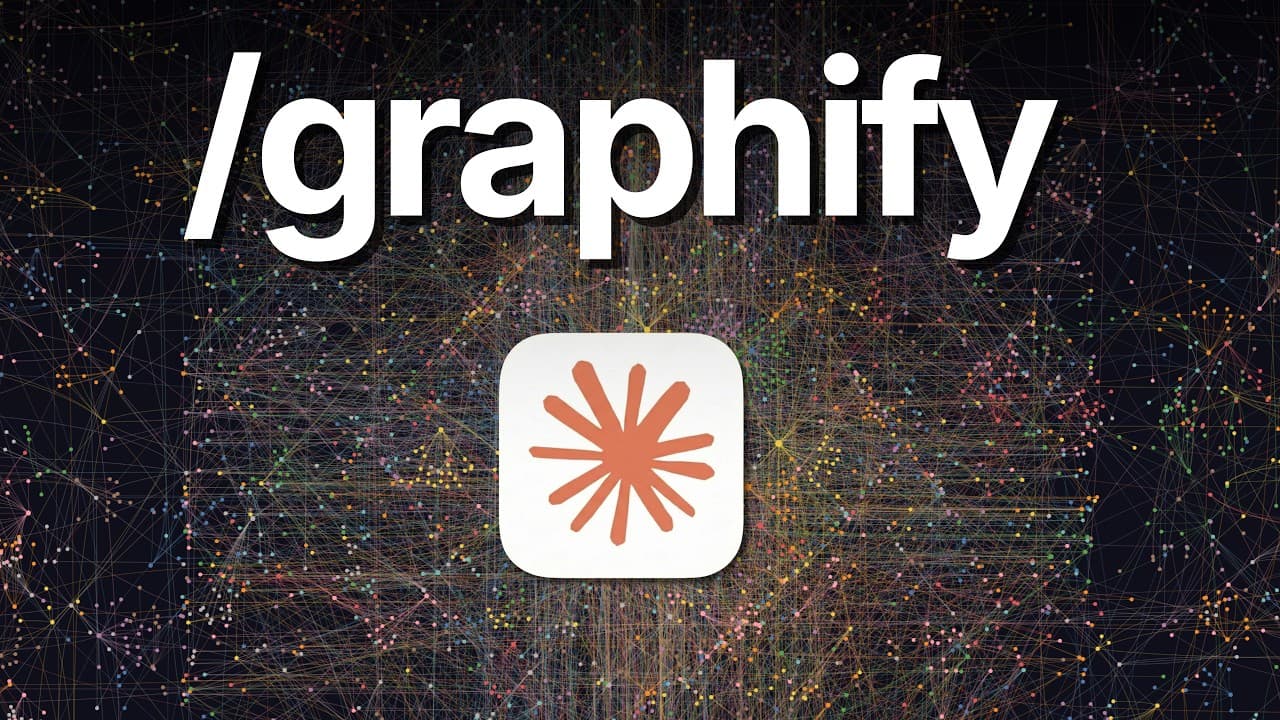
Graphify just solved Claude Code's memory problem. It's able to turn any repository and turn it into a wild knowledge graph just like the one you see here. And in the process, it allows Claude Code to give you more accurate answers at a fraction of the token costs. It's able to do this by traversing your entire codebase, mapping all the connections... Read More
Key Insights
- Graphify solves Claude Code's memory issue by creating knowledge graphs from repositories.
- Knowledge graphs allow for more accurate AI responses at lower token costs.
- Graphify is open source and free, making it accessible to all developers.
- The tool works in three passes: parsing code structure, transcribing media, and analyzing documents.
- Graphify does not use embeddings, differentiating it from Graph Rag systems.
- The tool is especially effective for structured codebases, while Graph Rag suits unstructured data.
- Graphify supports continuous updates, rebuilding graphs after each code commit.
- The tool can also create Obsidian vaults, showing its flexibility beyond codebases.
Install to Summarize YouTube Videos and Get Transcripts
Explore YouTube Video Summarizer or Get YouTube Transcript Extractor
Questions & Answers
Q: How does Graphify improve Claude Code's efficiency?
Graphify improves Claude Code's efficiency by creating a knowledge graph from the codebase, which allows for more accurate answers at a lower token cost. It maps the entire repository, providing a clear structure for the AI to follow, reducing the need for extensive token usage during queries.
Q: What are the key components of Graphify's process?
Graphify's process involves three key components: parsing the code structure using Tree-sitter, transcribing media files with Faster Whisper, and analyzing documents with a large language model. This comprehensive approach allows it to create a detailed knowledge graph from diverse data types within a repository.
Q: How does Graphify differ from a Graph Rag system?
Graphify differs from a Graph Rag system primarily in its lack of embeddings. While Graph Rag systems are ideal for unstructured data, Graphify excels with structured codebases. It focuses on creating direct connections within the code, providing a map for AI coding assistants to follow.
Q: Can Graphify handle non-code data?
Yes, Graphify can handle non-code data by analyzing documents, images, and other media types during its third pass. It can also create an Obsidian vault for repositories composed of markdown files or other non-code elements, showcasing its versatility beyond traditional codebases.
Q: How does Graphify maintain updated knowledge graphs?
Graphify maintains updated knowledge graphs by rebuilding them after each code commit. This automatic updating process ensures that the knowledge graph reflects the latest changes in the repository, allowing AI coding assistants to access the most current information without additional cost.
Q: What are the benefits of using Graphify with Claude Code?
Using Graphify with Claude Code offers benefits such as more accurate responses and significant token savings. By providing a structured map of the codebase, Graphify reduces the need for extensive token usage, enabling Claude Code to deliver precise answers quickly and efficiently.
Q: Is Graphify suitable for team environments?
Yes, Graphify is suitable for team environments as it supports parallel development. It can manage updates from multiple developers working on the same repository, ensuring the knowledge graph remains consistent and up-to-date, facilitating collaboration and efficient information retrieval for the team.
Q: What is the significance of Graphify's open-source nature?
Graphify's open-source nature is significant as it allows developers to access and modify the tool freely, fostering innovation and collaboration. This accessibility ensures that a wide range of developers can leverage Graphify to enhance their AI coding assistants, contributing to the broader development community.
Summary & Key Takeaways
-
Graphify effectively solves Claude Code's memory problem by converting repositories into knowledge graphs. This process allows AI coding assistants to provide more accurate answers using fewer tokens. Graphify's open-source nature and three-pass system (code parsing, media transcription, document analysis) make it a versatile tool for developers.
-
By mapping codebases into knowledge graphs, Graphify enhances the efficiency of AI coding assistants like Claude Code. The tool processes data in three stages: code structure analysis, media transcription, and document analysis. Its open-source availability and compatibility with various coding agents make it a valuable resource.
-
Graphify distinguishes itself from Graph Rag systems by not using embeddings, focusing instead on structured codebases. It supports continuous updates, rebuilding graphs after code changes, and can create Obsidian vaults for non-code data. This flexibility ensures it can be a useful tool in diverse development scenarios.
Read in Other Languages (beta)
Share This Summary 📚
Summarize YouTube Videos and Get Video Transcripts with 1-Click
Try YouTube Summary with ChatGPT & Claude or YouTube Transcript Generator
Explore More Summaries from Chase AI 📚





Summarize YouTube Videos and Get Video Transcripts with 1-Click
Try YouTube Summary with ChatGPT & Claude or YouTube Transcript Generator