What Causes Smog and How Does It Affect Health?
TL;DR
Smog is caused by a combination of volatile organic compounds (VOCs) and nitrogen oxides, which react with sunlight to form harmful pollutants. It irritates the eyes and respiratory system, exacerbates asthma, and can damage crops. Areas with high humidity or certain geographic features are more vulnerable to smog, highlighting the need for regulatory measures to reduce its impact.
Transcript
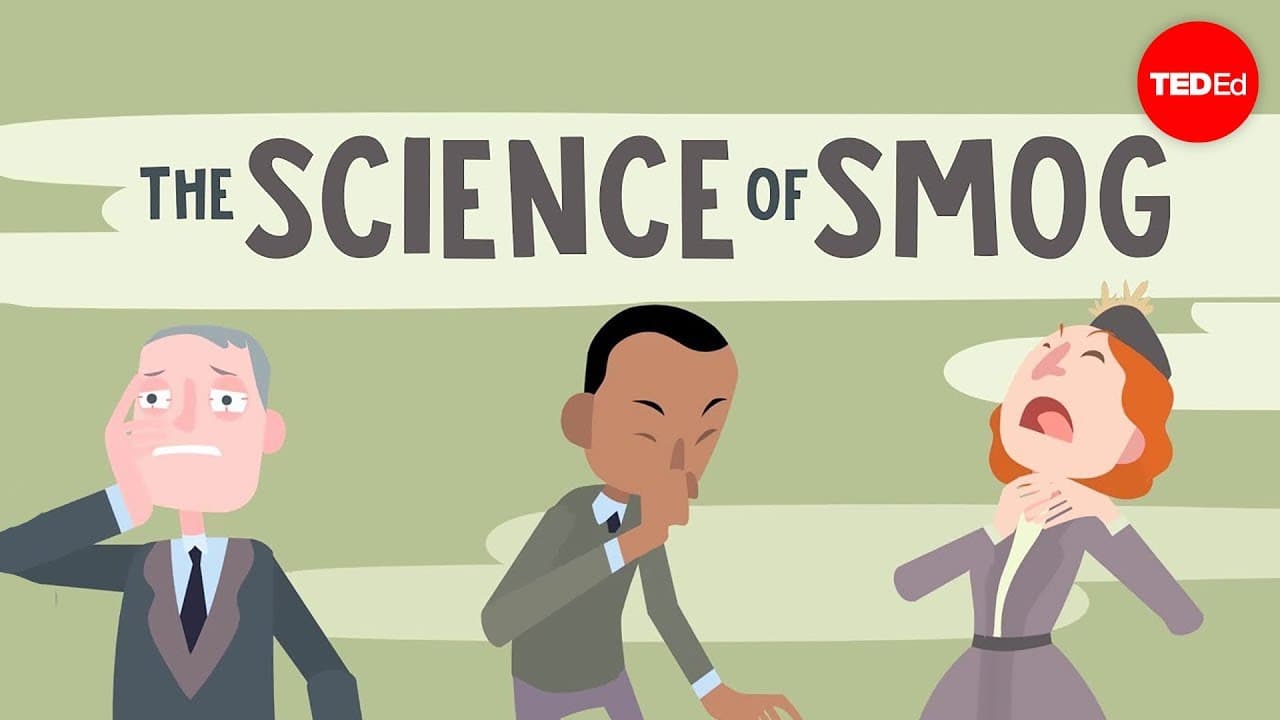
On July 26, 1943, Los Angeles was blanketed by a thick gas that stung people's eyes and blocked out the Sun. Panicked residents believed their city had been attacked using chemical warfare. But the cloud wasn't an act of war. It was smog. A portmanteau of smoke and fog, the word "smog" was coined at the beginning of the 20th century to describe th... Read More
Key Insights
- ❓ Smog is a combination of industrial pollution and photochemical reactions caused by VOCs and nitrogen oxides.
- ☀️ London's industrial smog was due to high humidity, while photochemical smog is strongest in urban areas with calm winds and dry, warm, sunny weather.
- 🥺 Smog irritates the eyes, nose, and throat, worsens respiratory conditions, and can lead to respiratory infections.
- 💄 Smog can also damage and weaken crops, making them more susceptible to insects.
- 🛀 The Clean Air Act in London and regulations on vehicle emissions in the US have shown success in reducing smog levels.
- ✋ Coal-dependent countries like China and Poland experience high levels of industrial smog.
- 🇻🇦 Rapidly developing cities around the world, like Mexico City, New Delhi, and Tehran, are affected by photochemical smog and vehicle emissions.
Install to Summarize YouTube Videos and Get Transcripts
Explore YouTube Video Summarizer or Get YouTube Transcript Extractor
Questions & Answers
Q: What causes the formation of smog in cities?
The formation of smog is caused by the reaction of volatile organic compounds (VOCs) and nitrogen oxides with sunlight. These compounds are released from manmade sources such as solvents, paints, glues, and motor vehicle emissions.
Q: Why does smog affect some cities more than others?
Both industrial and photochemical smog formation is influenced by local weather and geography. Factors like high humidity (for industrial smog) and calm winds, dry, warm, and sunny weather (for photochemical smog) make certain cities more susceptible. Cities surrounded by mountains or located in basins, like LA and Beijing, can also experience higher levels of smog due to limited dispersion.
Q: What are the health effects of smog?
Smog can irritate the eyes, nose, and throat, exacerbate respiratory conditions like asthma and emphysema, and increase the risk of respiratory infections. Young children, older people, and pregnant women are particularly vulnerable. Exposure to smog has also been linked to low birth weight and potential birth defects.
Q: How has smog been addressed in the past?
The Great Smog of London in 1952 led to the implementation of the Clean Air Act, which banned burning coal in certain areas, resulting in a significant reduction in smog. Similarly, regulations on vehicle emissions and gas content in the US have reduced volatile compounds and smog levels.
Summary & Key Takeaways
-
Smog is a combination of industrial pollution and photochemical reactions caused by VOCs and nitrogen oxides.
-
VOCs are compounds that easily become vapors and are released from manmade sources, while nitrogen oxides come from incomplete combustion in vehicles.
-
Smog can cause eye irritation, damage lung tissue, worsen respiratory conditions, and harm crops.
Read in Other Languages (beta)
Share This Summary 📚
Summarize YouTube Videos and Get Video Transcripts with 1-Click
Try YouTube Summary with ChatGPT & Claude or YouTube Transcript Generator
Explore More Summaries from TED-Ed 📚






Summarize YouTube Videos and Get Video Transcripts with 1-Click
Try YouTube Summary with ChatGPT & Claude or YouTube Transcript Generator