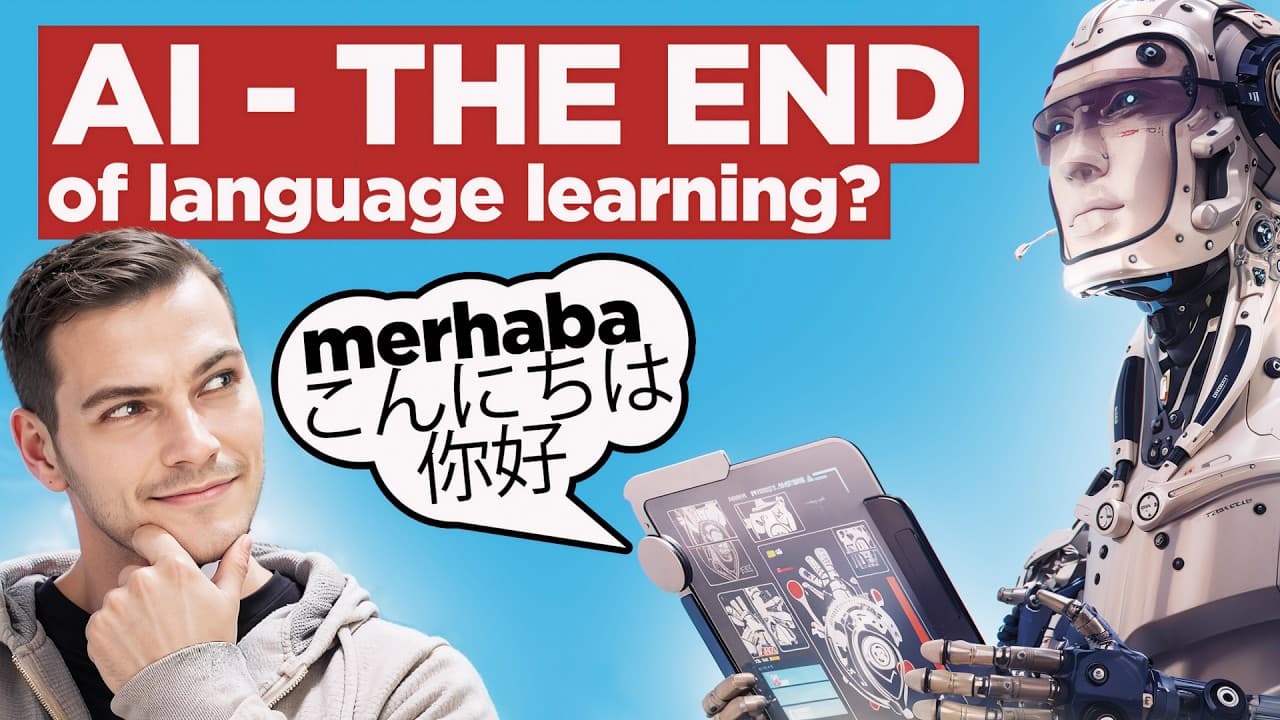
A.I. - The END of Language Learning?
TL;DR
AI may alter language learning, but won't eliminate it.
Transcript
Lots of people seem to think that I’m not real. Apparently I’m AI generated! Maybe it’s true! There’s a lot of talk about how artificial intelligence is going to change the world in the coming years. A lot of jobs that people do today will probably disappear, and a lot of the skills that we think are important to learn will probably become irre... Read More
Key Insights
- AI tools can translate languages and mimic speech, potentially reducing the need for learning languages for practical purposes.
- Current AI translation tools require pre-recorded videos, but real-time translation in meetings is already possible with text captions.
- Future advancements may include wearable devices offering real-time audio translation, reducing the necessity of knowing multiple languages.
- Despite AI's capabilities, language learning will persist for enjoyment, cultural connection, and personal satisfaction.
- AI may struggle with dialects, idioms, and informal speech, areas where human language learners excel in connecting with native speakers.
- Learning languages can provide unique, memorable experiences that AI translation cannot replicate, such as personal interactions and cultural appreciation.
- AI translation will make functional language use less necessary, but won't replace the intrinsic joy and cultural insights gained from language learning.
- Language enthusiasts will continue to study languages out of passion, even if AI makes it unnecessary for practical tasks.
Install to Summarize YouTube Videos and Get Transcripts
Explore YouTube Video Summarizer or Get YouTube Transcript Extractor
Questions & Answers
Q: How does AI currently handle language translation?
AI tools like HeyGen can translate pre-recorded videos into different languages, mimicking the speaker's voice and mouth movements. However, these tools are not yet capable of real-time translation for conversational use, though text-based real-time translation is available in platforms like Zoom and Microsoft Teams.
Q: What future advancements in AI translation are anticipated?
Future advancements may include wearable devices, such as smart glasses and earpieces, that provide real-time audio and visual translation. These technologies could eliminate the need for a common spoken language in face-to-face interactions, potentially making language skills less essential for communication.
Q: Will AI eliminate the need for language learning?
AI is unlikely to eliminate language learning entirely. While it may reduce the necessity for functional language use in professional settings, people will continue to learn languages for enjoyment, cultural connection, and personal interest, which AI cannot replicate.
Q: What are the limitations of AI translation tools?
AI translation tools may struggle with dialects, idioms, and informal speech, which are essential for authentic communication and connection with native speakers. These subtleties often enhance personal interactions, highlighting the value of human language learning.
Q: Why might people continue to learn languages despite AI advancements?
People may continue to learn languages for the joy of discovery, cultural appreciation, and personal satisfaction. Language learning offers unique experiences, such as connecting with others and understanding cultural nuances, which AI translation cannot provide.
Q: How does language learning enhance cultural connection?
Learning a language demonstrates care and respect for another culture, fostering connections and appreciation from native speakers. It allows learners to understand cultural nuances, idioms, and expressions, creating memorable and meaningful interactions that AI translation cannot replicate.
Q: What personal benefits do people gain from learning languages?
Language learning offers personal satisfaction, cognitive engagement, and a sense of accomplishment. It allows individuals to immerse themselves in different cultures, enjoy foreign media, and engage in intellectual challenges, providing intrinsic rewards beyond practical communication needs.
Q: What is the speaker's perspective on AI and language learning?
The speaker believes that while AI will change how languages are used for functional tasks, it won't replace the personal joy and cultural insights gained from language learning. They emphasize that language learning will persist for personal interest and meaningful social interactions.
Summary & Key Takeaways
-
The video discusses how AI's advancements in translation technology might change the landscape of language learning, making some skills less essential. However, the personal and cultural benefits of learning languages will continue to attract learners.
-
AI tools like HeyGen can translate videos into different languages, but they currently lack real-time capabilities for face-to-face interactions. Future technologies might include wearable devices for real-time translation, altering the need for language skills in professional settings.
-
Despite AI's growing role in translation, language learning will remain valuable for personal enjoyment, cultural connection, and the ability to navigate informal and idiomatic expressions. The speaker emphasizes the irreplaceable experiences and connections that come from learning languages.
Read in Other Languages (beta)
Share This Summary 📚
Summarize YouTube Videos and Get Video Transcripts with 1-Click
Try YouTube Summary with ChatGPT & Claude or YouTube Transcript Generator
Explore More Summaries from Langfocus 📚






Summarize YouTube Videos and Get Video Transcripts with 1-Click
Try YouTube Summary with ChatGPT & Claude or YouTube Transcript Generator