How to Scale E-Commerce With Feedback Loops

TL;DR
Use feedback loops to identify why each e-commerce ad succeeds or fails, then apply those findings to new creative variations and the broader customer journey. Consistent testing alone can repeat the same mistakes, while structured review of audience specificity, curiosity, engagement, landing-page congruence, and recent performance produces useful iterations that can support faster scaling.
Transcript
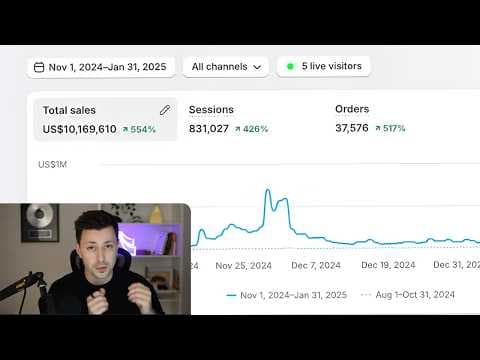
The clip that you're about to see is literal footage of someone who hit over $100,000 in a single day explain the number one thing that helped him actually get there. Is like always better with every test. I think that's the that's the biggest um learning I had. Even in the beginning like before evolve like I didn't do like any learning. I just tes... Read More
Key Insights
- A feedback loop is a process for identifying why an e-commerce action worked or failed, then applying that finding to the next test. Without this review, repeated testing can reproduce the same mistakes instead of generating meaningful progress.
- Consistency is insufficient when testing lacks structured learning. The presenter argues that scaling depends on understanding the reasons behind positive and negative outcomes, because each completed feedback loop provides direction for creative iterations and improvements throughout the customer journey.
- The longest-running ad is not necessarily a brand's best-performing ad. Across roughly half of the accounts the presenter manages, the longest-running creatives are usually not the strongest, so using duration alone can lead marketers toward incorrect conclusions and unhelpful creative lessons.
- Ad engagement is a useful but imperfect research signal. The demonstrated AdSpy workflow filters Grüns ads that were seen within the last 45 days, remain active, and rank from highest to lowest by shares to identify recent creatives that may be performing well.
- Audience specificity can make an advertisement more relatable. The Grüns creative addresses the MTHFR gene, allowing viewers who identify with that term to feel directly understood while encouraging unfamiliar viewers to investigate whether the message could apply to their metabolism concerns.
- Curiosity can stop viewers and encourage further investigation. The unfamiliar MTHFR reference and a large green gummy-like bear create questions, while the surrounding copy clarifies the product enough for interested viewers to continue toward the shop and landing page.
- Landing-page congruence extends the advertisement's message through the customer journey. Grüns runs split tests and uses pages aligned with particular avatars, including a page focused on a healthy habit for kids, so the post-click experience can continue the ad's audience-specific positioning.
- Creative analysis improves through repeated exposure to strong advertisements. The presenter recommends studying many top-performing ads to recognize recurring patterns, strengthen judgment about why a creative works, and generate informed variations rather than treating every new test as an isolated experiment.
Install to Summarize YouTube Videos and Get Transcripts
Explore YouTube Video Summarizer or Get YouTube Transcript Extractor
Questions & Answers
Q: How do feedback loops help scale an e-commerce brand?
Feedback loops help an e-commerce brand scale by turning each test into a source of information. The marketer reviews why an ad or customer-journey element worked or failed, records the lesson, and applies it to later variations. This avoids repeatedly making the same mistakes and makes testing progressively better instead of merely more frequent.
Q: Why is repeated ad testing alone not enough?
Repeated testing alone is not enough because activity does not guarantee learning. The featured operator said he initially tested continuously without looking back, then recognized the importance of feedback loops. Unless marketers analyze why results occurred, they can repeat the same errors. Consistency becomes more valuable when every test informs the next decision.
Q: How can marketers research potentially winning competitor ads?
The demonstrated method uses AdSpy to examine a specific advertiser's active ads. For Grüns, the presenter selects ads seen during the last 45 days, keeps those that remain active, and orders them from highest to lowest by shares. Likes, comments, and shares can indicate traction, although the presenter explicitly says this approach is not 100 percent accurate.
Q: Why should marketers avoid judging ads by how long they run?
An ad's running duration does not prove that it is the account's top performer. The presenter says that across roughly half of the accounts his team manages, the longest-running ads usually are not the best ads. Treating longevity as the main performance estimate can therefore produce the wrong selection and lead to incorrect lessons for future creative development.
Q: Why can shares help identify strong e-commerce ads?
Shares can help because winning Meta ads often accumulate visible traction through likes, comments, and shares. The presenter prefers filtering specifically by shares and says the highest-shared ads are usually close to the strongest performers. However, shares remain an indirect estimate rather than conclusive account data, so marketers should use them as a research signal rather than certainty.
Q: How does the MTHFR gene ad target a specific audience?
The Grüns ad uses the MTHFR gene as a highly specific audience reference. People who already identify as carrying the gene may see the message as directly relevant and feel that the brand understands them. People unfamiliar with the term may become curious, search for its meaning, and consider whether it relates to their concerns about metabolism.
Q: How does curiosity improve a static e-commerce ad?
Curiosity gives viewers a reason to stop and pay attention. In the reviewed creative, the unfamiliar MTHFR term raises a question, while the large green gummy-like bear adds visual intrigue. The advertisement also explains the product clearly enough to guide interest forward. This balance creates curiosity without leaving the audience unable to understand what is being offered.
Q: Why should an ad and landing page use congruent messaging?
Congruent messaging allows the landing page to continue the promise and audience focus established by the ad. The presenter notes that Grüns runs landing-page split tests and maintains pages aligned with different avatars, including one centered on a healthy habit for kids. Reviewing this post-click experience expands the feedback loop from creative performance to the full customer journey.
Summary & Key Takeaways
-
Feedback loops turn ad testing into cumulative learning. Instead of repeatedly launching creatives without reviewing results, marketers should determine why each ad worked or failed, document the findings, and use them in subsequent iterations. This process should cover creative decisions and the complete e-commerce customer journey, not merely isolated advertisements.
-
The featured research method examines recently active ads and sorts them by shares. The presenter considers likes, comments, and shares useful signals that an ad may be gaining traction, while warning that the longest-running creative is not necessarily the strongest performer. Engagement is treated as an estimate, not definitive performance data.
-
The Grüns example targets people associated with the MTHFR gene through specific language, curiosity, and a simple visual featuring a large green gummy bear. Its message can resonate with people who recognize the term while prompting unfamiliar viewers to investigate it. Congruent landing pages can then continue the selected audience-specific message.
Read in Other Languages (beta)
Share This Summary 📚
Summarize YouTube Videos and Get Video Transcripts with 1-Click
Try YouTube Summary with ChatGPT & Claude or YouTube Transcript Generator
Explore More Summaries from Spencer Pawliw 📚

Summarize YouTube Videos and Get Video Transcripts with 1-Click
Try YouTube Summary with ChatGPT & Claude or YouTube Transcript Generator