How to Analyze Facebook Ads Data the Right Way (The 2026 Guide)
TL;DR
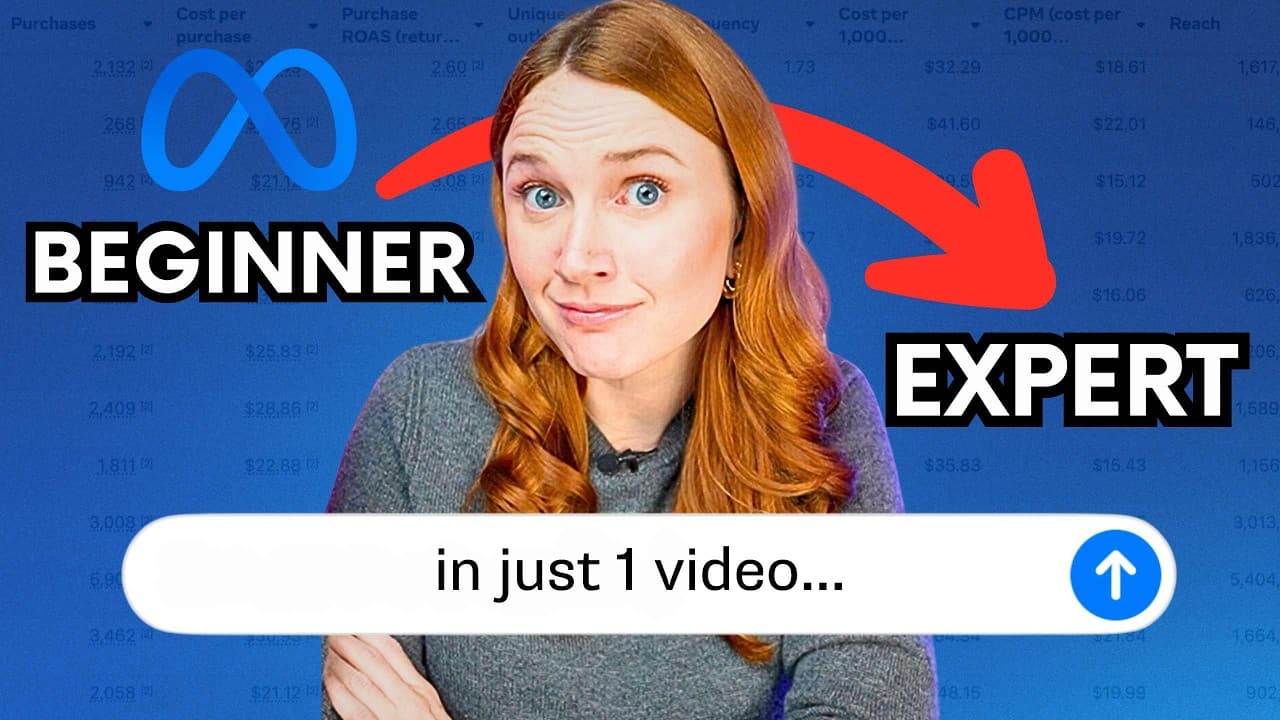
Analyze Facebook ads data by first identifying what works through amount spent, purchases, cost per purchase, and ROAS, then using storytelling metrics to understand why it works. Analyze before optimizing, sort results from highest to lowest spend, and examine frequency, unique outbound click-through rate, hook rate, hold rate, and post shares for context. Read on for a practical Ads Manager workflow and metric definitions.
Transcript
analyzing meta ads data is well complicated in fact in 2025 many advertisers are still focusing on the wrong metrics like clickthrough rate CPM or CPC so in this video I'm going to show you exactly how to analyze Facebook ads data the right way from the beginner to expert level this way you can scale smarter and not waste your money so if you ever ... Read More
Key Insights
- Primary metrics like cost per purchase and ROAS tell you what is working in your ad campaigns.
- Storytelling metrics such as frequency and CPM help explain why certain ads perform well or poorly.
- ASC campaigns often perform better with a minimum of 20 ad creatives for optimal results.
- Unique outbound click-through rate is a purer metric for gauging ad effectiveness than average click-through rate.
- Video hook and hold rates are essential for understanding viewer engagement with video ads.
- First-party data tools like Triple Whale and Northbeam are beneficial for brands with multiple attribution channels.
- Motion is a valuable tool for creative strategy, helping identify top-performing creatives and patterns.
- Comparative data analysis, including competitor data, can provide insights into effective ad strategies.
Install to Summarize YouTube Videos and Get Transcripts
Explore YouTube Video Summarizer or Get YouTube Transcript Extractor
Questions & Answers
Q: How do you analyze Facebook ads data effectively?
Start by answering two questions: what is working, and why is it working? Use amount spent, purchases, cost per purchase, and ROAS as primary metrics, then examine supporting metrics such as frequency, CPM, unique outbound click-through rate, hook rate, and hold rate to explain the results.
Q: Which Facebook ad metrics should guide optimization decisions?
The primary metrics are amount spent, purchases, cost per purchase, and ROAS. These show whether a campaign is working and should guide optimization, while the remaining metrics provide context about why performance is strong or weak.
Q: Should you analyze and optimize Facebook ads at the same time?
No. Complete the analysis first, then make optimization changes based on what the data shows. Separating these activities helps you focus on identifying what works and why before tweaking campaigns or creatives.
Q: What bidding strategy and attribution setting should beginners use?
The suggested starting bid strategy is highest volume. The recommended attribution setting is 7-day click and one-day view, which attributes a purchase when someone clicks within a 7-day period or views the ad within 24 hours.
Q: Why is unique outbound click-through rate useful?
Unique outbound click-through rate measures how many individual users click through toward the landing page. It is described as a purer measure than average click-through rate, which can include clicks to a profile or clicks that do not reach the landing page.
Q: How should frequency be interpreted in Facebook Ads Manager?
Frequency shows how many times, on average, people see an ad. A frequency above five across the last several days or weeks can indicate that the campaign or creatives are repeatedly reaching the same people or leaning heavily on retargeting audiences.
Q: What do video hook rate and hold rate measure?
Hook rate measures the percentage of viewers who watch the first three seconds of a video creative. Hold rate measures those who watch the first 15 seconds, or the entire video when it is shorter than 15 seconds; comparing hold rate with average play time gives additional context about retention.
Q: How can Motion help analyze Facebook ad creatives?
Motion can automatically report the top-performing creatives for the week and make those findings easier to share with a broader creative team. It is used to analyze creatives, identify patterns, and build reporting that supports creative strategy decisions.
Summary & Key Takeaways
-
To analyze Facebook ads data, focus on primary metrics like cost per purchase and ROAS to determine what works, and use storytelling metrics like frequency to understand why. Tools like Ads Manager and Motion can provide deeper insights, while first-party data tools are useful for brands with complex attribution needs.
-
ASC campaigns with a minimum of 20 ad creatives tend to perform better. Unique outbound click-through rate offers a clearer view of ad effectiveness, and video hook and hold rates are crucial for assessing engagement.
-
Motion aids in creative strategy by identifying top-performing ads and patterns. Comparative data, including competitor analysis, can further refine ad strategies and improve campaign outcomes.
Read in Other Languages (beta)
Share This Summary 📚
Summarize YouTube Videos and Get Video Transcripts with 1-Click
Try YouTube Summary with ChatGPT & Claude or YouTube Transcript Generator
Explore More Summaries from Dara Denney 📚





Summarize YouTube Videos and Get Video Transcripts with 1-Click
Try YouTube Summary with ChatGPT & Claude or YouTube Transcript Generator