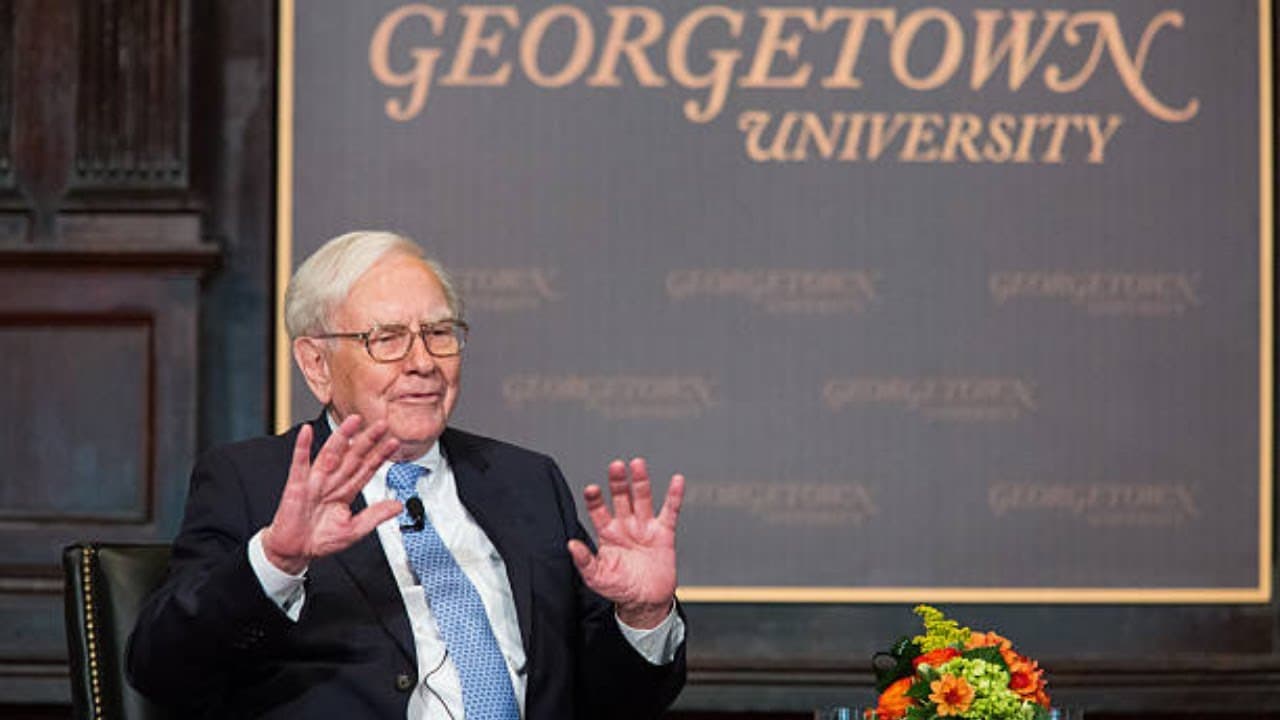
Warren Buffett | Lecture | Georgetown University | September 19, 2013
TL;DR
Buffett describes how he began investing at age 11 after saving enough to buy stock and how reading books and library resources fed his curiosity. He reflects on wartime unity in Washington and how early experiences shaped his long term approach to investing and philanthropy.
Transcript
ladies and gentlemen please welcome to the stage lindsay bruinsma an mba candidate at the mcdonough school of business john jay de joya president of georgetown university brian t moynihan ceo of bank of america and warren e buffett chairman of the board and ceo of berkshire hathaway [Applause] welcome good evening thank you all for being here i mus... Read More
Key Insights
- Buffett is fascinated by investing from a young age and used reading to build knowledge.
- The start of his investing journey involved a concrete, small investment and a persistent savings effort.
- Georgetown and Washington experiences during World War II shaped his view of national unity and responsibility.
- Early learning came from reading and the local library, fueling independent study.
- Buffett believes long term, patient investing is key to success, not quick gains.
- Philanthropy is integrated into his financial philosophy, as shown by the Giving Pledge.
- He emphasizes the value of learning from mentors and peers in shaping his career.
- His approach combines practical investing with a broad social purpose, including charity and education.
Install to Summarize YouTube Videos and Get Transcripts
Explore YouTube Video Summarizer or Get YouTube Transcript Extractor
Questions & Answers
Q: How did Warren Buffett first become interested in investing
Buffett began investing at age 11 after saving 120 over five years to buy three shares of City Service preferred. He learned by reading books in his father’s office and at the library, quickly turning curiosity into a practical pursuit. This early effort taught him the value of patience and disciplined saving.
Q: What role did reading and libraries play in Buffett’s education
Buffett describes reading everything available in the Omaha Public Library and later the Library of Congress, using books on investments as primary resources. This self-driven study fed his curiosity, helped him understand markets, and established a habit of continuous learning that underpins his long term investing approach.
Q: How did Buffett describe his memories of Georgetown and wartime Washington
Buffett shared memories from Georgetown Hospital and wartime Washington, noting a time of unity and shared sacrifice. He spoke about gasoline, sugar, and meat rationing, and saving bonds, which illustrated a society rallying around common goals. These experiences contributed to his worldview on responsibility and values.
Q: What is Buffett’s view on long term investing
Buffett emphasizes patience and long term thinking as essential to investing success. He attributes his approach to consistent study, learning from books, and applying principles over time rather than seeking quick wins. This philosophy aligns with his later charitable commitments and steady, principled decision making.
Q: How did Buffett’s early life influence his philanthropy
Buffett’s early experiences of community, unity, and responsibility informed his later philanthropic path, including the Giving Pledge with Bill and Melinda Gates and his commitment to donate Berkshire Hathaway shares to charity. These choices reflect a long term view of wealth as a tool for social impact.
Q: What was Buffett’s message about learning from mentors and peers
Buffett’s narrative shows the importance of learning from mentors and peers, such as discussions with colleagues and influential figures, which helped shape his investment philosophy. He valued real conversations and practical insights that complemented his independent study.
Q: How did Buffett describe the role of community and society in his work
Buffett describes his work as balancing economic value with social value, a theme echoed in his philanthropic efforts and collaborations like the Giving Pledge. He views business leadership as extending beyond profit to contribute to broader societal good.
Q: What does Buffett say about the influence of his early environment on his career
Buffett attributes his early environment, including wartime unity and a culture of saving and contributing to common goals, as foundational to his patient, value-driven approach. This background informed how he views long-term strategy, discipline, and the role of wealth in society.
Summary
This video features a conversation between Warren Buffett and Brian Moynihan at Georgetown University. They discuss various topics such as philanthropy, investing strategies, the economy, and the future of America. Buffett talks about his investment in GEICO and how he believes in finding opportunities when stocks are selling at cheap prices. He also shares his optimism for the future of America and emphasizes the importance of everyone participating in the country's prosperity.
Questions & Answers
Q: Can you share a memorable investment experience?
One of my most memorable investments was in GEICO. I first got exposed to it in 1950 when I met Ben Graham, the chairman of the company. Several years later, in 1976, GEICO was in trouble and I bought a third of the company in the market. In 1995, I bought the rest of the company. It has been a great investment and a wonderful partnership with the people at GEICO.
Q: How did you come up with the idea for the Giving Pledge and why did you choose Bill and Melinda Gates as partners?
The idea for the Giving Pledge came about when Bill and I were discussing philanthropy. We decided to call David Rockefeller and ask if he would host a dinner for some influential people to talk about philanthropy. The values at the core of the work we examined were defining characteristics of the tradition that animates our university community. Bill and I believed in the principle that every human life has equal value, and we wanted to inspire other wealthy individuals to donate at least 50% of their net worth to philanthropy. We chose Bill and Melinda Gates as partners because of their deep commitment to philanthropy and their global reach through the Bill and Melinda Gates Foundation.
Q: How do you see the current state of the economy and its impact on businesses and individuals?
The economy has come back from the panic in 2008, thanks to the efforts of people like Ben Bernanke, Hank Paulson, and Tim Geithner. However, there is still a significant inequality in our society. While businesses are doing well and having record profits, many individuals are not experiencing the same level of prosperity. The median income has not changed in real purchasing power since 1989, and the gap between the rich and the poor is widening. We need to ensure that everyone has the opportunity to share in the country's prosperity.
Q: What are the lessons you have learned from the past economic cycles?
One of the lessons is that people tend to make the same mistakes over and over again. When they get greedy, they make bad investment decisions, and when they get scared, they all want to sell at once. It's important to have the right temperament and to ignore what other people are saying. Stocks often sell at silly prices, and if you have the right philosophy and approach to investing, you can find opportunities during times of panic or recession.
Q: What makes you optimistic about the future of America?
America has come a long way in just a few hundred years. From having less than four million people at the time of its founding to becoming the world's largest economy, the country has shown tremendous growth and potential. Despite the periodic recessions and challenges, the market system works, and America has a history of resilience and progress. The key is to ensure that everyone has the opportunity to participate in the country's prosperity and to create a society where nobody gets left too far behind.
Q: Can you share your investment strategy and any advice for young investors?
My investment strategy is based on finding opportunities when stocks are cheap. I follow the principles of Benjamin Graham, who emphasized the importance of having the right framework and temperament. You don't need a high IQ to be a successful investor, but you need the right mindset and the ability to ignore market noise. Stocks often sell at silly prices, and if you have the patience and discipline to wait for those opportunities, you can make successful investments. It's also important to have a long-term perspective and to focus on the fundamentals of businesses.
Q: Are you planning to invest in Brazil?
I don't know where I will invest next. As an investor, I enjoy the uncertainty and the challenge of finding new opportunities. I have invested in various countries in the past, such as China, South Korea, and Israel. I partnered with 3G Capital and Joshua Lemon from Brazil for the Heinz deal, but I cannot say if my next investment will be in Brazil. The beauty of investing is that you never know what tomorrow holds, and that's what makes it interesting.
Takeaways
Warren Buffett believes in finding opportunities when stocks are selling at cheap prices and taking a long-term approach to investment. He emphasizes the importance of having the right mindset and temperament and being able to ignore market noise. Despite periodic recessions and challenges, Buffett remains optimistic about the future of America and its potential for growth. However, he also recognizes the need for everyone to participate in the country's prosperity and for society to ensure that nobody gets left too far behind.
Summary & Key Takeaways
-
Buffett recounts starting to invest at 11 after saving 120 to buy three shares of City Service preferred and describes learning from books and the local library. This early effort laid a foundation for his lifelong focus on value and patience in investing.
-
He recalls hisGeorgetown memories and the wartime environment as formative, noting a sense of national unity and shared purpose that influenced his outlook on business and philanthropy.
-
He emphasizes his philanthropic commitments, including the Giving Pledge with Bill and Melinda Gates and his approach to donating Berkshire Hathaway shares to charity, which reflects his long term view on wealth and social impact.
Read in Other Languages (beta)
Share This Summary 📚
Summarize YouTube Videos and Get Video Transcripts with 1-Click
Try YouTube Summary with ChatGPT & Claude or YouTube Transcript Generator
Explore More Summaries from Investor Archive 📚
Summarize YouTube Videos and Get Video Transcripts with 1-Click
Try YouTube Summary with ChatGPT & Claude or YouTube Transcript Generator