Products
Features
YouTube Video Summarizer
Summarize YouTube videos
Web & PDF Highlighter
Highlight web pages & PDFs
Chat with PDF
Ask any PDF questions with AI
Ask AI Clone
Chat with your highlights & memories
Audio Transcriber
Transcribe audio files to text
Glasp Reader
Read and highlight articles
Kindle Highlight Export
Export your Kindle highlights
Idea Hatch
Hatch ideas from your highlights
Integrations
Obsidian Plugin
Notion Integration
Pocket Integration
Instapaper Integration
Medium Integration
Readwise Integration
Snipd Integration
Hypothesis Integration
Apps & Extensions
Chrome Extension
Safari Extension
Edge Add-ons
Firefox Add-ons
iOS App
Android App
Discover
Discover
Ideas
Discover new ideas and insights
Articles
Curated articles and insights
Books
Book recommendations by great minds
Posts
Essays and notes from readers
Quotes
Inspiring quotes collection
Videos
Curated videos and summaries
Explore Glasp
Glasp Story
How we grew from 0 to 3 million users
Glasp Newsletter
Weekly insights and updates
Glasp Talk
Interview series with great minds
Glasp Blog
Latest news and articles
Glasp Use Cases
Learn how others use Glasp
Build & Support
Glasp API
Access Glasp's API for developers
MCP Connector
Connect Glasp to Claude & ChatGPT
Community
Glasp Reddit Community
Students
Student discount and benefits
FAQs
Frequently Asked Questions
AboutPricing
DashboardLog inSign up

How Can We Modify Chickens to Resemble Dinosaurs?
38.8K views
•
March 29, 2013
by
TED-Ed
YouTube video player
How Can We Modify Chickens to Resemble Dinosaurs?

TL;DR

To modify chickens to resemble dinosaurs, scientists can use genetic techniques to reactivate ancestral traits, such as developing teeth or three-fingered hands. Though extracting dinosaur DNA is impractical, enhancing chickens allows us to explore evolutionary biology and engage with concepts of species development. This project aims to create a 'chickenosaurus' as a fun educational tool.

Transcript

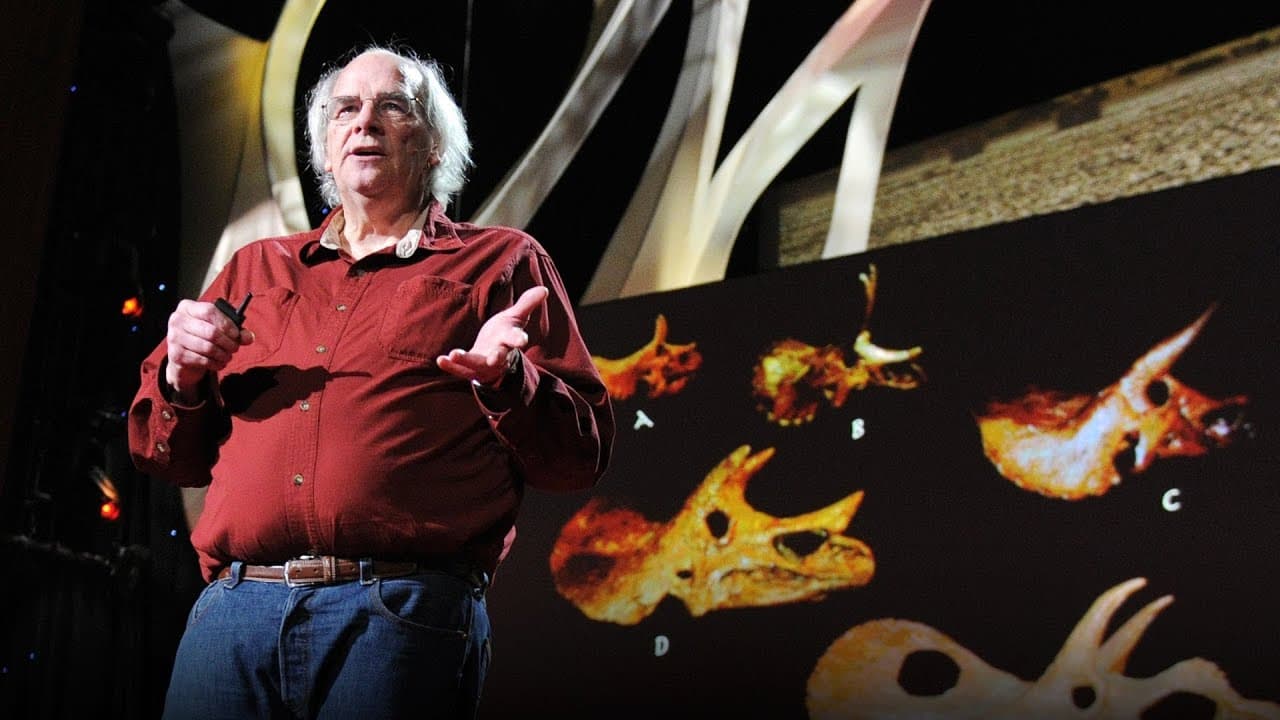
[Applause] when I was uh growing up in Montana I uh I had two dreams I wanted to be a paleontologist a dinosaur paleontologist and I wanted to have a pet dinosaur and so that's what I've been striving for all of my life I was very fortunate early in my career I was fortunate in finding things I wasn't very good at reading things in fact I don't rea... Read More

Key Insights

  • 🫠 The speaker faced challenges in reading due to being dyslexic but found success in discovering dinosaur fossils and making significant hypotheses about their behavior.
  • 🦕 Extracting dinosaur DNA for cloning purposes is not feasible due to its rapid degradation.
  • 🦕 Birds are considered living dinosaurs, and modifying chickens can be a way to create a chickenosaurus with certain dinosaur-like characteristics.

Install to Summarize YouTube Videos and Get Transcripts

Explore YouTube Video Summarizer or Get YouTube Transcript Extractor

Questions & Answers

Q: What were some of the significant discoveries made by the speaker in his career?

The speaker discovered the first dinosaur eggs, baby dinosaurs in nests, dinosaur embryos, and evidence of social behavior among dinosaurs.

Q: Can dinosaur DNA be extracted and used to create living dinosaurs?

No, dinosaur DNA breaks down too fast, making it impossible to clone dinosaurs based on their DNA.

Q: How are birds related to dinosaurs?

Birds are considered living dinosaurs. They are classified as avian dinosaurs, while extinct dinosaurs are referred to as non-avian dinosaurs.

Q: How does the speaker propose modifying chickens to resemble dinosaurs?

The speaker suggests using evolutionary tools such as selection, transgenesis, and atavism activation to modify chickens' characteristics, such as adding teeth or retaining a longer tail.

Summary & Key Takeaways

  • The speaker discusses his childhood dream of becoming a paleontologist and having a pet dinosaur.

  • He talks about his fortunate discoveries of dinosaur eggs, embryos, and evidence of social behavior in dinosaurs.

  • The speaker explains the impossibility of extracting dinosaur DNA but suggests modifying chickens to resemble dinosaurs as a teaching tool.


Read in Other Languages (beta)

English

Share This Summary 📚

Summarize YouTube Videos and Get Video Transcripts with 1-Click

Download browser extensions on:

Try YouTube Summary with ChatGPT & Claude or YouTube Transcript Generator

Explore More Summaries from TED-Ed 📚
How do cigarettes affect the body? - Krishna Sudhir thumbnail
How do cigarettes affect the body? - Krishna Sudhir
TED-Ed
What happens during a heart attack? - Krishna Sudhir thumbnail
What happens during a heart attack? - Krishna Sudhir
TED-Ed
How blood pressure works - Wilfred Manzano thumbnail
How blood pressure works - Wilfred Manzano
TED-Ed
How we conquered the deadly smallpox virus - Simona Zompi thumbnail
How we conquered the deadly smallpox virus - Simona Zompi
TED-Ed
Can you solve the pirate riddle? - Alex Gendler thumbnail
Can you solve the pirate riddle? - Alex Gendler
TED-Ed
How Thor got his hammer - Scott A. Mellor thumbnail
How Thor got his hammer - Scott A. Mellor
TED-Ed

Summarize YouTube Videos and Get Video Transcripts with 1-Click

Download browser extensions on:

Try YouTube Summary with ChatGPT & Claude or YouTube Transcript Generator

Apps & Extensions

  • Chrome Extension
  • Safari Extension
  • Edge Add-ons
  • Firefox Add-ons
  • iOS App
  • Android App

Key Features

  • YouTube Video Summarizer
  • Web & PDF Summarizer
  • Web & PDF Highlighter
  • Chat with PDF
  • Ask AI Clone
  • Audio Transcriber
  • Glasp Reader
  • Kindle Highlight Export
  • Idea Hatch

Integrations

  • Obsidian Plugin
  • Notion Integration
  • Pocket Integration
  • Instapaper Integration
  • Medium Integration
  • Readwise Integration
  • Snipd Integration
  • Hypothesis Integration

More Features

  • APIs
  • MCP Connector
  • Blog & Post
  • Embed Links
  • Image Highlight
  • Personality Test
  • Quote Shots
  • Open Graph Checker

Company

  • About us
  • Our Story
  • Blog
  • Community
  • FAQs
  • Job Board
  • Newsletter
  • Pricing
Terms

•

Privacy

•

Guidelines

© 2026 Glasp Inc. All rights reserved.