Why do women have periods?
TL;DR
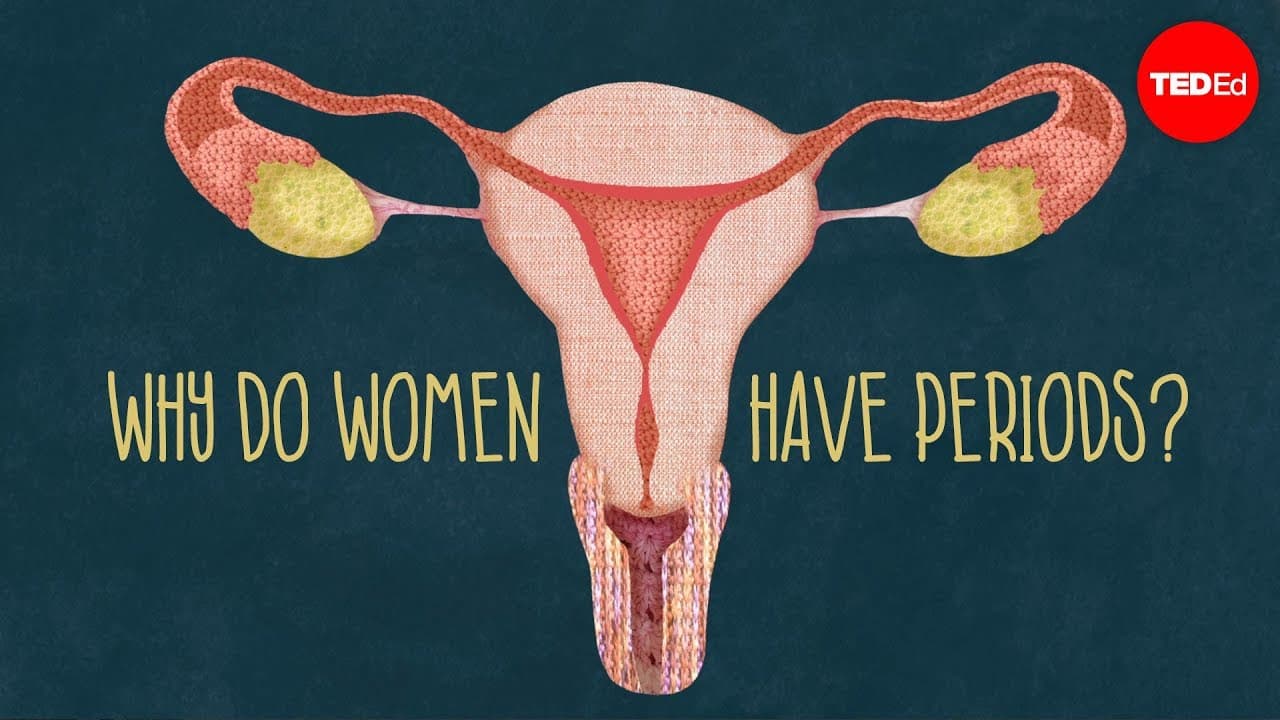
Women have periods as a protective mechanism to ensure healthy pregnancies. Menstruation allows the body to remove unfertilized eggs and potentially unhealthy embryos, thereby minimizing risks associated with unsuccessful pregnancies. This process is essential for selecting viable embryos and promotes the continuation of the human race.
Transcript
A handful of species on Earth share a seemingly mysterious trait: a menstrual cycle. We're one of the select few. Monkeys, apes, bats, humans, and possibly elephant shrews are the only mammals on Earth that menstruate. We also do it more than any other animal, even though its a waste of nutrients and can be a physical inconvenience. So where's the... Read More
Key Insights
- 🛟 Menstruation is a unique trait shared by only a few mammals, serving an essential purpose in ensuring healthy pregnancies.
- 📁 The placenta's direct access to the mother's bloodstream contributes to an evolutionary conflict between a mother and her fetus.
- 🧑🏭 Menstruation acts as a protective mechanism by eliminating risks associated with unsuccessful embryos, promoting the survival of healthy embryos.
Install to Summarize YouTube Videos and Get Transcripts
Explore YouTube Video Summarizer or Get YouTube Transcript Extractor
Questions & Answers
Q: Why do only a handful of species, including humans, have a menstrual cycle?
Humans and a few other mammals have a menstrual cycle to ensure healthy pregnancies by eliminating risks associated with unsuccessful embryos, contributing to the continuation of their species.
Q: How does the placenta contribute to the evolutionary conflict between a mother and her fetus during pregnancy?
The placenta, unique to humans and a few other species, allows the fetus to access the mother's bloodstream directly, enabling it to extract more nutrients than the mother planned to provide, leading to an evolutionary conflict of interests.
Q: What role does menstruation play in embryo selection?
Menstruation serves as a protective mechanism by removing any unfertilized eggs, sick, dying, or dead embryos, ensuring that only healthy embryos with optimal chances of survival are implanted, thereby continuing the human race.
Q: Why is pregnancy considered a huge and sometimes dangerous investment for mothers?
Pregnancy poses various risks to mothers, including intense fatigue, high blood pressure, diabetes, and preeclampsia, emphasizing the need for the body to carefully screen embryos through the process of menstruation to identify healthy ones worth the challenge.
Summary
This video explores the seemingly mysterious trait of menstruation, which is only found in a handful of species on Earth, including humans. Despite being a waste of nutrients and a physical inconvenience, menstruation plays a crucial role in the reproductive process. The answer to why this biological process exists lies in pregnancy, where the body allocates resources to create a nurturing environment for the growing fetus. However, pregnancy also creates a conflict of interests between the mother and the fetus, as they do not share exactly the same genes. This conflict leads to a biological tug-of-war inside the womb, where the fetus seeks to extract more resources for its own survival. One factor contributing to this conflict is the placenta, which connects to the mother's blood supply and provides nourishment to the fetus. Humans and a few other species have a unique placenta that directly accesses the mother's blood stream. This unrestricted access allows the fetus to manipulate the mother's hormones and blood vessels to secure sufficient resources. However, this constant demand for resources can lead to health risks for the mother, making pregnancy a significant and sometimes dangerous investment. Menstruation serves as a screening process, ensuring that only embryos worth the challenges of pregnancy continue to develop. When an embryo fails to pass the test, menstruation occurs, removing the endometrial lining, along with any unfertilized eggs or sick embryos, to protect the mother from potential infection and hormonal disruptions.
Questions & Answers
Q: Why is menstruation considered a waste of nutrients and a physical inconvenience?
Menstruation is considered a waste of nutrients and a physical inconvenience because it involves the shedding of the endometrial lining, along with any unfertilized eggs or sick embryos. This process results in blood loss, cramps, fatigue, and discomfort for the woman experiencing it. Additionally, the nutrients and energy invested in building up the endometrium are ultimately discarded if a pregnancy does not occur.
Q: How does pregnancy create a conflict of interests between the mother and the fetus?
Pregnancy creates a conflict of interests between the mother and the fetus due to the fact that they do not share exactly the same genes. The mother's body is evolutionarily programmed to provide equally for all her offspring, ensuring the spread of her genes. However, the fetus inherits genes from its father as well, and those genes can promote their own survival by extracting more than their fair share of resources from the mother. This evolutionary conflict results in a biological tug-of-war inside the womb, as the mother seeks to allocate resources for her own well-being while the fetus aims to secure sufficient resources for its own growth and development.
Q: What is the role of the placenta in the conflict between the mother and the fetus?
The placenta, a fetal organ that connects to the mother's blood supply, plays a significant role in the conflict between the mother and the fetus. In most mammals, the placenta is confined behind a barrier of maternal cells, allowing the mother to control the supply of nutrients to the fetus. However, in humans and a few other species, the placenta penetrates the mother's circulatory system, giving the fetus direct access to her blood stream. Through the placenta, the fetus releases hormones that manipulate the mother's body, dilating her arteries, increasing her blood sugar, and inflating her blood pressure. This unrestricted access to the mother's resources allows the fetus to extract more nutrients, which can put the mother's health at risk in the process.
Q: Why is pregnancy always a significant and sometimes dangerous investment for the mother?
Pregnancy is always a significant and sometimes dangerous investment for the mother due to the physical toll it takes on her body and the potential health risks involved. As the fetus grows, its ongoing demand for resources can cause intense fatigue, high blood pressure, and conditions such as diabetes and preeclampsia. Additionally, the connection between the fetus and the mother's blood supply becomes vital for the mother's health. In humans, severing this connection can lead to hemorrhage, endangering the mother's well-being. Moreover, if the fetus develops poorly or dies, the mother is at a heightened risk as well. Considering these risks, pregnancy requires a significant investment of the mother's resources and poses potential dangers to her health.
Q: How does menstruation serve as a screening process for embryos?
Menstruation serves as a screening process for embryos by eliminating any embryos that are not worth the challenges of pregnancy. Once ovulation occurs and fertilization doesn't result in a healthy pregnancy, the body sheds the endometrial lining, removing any unfertilized eggs, sick, dying, or dead embryos. This protective process ensures that only embryos with the best chance of successful development continue to progress, while eliminating potential risks to the mother's health. Thus, menstruation acts as a mechanism for quality control, allowing the body to prioritize resources for the most promising embryos.
Q: Why does the endometrium make implantation difficult for embryos?
The endometrium makes implantation difficult for embryos in order to ensure that only healthy embryos can survive and progress in development. The endometrium has evolved to create certain barriers and conditions, making it challenging for embryos to implant successfully. This process acts as a selective mechanism, favoring embryos that are most vigorously invasive and have a better chance of successful development. By making implantation difficult, the endometrium indirectly filters out weak or defective embryos, promoting the continuation of the most genetically fit individuals in the human population.
Q: What happens when an embryo fails the implantation process?
When an embryo fails the implantation process, it may still manage to attach partially or get partly through the endometrium. However, as it slowly dies, it poses risks to the mother's health. A dying embryo can leave the mother vulnerable to infections, and at the same time, it may emit hormonal signals that disrupt the mother's tissues. These risks can have detrimental effects on the mother's well-being and create potential complications. To mitigate these risks, the body removes any embryos that have failed the implantation process through menstruation, ensuring the mother's health and preventing potential harm from embryos that are unable to develop successfully.
Q: How does the process of menstruation contribute to the continuation of the human race?
The process of menstruation contributes to the continuation of the human race by acting as a quality control mechanism for the embryos. By shedding the endometrial lining and removing any unfertilized eggs, sick, dying, or dead embryos, menstruation ensures that only the healthiest and most viable embryos progress through pregnancy. This biological trait eliminates potential risks, protects the mother from infection and hormonal disruptions, and prioritizes resources for embryos that have the best chance of successful development. Consequently, menstruation sets the stage for the continuation of the human race by increasing the likelihood of genetically fit individuals and maintaining the overall reproductive health of the population.
Takeaways
In summary, menstruation, despite being a waste of nutrients and a physical inconvenience, serves as a vital process in the reproductive cycle of humans and a few other mammal species. It plays a crucial role in managing conflicts of interests between the mother and the fetus, as well as in financially screening embryos before committing to pregnancy. The unique placenta in humans allows the fetus to manipulate the mother's resources, which can have health implications for the mother. By shedding the endometrial lining and removing embryos that fail the implantation process, menstruation protects the mother from potential infections, hormonal disruptions, and unreliable embryos. Ultimately, menstruation ensures that only the healthiest embryos progress through pregnancy, maximizing the chances of successful reproduction and the continuation of the human race.
Summary & Key Takeaways
-
Menstruation in humans is a rare trait shared with only a few mammals like monkeys, apes, bats, and possibly elephant shrews.
-
The biological purpose of menstruation is to ensure healthy pregnancies by eliminating risks associated with unsuccessful embryos.
-
This unique process plays a crucial role in the continuation of the human race by selecting for healthy embryos.
Read in Other Languages (beta)
Share This Summary 📚
Summarize YouTube Videos and Get Video Transcripts with 1-Click
Try YouTube Summary with ChatGPT & Claude or YouTube Transcript Generator
Explore More Summaries from TED-Ed 📚






Summarize YouTube Videos and Get Video Transcripts with 1-Click
Try YouTube Summary with ChatGPT & Claude or YouTube Transcript Generator