Do NAD+ Supplements Support Healthy Aging?
TL;DR
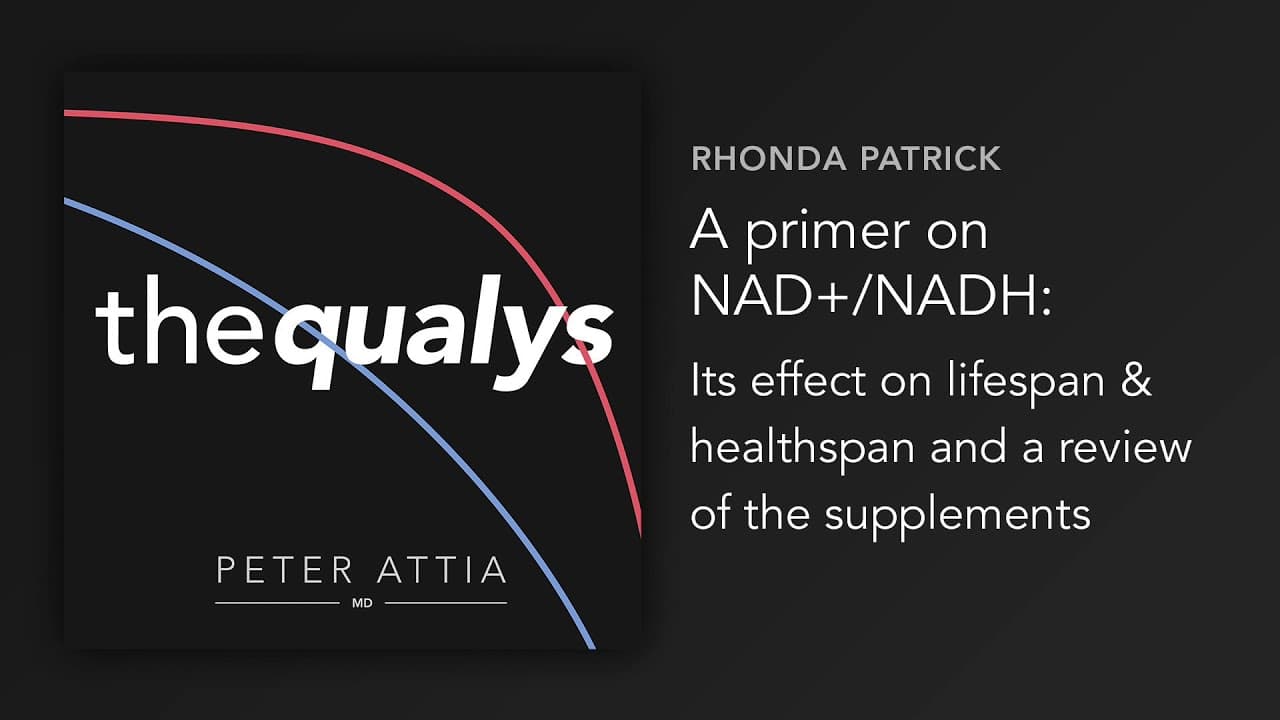
NAD+ supports mitochondrial energy production, sirtuin activity, and PARP-mediated DNA repair, but the case for supplementation remains uncertain. Rodent studies suggest benefits in some muscle and brain models, while small human studies show that nicotinamide riboside can raise plasma NAD+ dose-dependently without establishing that it reaches cells or mitochondria, improves healthspan, or extends lifespan.
Transcript
Welcome to The Qualies, a subscriber-exclusive podcast. Qualies is just a shorthand slang for a qualification round, which is something you do prior to the race, just a little bit quicker. Qualies podcast features episodes that are short, eh, we're hoping for less than 10 minutes each, which highlight the best questions, topics, tactics, et cetera,... Read More
Key Insights
- NAD+ is an important mitochondrial cofactor involved in respiratory function and energy production. Mitochondria generate NADH from available energy substrates, then use its proton and electrons through the electron transport chain to help create mitochondrial membrane potential and produce energy.
- The NAD+ to NADH ratio declines with age, but the reason is not fully established. The discussion identifies increased consumption and impaired regeneration as possible contributors, rather than assuming that age-related decline automatically proves supplementation will improve longevity or healthspan.
- PARP is a DNA repair enzyme that consumes substantial amounts of NAD+. Because DNA damage becomes more common with aging, increased PARP activation could create a major NAD+ sink and help explain why cellular NAD+ availability may decline over time.
- Inflammation and continuing immune-system activation may increase cellular energy demands and NAD+ consumption. These age-associated pressures could contribute to lower NAD+ levels alongside DNA repair requirements, although the relative importance of each proposed mechanism remains uncertain.
- The NAD+ salvage pathway regenerates NAD+, and dysfunction in this pathway may contribute to age-related decline. The conversation notes increasing evidence for this possibility but does not present a definitive explanation for whether consumption, impaired recycling, or both are primarily responsible.
- Nicotinamide riboside can increase plasma NAD+ levels in a dose-dependent manner according to pilot clinical studies discussed. However, higher plasma measurements do not establish whether NAD+ reaches the relevant cells, enters mitochondria, improves mitochondrial function, or produces longer life or better health.
- Animal evidence suggests NAD+ precursor supplementation can improve healthspan or mitochondrial function in selected rodent models. The clearest positive effects mentioned involve muscle myopathy models and the brain, but these findings do not establish equivalent benefits in humans.
- Fasting may increase NAD+ by reducing the availability of energy substrates such as glucose and fatty acids. When fewer substrates are available to generate NADH, NAD+ may accumulate, providing a non-supplement approach discussed for influencing the NAD+ to NADH balance.
Install to Summarize YouTube Videos and Get Transcripts
Explore YouTube Video Summarizer or Get YouTube Transcript Extractor
Questions & Answers
Q: What is the role of NAD+ and NADH in mitochondria?
NAD+ and NADH are central to mitochondrial respiratory function and energy production. When energy substrates such as glucose or fatty acids are available, mitochondria produce NADH. Its proton and electrons are then used through the electron transport chain, helping generate mitochondrial membrane potential and energy. Complex one converts NADH back to NAD+, linking the balance between these molecules to mitochondrial function.
Q: Why do NAD+ levels decline with age?
NAD+ may decline with age because it is consumed more heavily and possibly regenerated less effectively. Increasing DNA damage can activate PARP, a repair enzyme described as a major NAD+ sink. Inflammation and continuing immune activation may create additional demand. The salvage pathway that regenerates NAD+ may also become impaired, although the discussion does not identify one definitive cause.
Q: How does NAD+ support DNA repair?
NAD+ serves as a required resource for PARP, an enzyme involved in repairing DNA damage and believed to reside in the nucleus. As damage accumulates with age, PARP may become more active and consume more NAD+. This relationship offers a plausible explanation for age-related NAD+ decline, but the conversation does not establish whether supplementation improves DNA repair in humans.
Q: Do NAD+ supplements extend lifespan or healthspan?
The discussion does not establish that NAD+ supplements extend human lifespan or healthspan. Rodent evidence suggests benefits in certain models, particularly conditions involving muscle myopathy, mitochondrial dysfunction, or the brain. Human pilot studies show that nicotinamide riboside can raise plasma NAD+ levels, but meaningful effects on cellular function, healthspan, energy, or longevity remain unproven in the material presented.
Q: Does nicotinamide riboside reach cells and mitochondria?
Pilot clinical studies discussed in the episode indicate that nicotinamide riboside raises NAD+ levels in plasma in a dose-dependent manner. However, plasma elevation does not show whether the compound or resulting NAD+ enters relevant cells or mitochondria. Animal studies showing improved mitochondrial function imply an effect in the appropriate tissues, but equivalent intracellular delivery and benefits in humans remain uncertain.
Q: What does animal research show about NAD+ supplementation?
Animal research described in the discussion suggests that NAD+ precursor supplementation can improve healthspan or mitochondrial function in selected rodent models. Positive findings were especially associated with muscle myopathy models and the brain, both of which can depend heavily on mitochondrial function. These results are encouraging mechanistic evidence, but they cannot by themselves demonstrate comparable benefits in people.
Q: How can fasting affect the NAD+ to NADH balance?
Fasting may raise NAD+ because fewer energy substrates are available for conversion into NADH. Under fed conditions, substrates such as glucose and fatty acids support NADH production. When those substrates are absent during fasting, NAD+ may begin to accumulate. The discussion presents this as a way to influence the balance naturally, without claiming a specific healthspan or lifespan outcome.
Q: Could metformin reduce NAD+ or interfere with DNA repair?
The conversation raises this as an unresolved hypothesis. Metformin inhibits mitochondrial complex one, and complex one converts NADH to NAD+. The speakers therefore wonder whether metformin could lower the NAD+ to NADH ratio and reduce the substrate available to PARP for DNA repair. They explicitly state that they do not know the answer and propose consulting a metabolism expert.
Summary & Key Takeaways
-
NAD+ and NADH participate in mitochondrial energy metabolism. NADH supplies protons and electrons used by the electron transport chain, while complex one converts NADH to NAD+. This process contributes to mitochondrial membrane potential, respiratory function, and energy production, making the cellular balance between these molecules biologically important.
-
NAD+ levels and the NAD+ to NADH ratio decline with age. Possible explanations include greater NAD+ consumption by PARP during DNA repair, increased demands associated with inflammation and immune activation, and deterioration of the salvage pathway that regenerates NAD+. The discussion presents these mechanisms as plausible explanations rather than settled conclusions.
-
Supplement evidence is encouraging but incomplete. Rodent studies suggest NAD+ precursors can improve healthspan or mitochondrial function in certain muscle myopathy and brain models. Pilot human studies indicate nicotinamide riboside raises plasma NAD+ dose-dependently, but whether orally consumed compounds reach cells and mitochondria or produce meaningful health outcomes remains unknown.
Read in Other Languages (beta)
Share This Summary 📚
Summarize YouTube Videos and Get Video Transcripts with 1-Click
Try YouTube Summary with ChatGPT & Claude or YouTube Transcript Generator
Explore More Summaries from Peter Attia MD 📚
Summarize YouTube Videos and Get Video Transcripts with 1-Click
Try YouTube Summary with ChatGPT & Claude or YouTube Transcript Generator