What Are the Different Narrative Perspectives in Storytelling?
TL;DR
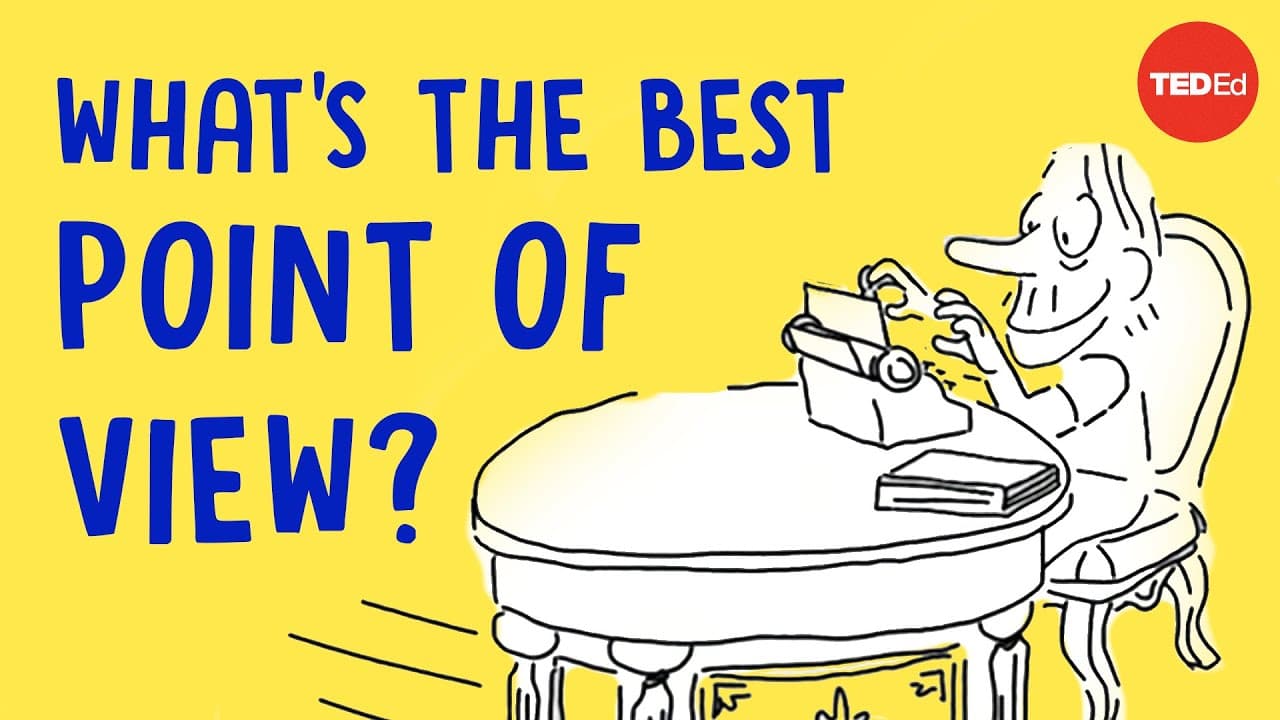
Narrative perspective shapes storytelling by influencing how the reader engages with the text. First person creates intimacy, third person offers a broader view, and second person immerses the reader directly into the narrative. The choice of perspective can enhance or constrain a story, impacting reader experience and character development.
Transcript
“I am an invisible man.” “Mrs. Dalloway said she would buy the flowers herself.” “You are about to begin reading Italo Calvino's new novel.” These three opening lines, from Ralph Ellison’s "Invisible Man," Virginia Woolf’s "Mrs. Dalloway," and Italo Calvino’s "If on a winter’s night a traveler," each establish a different point of view. Who is ... Read More
Key Insights
- 📖 Each story is told from a specific point of view, shaping the narrative and perspective of the reader. From first person to third person, the narrator determines how the story unfolds and what information is revealed.
- 👤 The choice of point of view can greatly impact how a story is perceived. For example, Rapunzel can be told from different perspectives, such as the prince, Rapunzel herself, or even the reader through second person narration.
- 🔀 Different points of view offer unique possibilities and constraints. Third person narration allows for distance, while first person brings readers closer to the narrator's experience. Second person narration builds urgency and suspense.
- 🤔 The constraints of a particular point of view can actually enhance a story by focusing it or highlighting specific elements. Each perspective brings its own advantages and limitations.
- 🔍 Third person narrators can be either limited or omniscient, giving insight into characters' thoughts and feelings or staying close to one character's perspective. ⏳ First person narration creates a close connection between the reader and the narrator, but is limited to the narrator's knowledge. This can create suspense and reveal information gradually.
- 🎭 First person narrators can be unreliable, offering a skewed or delusional perspective. This can be used to explore deeper themes or expose flaws in society, as seen in "The Remains of the Day."
- 🔢 In "We the Animals," the narration shifts from a plural first person perspective to a singular first person as the characters grow and one brother feels isolated. Point of view can mirror character development.
- 🌐 Second person narration, though less common, can build urgency and suspense by placing the reader in the character's perspective. It can also be used to create distance between the narrator and the story.
- 🌍 New technologies like virtual and augmented reality may revolutionize point of view experimentation, allowing readers to experience stories from different vantage points and perspectives.
Install to Summarize YouTube Videos and Get Transcripts
Explore YouTube Video Summarizer or Get YouTube Transcript Extractor
Questions & Answers
Q: How does the choice of point of view impact the reader's experience of a story?
The choice of point of view can greatly impact the reader's experience of a story. A third person narrator might create a sense of detachment, allowing readers to observe characters from a distance and potentially making the storyline more objective. On the other hand, a first person narrator can establish a strong connection between the reader and the protagonist, inviting readers to share in their thoughts and emotions. A second person narrator, although less commonly used, can bring a sense of urgency and suspense to the story by immersing the reader directly in the narrative. Ultimately, the choice of point of view can shape the reader's perspective and engagement with the story.
Q: How can a third person narrator provide more insight into multiple characters' thoughts and feelings?
As a third person narrator, the storyteller has the ability to switch between different characters' perspectives, allowing readers to gain insights into multiple characters' thoughts and feelings. This omniscient perspective helps readers understand the motivations and emotions driving various characters and provides a broader understanding of the overall narrative. By presenting different points of view, a third person narrator can provide a more comprehensive and nuanced portrayal of the story's events and characters.
Q: How does a first person narrator's limited knowledge impact the reader's experience?
A first person narrator's limited knowledge can create suspense and surprise for the reader. Since the reader only knows information as the narrator discovers it, they can feel a sense of anticipation and uncertainty along with the protagonist. This limited perspective can also make the reader more empathetic towards the narrator, as they experience the story directly through their eyes. However, it's important to note that a first person narrator's limited knowledge can also result in unreliable or biased storytelling, as their own perceptions and biases shape the narrative.
Q: What is the purpose of using second person narration in storytelling?
Second person narration can serve various purposes in storytelling. Placing the reader in a character's perspective can create a sense of immersion and urgency, making the reader feel like an active participant in the narrative. This can be particularly effective in creating suspense or evoking specific emotions from the reader. Additionally, second person narration can also be used to create distance between the narrator and their own story, inviting reflection or commentary on the events unfolding. However, the use of second person narration often requires the reader to suspend disbelief and actively engage in the story in a different way.
Summary & Key Takeaways
-
Different points of view, such as first person, second person, and third person, offer a range of possibilities and constraints in storytelling.
-
A third person narrator can create a sense of distance, while a first person narrator establishes closeness between the reader and the narrator.
-
Second person narration can build urgency and suspense, although it is less commonly used.
Read in Other Languages (beta)
Share This Summary 📚
Summarize YouTube Videos and Get Video Transcripts with 1-Click
Try YouTube Summary with ChatGPT & Claude or YouTube Transcript Generator
Explore More Summaries from TED-Ed 📚
Summarize YouTube Videos and Get Video Transcripts with 1-Click
Try YouTube Summary with ChatGPT & Claude or YouTube Transcript Generator