How to Turn LinkedIn Data Into Warm Job Leads
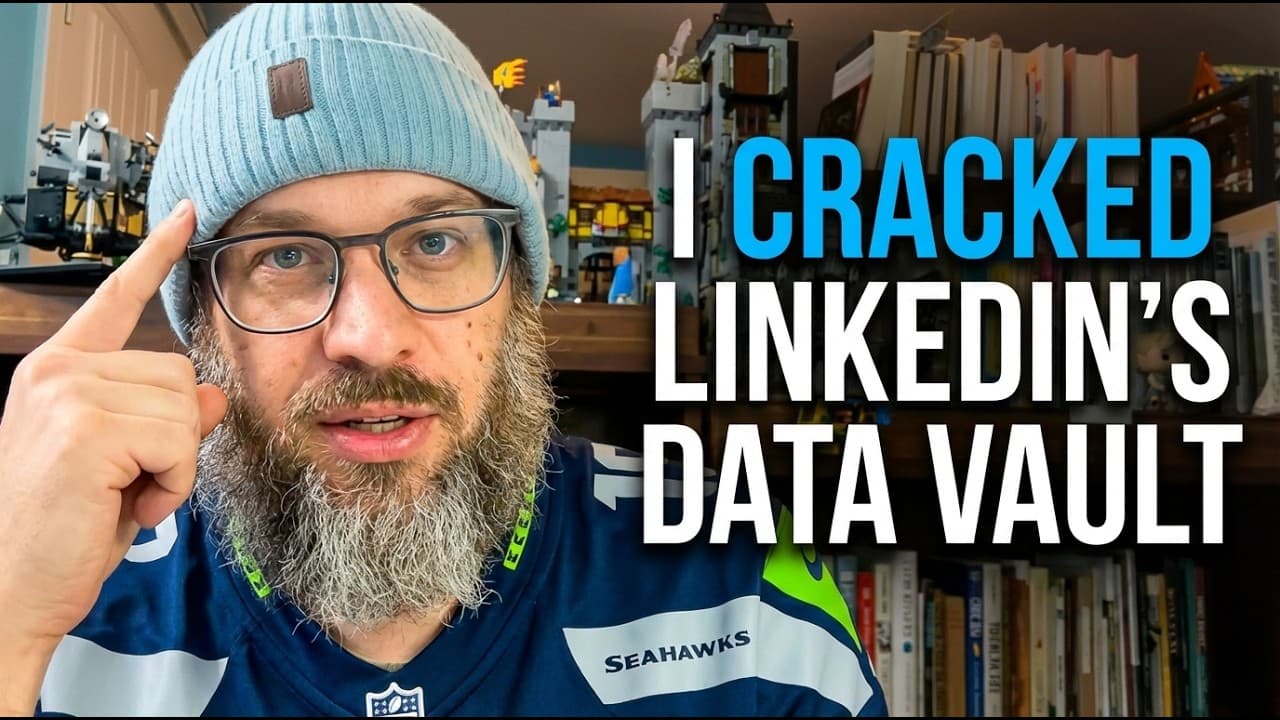
TL;DR
Turn LinkedIn data into warm job leads by exporting your files, giving them to ChatGPT or Claude Co-work, and asking which existing relationships offer the strongest path to a target company. The analysis can model relationships losing half their strength after 180 untouched days, assess potential advocates, and uncover dormant conversations worth restarting. Read on for the specific questions and scoring methods that can focus your outreach.
Transcript
The most powerful digital platforms in our lives lost their edge in late 2025 and early 2026, and almost nobody has noticed it yet. For as long as we've used digital platforms, we've existed in a state offormational asymmetry. LinkedIn knows everything about your professional network, right? Every connection, every message, every endorsement, every... Read More
Key Insights
- Platform data asymmetry is the condition in which users generate detailed personal data while platforms control its analysis and return only a filtered interpretation shaped by business objectives such as engagement, time on site, and premium conversions.
- AI analysis works by combining exported platform files with natural-language questions, allowing users to investigate their own priorities without depending on the limited buttons, feeds, recommendations, and query options built into a platform's interface.
- A relationship half-life model estimates that an untouched relationship loses half its strength every 180 days, while adjusting the decay curve for institutional bonds, communication frequency, interaction recency, and whether exchanges are shallow or substantively deep.
- A reciprocity ledger measures social capital by assigning values to recommendations and endorsements given or received, then combining records from multiple files to show which professional relationships appear balanced and where one person has invested more than the other.
- A vouch score predicts who might advocate for a job seeker by synthesizing message depth, relationship recency, recommendations, endorsements, and shared institutional history. The transcript suggests that scores above 80 indicate strong advocacy potential, while scores below 30 indicate weak familiarity.
- Conversation resurrection identifies dormant message threads containing natural reasons to reconnect, such as an unfulfilled promise to catch up or a request for help that never progressed. Language models can detect this conversational intent more effectively than conventional keyword queries.
- Network archetype classification examines a person's connection fingerprint to characterize networking behavior, including whether the person attracts substantial inbound interest, connects people across many organizations, or functions more like a visible thought leader.
- Warm path discovery ranks existing connections by relevance and relationship warmth, then searches for credible bridges into a target company. It can consider related organizations or industries, such as other robotics companies when the target operates in robotics, to prioritize outreach.
Install to Summarize YouTube Videos and Get Transcripts
Explore YouTube Video Summarizer or Get YouTube Transcript Extractor
Questions & Answers
Q: How can LinkedIn data help find warm job leads?
Exported LinkedIn data can reveal which existing relationships provide credible bridges to a target employer. AI can combine connection records, messages, recommendations, endorsements, interaction recency, and shared company histories, then rank contacts by relationship warmth and relevance.
Q: How do I analyze exported LinkedIn data with AI?
Export your available LinkedIn data files and provide them to ChatGPT or Claude Co-work. Ask plain-English questions tied to your job search, such as who you should contact this week, which relationships need maintenance, or what your realistic path is to a target company.
Q: What is a relationship half-life model for networking?
A relationship half-life model estimates how professional connections become colder without meaningful contact. The example algorithm treats an untouched relationship as losing half its strength every 180 days and adjusts the result using signals such as interaction recency, communication frequency, institutional bonds, and message depth.
Q: What is a networking reciprocity ledger?
A reciprocity ledger estimates the balance of social investment within a professional relationship. It can assign values to recommendations and endorsements given or received, then combine those records with connection metadata to show where support appears balanced or one-sided.
Q: How does an AI vouch score identify potential advocates?
A vouch score combines message depth, relationship recency, recommendations, endorsements, and shared institutional history. In the example described, scores above 80 suggest strong advocacy potential, while scores below 30 indicate weak familiarity.
Q: How can AI find dormant LinkedIn conversations worth restarting?
AI can scan message history for dormant threads that contain a natural reason to reconnect. Examples include an unfulfilled plan to catch up or a request for help that never progressed, which language models can identify by interpreting conversational intent.
Q: What is network archetype classification?
Network archetype classification examines a person's overall connection and interaction patterns. It can indicate whether someone attracts substantial inbound interest, connects people across many organizations, or operates more like a visible thought leader, helping shape a networking strategy around their existing behavior.
Q: How does warm path discovery rank LinkedIn contacts?
Warm path discovery ranks contacts primarily by their relevance to the target company and the warmth of the existing relationship. AI can also consider connections associated with related organizations or industries, producing a focused list of credible people to approach instead of relying on cold applications.
Summary & Key Takeaways
-
Digital platforms possess detailed information about users but present filtered interpretations designed around engagement, time on site, and premium conversions. Legally mandated data exports and AI analysis make that arrangement optional by letting individuals examine raw files, combine scattered records, and ask questions that platform interfaces do not support.
-
LinkedIn exports can support relationship half-life models, reciprocity ledgers, vouch scores, and conversation resurrection. These analyses combine message substance, interaction recency, endorsements, recommendations, connection metadata, and institutional history to estimate relationship strength, social capital balances, potential advocacy, and natural opportunities to restart useful conversations.
-
Warm path discovery ranks connections by both relationship warmth and relevance to a target company. Instead of sending cold applications, a job seeker can identify credible bridges through related organizations, industries, and professional relationships. The resulting network view supports a more focused, relationship-based strategy for reaching employers and directing career activity.
Read in Other Languages (beta)
Share This Summary 📚
Summarize YouTube Videos and Get Video Transcripts with 1-Click
Try YouTube Summary with ChatGPT & Claude or YouTube Transcript Generator
Explore More Summaries from AI News & Strategy Daily | Nate B Jones 📚






Summarize YouTube Videos and Get Video Transcripts with 1-Click
Try YouTube Summary with ChatGPT & Claude or YouTube Transcript Generator