How Did Humans Invent Nationalism and Make National Identity So Powerful?
TL;DR
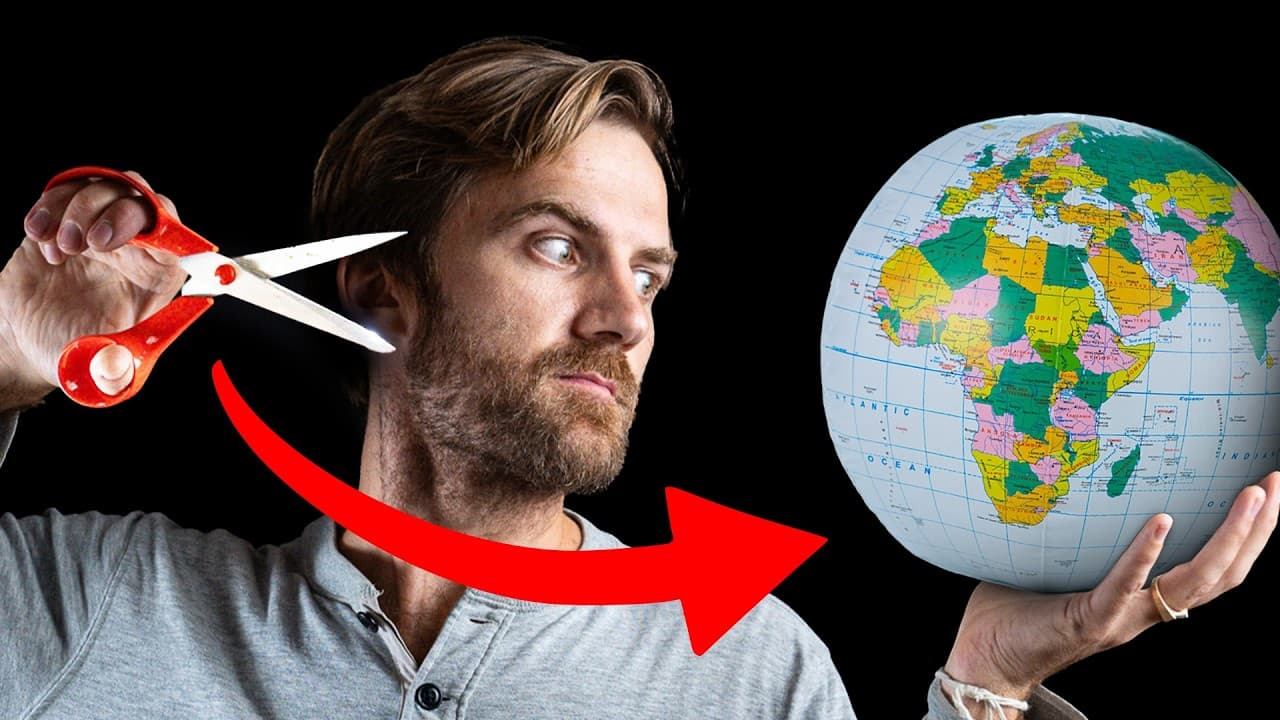
National identity became powerful by turning people, land, and the state into one imagined community united by heritage and identity. France shows how this identity was constructed despite divided languages, genetic links across borders, and strong local loyalties. The French Revolution recast subjects as citizens, while Napoleon promoted patriotism, symbols, and songs, making the historical process worth examining further.
Transcript
(dramatic music) (radio crackling) - Our world is built on an idea. It's an idea so powerful that we fight and die for it. We draw our maps around it. It shapes our politics and forms the basis of our very identity, who we think we are. It's an idea so pervasive that you've probably never even stopped to notice how weird it is. Because here's the t... Read More
Key Insights
- A nation is a constructed community that treats people, land, and the state as one entity united by heritage and identity. Its power comes from persuading individuals that they belong to a community much larger than their immediate town, village, or personal relationships.
- Historical kingdoms were not necessarily modern nations because sharing a monarch did not create a shared identity among their inhabitants. A distant king might levy taxes, but ordinary farmers could still identify primarily with their local communities rather than with everyone living inside the ruler's shifting territory.
- France's borders did not simply form around one genetically unified population. The transcript's European genetic map indicates that people in parts of France could have closer genetic links with populations across a border than with people elsewhere inside France.
- Physical traits do not consistently align with national borders. The distribution of red hair is presented as an example showing that regional human characteristics can extend across countries rather than dividing populations neatly according to the political lines drawn on maps.
- French linguistic unity developed recently relative to the kingdom's long history. A map from the early 1800s shows that only one area spoke something close to modern French, while most inhabitants of the territory spoke other languages that their communities had used for hundreds of years.
- Ancient Chinese identity was described as strongest among political elites in the capital rather than throughout the imperial population. Many people under imperial rule did not speak Chinese or identify as Chinese, while shifting borders and rival empires complicated any fixed definition of Chinese people or land.
- The French Revolution introduced the idea that political legitimacy comes from the people rather than from God or a natural royal right. By redefining royal subjects as citizens, it encouraged residents to regard the country and its soil as something they collectively owned.
- Napoleon Bonaparte accelerated the construction of French national identity by rallying people around patriotism. Symbols and songs helped translate an abstract idea of shared citizenship into a more tangible national story capable of uniting communities that had previously remained culturally and linguistically divided.
Install to Summarize YouTube Videos and Get Transcripts
Explore YouTube Video Summarizer or Get YouTube Transcript Extractor
Questions & Answers
Q: What is a nation?
A nation is a giant community said to be united by heritage and identity. It treats the people, the land, and the state as one thing, making national belonging part of personal identity.
Q: How did humans invent nationalism?
Humans constructed national stories that connected populations, territory, government, heritage, and identity. These stories persuaded people to identify with a vast political community rather than only with their village, town, or immediate relationships.
Q: Why does the video say nations are made up?
National borders do not naturally contain one ethnicity, language, or ancient unified population. France had divided languages, genetic relationships crossing borders, shifting rulers, and residents who primarily identified with local communities.
Q: Why was the Kingdom of France not a modern nation?
People under the French king shared a ruler but did not necessarily share a French identity. Someone living hundreds of kilometers from the palace in Paris might see the king mainly as a distant person who occasionally levied taxes.
Q: How did language challenge the idea of an ancient French nation?
A map from the early 1800s shows that only one area spoke something close to modern-day French. Most people in France spoke other languages and had done so for hundreds of years.
Q: Did ethnicity align with France's national borders?
No. The European genetic map presented in the video indicates that parts of France had closer genetic links with people across the border than with people elsewhere inside France. The distribution of traits such as red hair also did not follow national borders.
Q: Why did changing borders not immediately change people's identities?
When a town shifted from the French king to the English king, its residents did not suddenly change from French to English. A farmer remained tied to the same village and daily struggle despite the change in political authority.
Q: How did the French Revolution and Napoleon strengthen French national identity?
The French Revolution promoted the idea that government legitimacy came from the people and recast royal subjects as citizens. Napoleon accelerated the process by rallying people around patriotism and promoting shared national symbols and songs.
Summary & Key Takeaways
-
Definition: A nation is a giant community that unites people, land, and the state through shared heritage and identity.
-
Definition: National belonging makes residence part of identity, turning someone who lives in America into someone who identifies as American.
-
Compare: Historical kingdoms united subjects under one ruler, while modern nations encourage citizens to identify with a shared political community.
-
Number: In the early 1800s, only one area of France spoke something close to modern-day French.
-
Number: The Kingdom of France appears on maps reaching back to the 1200s, but shared rule did not create modern French identity.
-
Compare: French genetic relationships and traits such as red hair crossed political borders rather than matching them.
-
Who: Residents far from the king's palace in Paris often identified with their village or town instead of a unified France.
-
Definition: The French Revolution reframed royal subjects as citizens and presented political legitimacy as coming from the people.
-
Who: Napoleon Bonaparte strengthened French national identity through patriotism, shared symbols, and songs.
-
Compare: A town could pass from the French king to the English king without its farmers suddenly adopting a different identity.
Read in Other Languages (beta)
Share This Summary 📚
Summarize YouTube Videos and Get Video Transcripts with 1-Click
Try YouTube Summary with ChatGPT & Claude or YouTube Transcript Generator
Explore More Summaries from Johnny Harris 📚




Summarize YouTube Videos and Get Video Transcripts with 1-Click
Try YouTube Summary with ChatGPT & Claude or YouTube Transcript Generator