What Are Acid-Base Reactions and Their Environmental Impact?
TL;DR
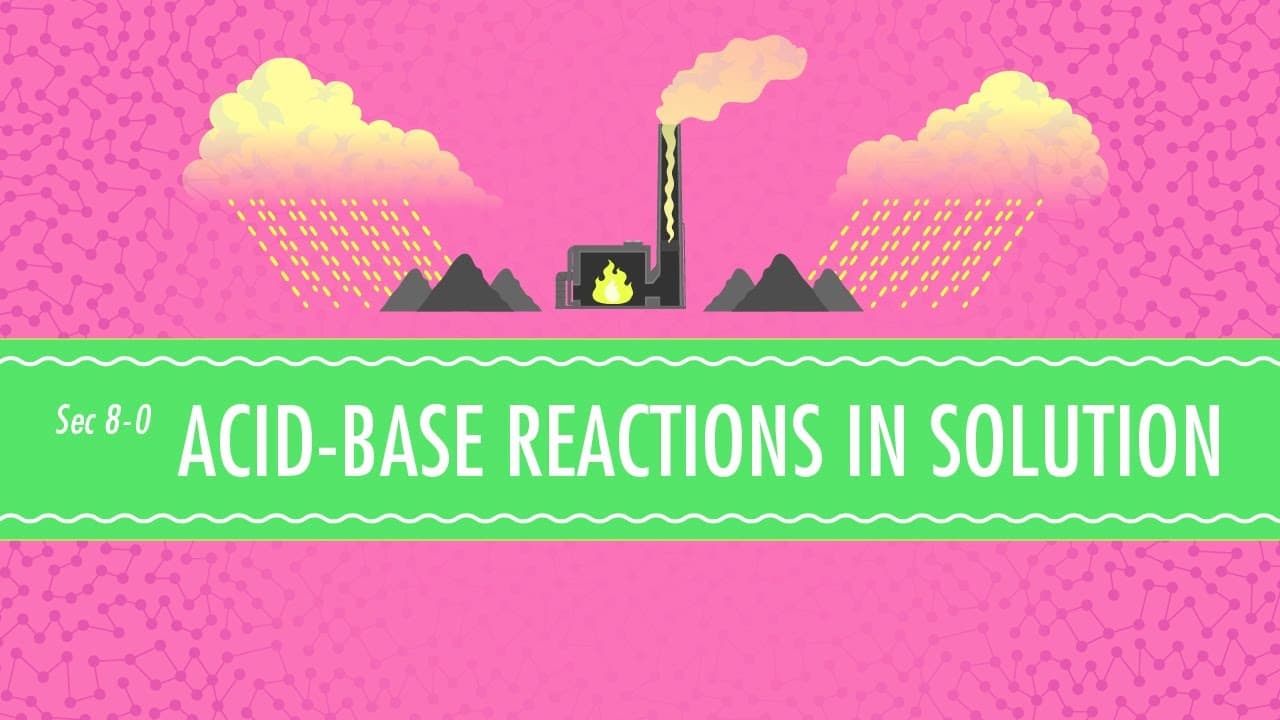
Acid-base reactions involve the transfer of protons between substances, with acids donating protons and bases accepting them. These reactions can lead to environmental issues like acid rain, primarily from sulfuric acid emissions, which damage ecosystems and man-made structures. Limestone scrubbers are used to reduce sulfur emissions from coal-fired power plants, converting harmful substances into less damaging compounds.
Transcript
All right, so you're studying Chemistry, what's the worst that could happen? In most classes, the worst that can happen is just abject, total failure. You're just like failing the test, failing the class, having to rethink your life choices, maybe even quit, drop out of school, get a job at a diner, and start smoking Lucky Strikes. But in Chemistry... Read More
Key Insights
- Chemistry poses significant risks, including potential death, due to dangerous reactions occurring in labs and environmental impacts.
- Acids and bases are defined by their ability to donate or accept protons, respectively, as per the Bronsted-Lowry definition.
- Water is both the most common acid and base, due to its ability to either donate or accept protons.
- Acid rain, primarily caused by sulfuric acid from coal-fired power plants, damages limestone structures and ecosystems.
- Strong acids readily donate protons, resulting in weak conjugate bases, while strong bases have weak conjugate acids.
- Limestone scrubbers are used to mitigate sulfur emissions from power plants, converting sulfur dioxide to calcium sulfate.
- The chemical industry utilizes byproducts of sulfur scrubbing processes, such as sulfuric acid, for various industrial applications.
- Despite its potential dangers, chemistry plays a crucial role in solving environmental issues caused by industrial activities.
Install to Summarize YouTube Videos and Get Transcripts
Explore YouTube Video Summarizer or Get YouTube Transcript Extractor
Questions & Answers
Q: What are the potential dangers associated with studying chemistry?
Studying chemistry poses significant dangers, including potential death due to hazardous reactions in labs and environmental impacts from chemical processes. Chemists face risks from workplace accidents and exposure to harmful substances, which can lead to health issues like cancer. Despite these risks, chemistry is vital for advancing human life.
Q: How are acids and bases defined according to Bronsted and Lowry?
Bronsted and Lowry defined acids and bases based on their ability to donate or accept protons. An acid is any substance that donates a proton, while a base is any substance that accepts a proton. This definition encompasses a wide range of molecules, making it applicable to many chemical reactions.
Q: Why is water considered both an acid and a base?
Water is considered both an acid and a base because it can either donate a proton to become a hydronium ion (H3O+) or accept a proton to form hydroxide ions (OH-). This dual capability makes water the most common acid and base, facilitating various chemical reactions in aqueous solutions.
Q: What environmental impact does acid rain have?
Acid rain, primarily caused by sulfuric acid emissions from coal-fired power plants, has significant environmental impacts. It damages limestone structures, acidifies water bodies, and harms aquatic life, forests, and ecosystems. The acidity can reach levels comparable to lemon juice, causing irritation to human skin and further environmental degradation.
Q: How do limestone scrubbers work in power plants?
Limestone scrubbers in power plants work by passing flue gases through a limestone slurry. The sulfur dioxide in the gases reacts with the limestone to form calcium sulfate, effectively removing sulfur emissions. This process helps mitigate the environmental impact of acid rain by reducing the amount of sulfur released into the atmosphere.
Q: What are strong acids and bases, and how do they differ from weak ones?
Strong acids are those that readily donate protons, resulting in weak conjugate bases that are less likely to accept protons. Conversely, strong bases are efficient at accepting protons, leading to weak conjugate acids. The strength of an acid or base is determined by its tendency to donate or accept protons in chemical reactions.
Q: How does chemistry help solve environmental issues caused by industrial activities?
Chemistry helps solve environmental issues by developing processes to mitigate harmful emissions and byproducts. For example, limestone scrubbers reduce sulfur emissions from power plants, and chemical reactions convert these emissions into useful substances like sulfuric acid. These solutions demonstrate chemistry's role in addressing environmental challenges.
Q: What role does sulfuric acid play in industrial applications?
Sulfuric acid, a byproduct of sulfur scrubbing processes, plays a crucial role in various industrial applications. It is used in paper mills, iron and steel production, industrial cleaning, and chemical synthesis. The production of sulfuric acid from industrial emissions showcases how chemistry can repurpose waste into valuable resources.
Summary & Key Takeaways
-
The video discusses the dangers of chemistry, highlighting the potential for death and environmental damage due to chemical reactions. It focuses on acid-base reactions, explaining their definitions and impacts.
-
Acids and bases are defined by their proton exchange capabilities. The video explains how acid rain, caused by sulfuric acid emissions, affects the environment and how limestone scrubbers help mitigate these effects.
-
The video emphasizes the dual role of chemistry in causing and solving environmental issues. It explains the importance of understanding acid-base reactions and their implications for industrial processes and environmental protection.
Read in Other Languages (beta)
Share This Summary 📚
Summarize YouTube Videos and Get Video Transcripts with 1-Click
Try YouTube Summary with ChatGPT & Claude or YouTube Transcript Generator
Explore More Summaries from CrashCourse 📚



Summarize YouTube Videos and Get Video Transcripts with 1-Click
Try YouTube Summary with ChatGPT & Claude or YouTube Transcript Generator