What Are Poor Theater and Theater of the Oppressed?
TL;DR
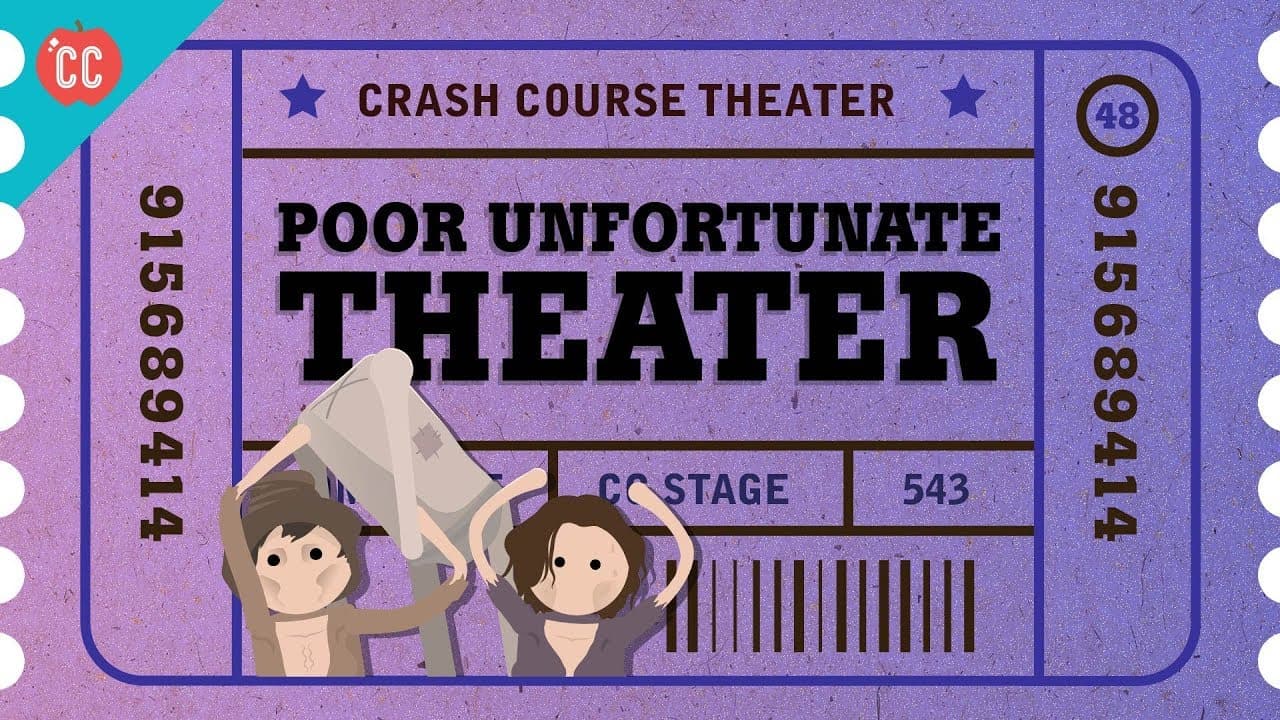
Poor Theater, created by Jerzy Grotowski, strips away traditional staging to emphasize personal discovery through actor expression. Conversely, Augusto Boal's Theater of the Oppressed empowers audiences to actively participate and engage in social change, encouraging them to address injustices. Both approaches challenge conventional theater by breaking down barriers between actors and spectators.
Transcript
Hey there! I’m Mike Rugnetta, this is Crash Course Theater, and today we’re looking at two very different models of radical, transformative theater. First, we’ll head to Poland for Jerzy Grotowski’s Poor Theater. Then, we’ll zoom over to Brazil for Augusto Boal’s The Theater of the Oppressed. These are pretty different movements: one is mostly conc... Read More
Key Insights
- 🎭 Poor Theater and The Theater of the Oppressed are two different models of radical theater that challenge conventional theatrical practices.
- 😒 Poor Theater emphasizes personal discovery and uses minimalistic staging, while The Theater of the Oppressed aims to create social change and empowers the audience to participate in the performance.
- 🧑🏭 Both types of theater focus on breaking down barriers between actors and audiences and emphasize the power of the actor to convey character and emotion.
- 🎭 Grotowski's Poor Theater draws inspiration from theater's origins in ritual and myth, while Boal's Theater of the Oppressed is influenced by Brechtian techniques and aims for political engagement.
- 🥺 Grotowski's method requires complete immersion in the role, leading to deep personal transformations for the actors, while Boal's method empowers audience members to take action against social injustice in their own lives.
- 🎭 Grotowski's Poor Theater was more influential and widely documented, while Boal's Theater of the Oppressed gained momentum as a participatory and empowering form of political theater.
Install to Summarize YouTube Videos and Get Transcripts
Explore YouTube Video Summarizer or Get YouTube Transcript Extractor
Questions & Answers
Q: What is the main objective of Poor Theater?
Poor Theater, developed by Jerzy Grotowski, aims to break away from theatrical conventions and create a more personal and ritualistic experience for both the actors and the audience. It focuses on the power of the actor to convey character and setting without relying on costumes, scenery, or props.
Q: How does The Theater of the Oppressed empower audience members?
The Theater of the Oppressed, created by Augusto Boal, encourages audience members to become "spect-actors" who actively participate in the performance. This empowers them to take action in their own lives and work towards social justice by suggesting new actions for the characters and evaluating proposed solutions to social problems.
Q: How did Grotowski's Poor Theater differ from Stanislavski's acting style?
While Stanislavski's acting style is based in psychological realism, Grotowski's Poor Theater moved away from realism and towards a more ritualistic and elemental approach. Grotowski believed in a complete immersion in the role, with actors spending years refining every movement, breath, and facial expression to create intense emotional connections with the audience.
Q: What was the impact of Boal's Theater of the Oppressed?
Boal's Theater of the Oppressed revolutionized the concept of theater by creating a participatory and empowering experience for both the audience and the actors. It inspired communities to take action against social injustices and provided a platform for dialogue and collective problem-solving.
Summary & Key Takeaways
-
Poor Theater, developed by Jerzy Grotowski, focuses on personal discovery and moves away from theatrical conventions like costumes and scenery.
-
The Theater of the Oppressed, created by Augusto Boal, aims to create broader social change and empowers audience members to take action against injustice.
-
Both types of theater emphasize the power of the actor and challenge traditional notions of performance.
Read in Other Languages (beta)
Share This Summary 📚
Summarize YouTube Videos and Get Video Transcripts with 1-Click
Try YouTube Summary with ChatGPT & Claude or YouTube Transcript Generator
Explore More Summaries from CrashCourse 📚
Summarize YouTube Videos and Get Video Transcripts with 1-Click
Try YouTube Summary with ChatGPT & Claude or YouTube Transcript Generator