Nobel Lecture: Tasuku Honjo, Nobel Prize in Physiology or Medicine 2018
TL;DR
Acquired immunity makes antibody diversification possible and provides the biological foundation for cancer immunotherapy. Tasuku Honjo traces research from antibody gene rearrangement and class switching to the identification of PD-1, showing how persistent investigation and fortunate scientific encounters helped reveal mechanisms of immune defense and produce important cancer drugs.
Transcript
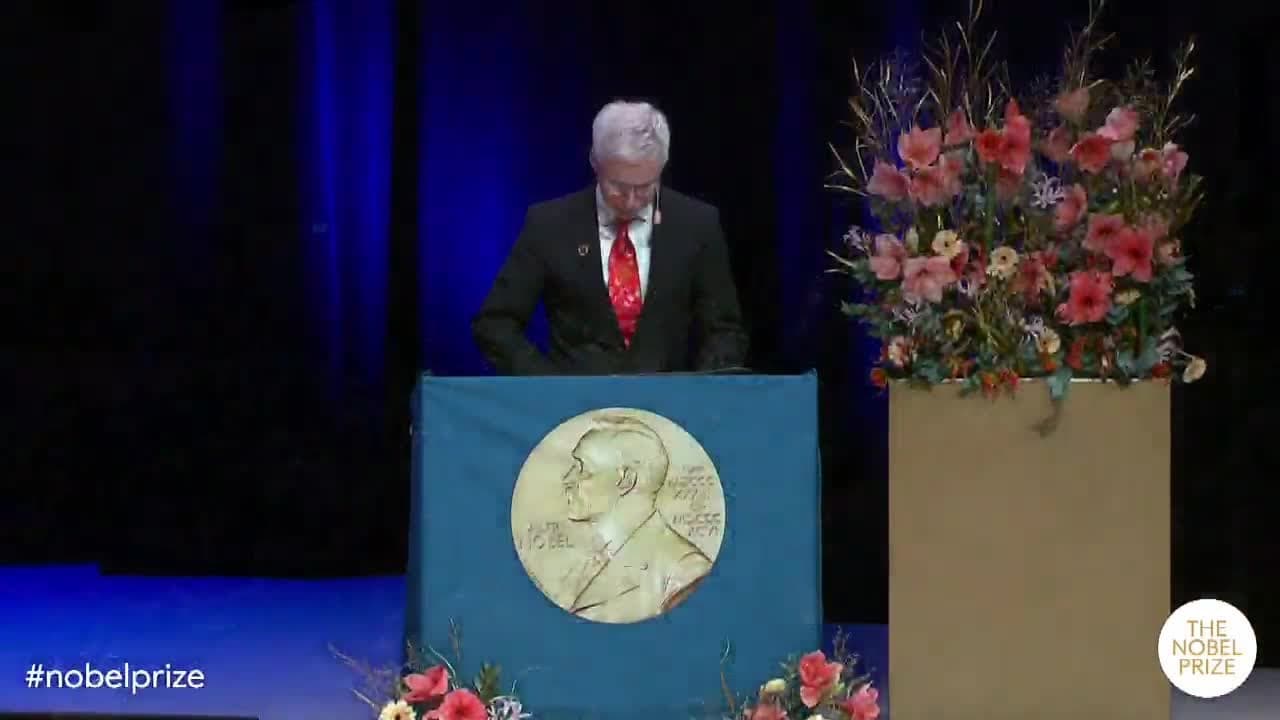
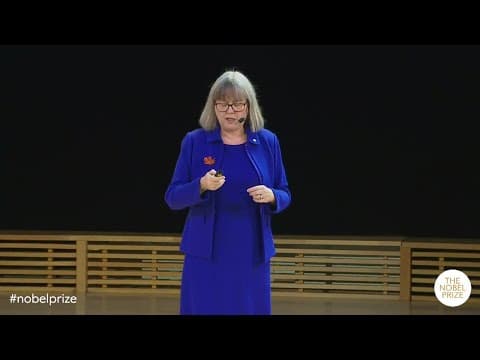
so this year's laureates Tosca Hangzhou was born in Kyoto in 1942 this was during the World War two so these were really difficult times the family moved around quite a lot but Anya managed to make it through so in the 1960s he started medicine at the Kyoto University and became MD in 99 and 1966 he spent the next years in the Graduate School in th... Read More
Key Insights
- Acquired immunity is the biological system that allows highly specific antibody responses and makes cancer immunotherapy possible. Honjo frames its development as a series of fortunate discoveries involving antibody diversity, genetic alteration, immune regulation, and the identification of PD-1.
- Antibody diversity is a genetic puzzle because animals produce antibodies against an almost infinite range of antigens, including artificial chemicals, while possessing only a limited number of immunoglobulin genes. This conflict motivated the search for mechanisms that alter antibody genes.
- An antibody is composed of two heavy chains and two light chains linked by disulfide bonds. Its amino-terminal variable regions recognize antigens, while its carboxyl-terminal constant regions perform activities that help process or respond to captured antigens.
- Immunoglobulin diversity is generated partly through genetic recombination during B-cell differentiation. Variable, joining, and diversity gene components are assembled in combinations, producing a large repertoire without requiring a separate inherited gene for every possible antigen.
- Affinity maturation is driven by somatic hypermutation and antigen selection. B cells change their variable regions relatively randomly, and cells expressing antibodies with higher affinity for the antigen are selected during repeated immunization.
- Class switching changes an antibody's constant region while preserving its variable region. Repeated immunization can shift the dominant antibody from IgM to classes such as IgG, IgA, or IgE, each of which has different functions and locations.
- Class switching requires a major chromosomal rearrangement in which a large intervening DNA segment is deleted and looped out. This deletion allows a particular constant-region gene to be expressed without changing the antigen-recognizing variable region.
- PD-1 functions as an immune checkpoint inhibitor and became the target of antibodies used as important cancer drugs. Honjo's contribution extended from identifying PD-1 to clarifying its regulatory role and enabling therapeutic interference with that checkpoint.
Install to Summarize YouTube Videos and Get Transcripts
Explore YouTube Video Summarizer or Get YouTube Transcript Extractor
Questions & Answers
Q: How does acquired immunity make cancer immunotherapy possible?
Acquired immunity enables highly specific responses against antigens through diversified antibodies and regulated immune-cell activity. Honjo argues that cancer immunotherapy depends on this capacity. Research into antibody genes revealed how specificity develops, while work on PD-1 showed that immune responses are also restrained by checkpoints. Antibodies directed against PD-1 can interfere with that regulatory mechanism and have become important cancer drugs.
Q: How can animals produce antibodies against almost infinite antigens?
Animals do not require a separate inherited immunoglobulin gene for every antigen. Research described by Honjo showed that limited gene components undergo genetic alteration during B-cell differentiation. Variable and joining components in light chains, along with diversity and joining components in heavy chains, are assembled through recombination. Combinatorial assembly and somatic hypermutation together create an enormous antibody repertoire capable of recognizing natural antigens and artificial chemicals.
Q: What parts of an antibody recognize and process antigens?
An antibody contains two heavy chains and two light chains connected by disulfide bonds. Each chain includes a variable region near its amino terminus and a constant region near its carboxyl terminus. The variable region is responsible for recognizing a specific antigen. The constant region supports the antibody's other activities, including functions involved in processing or responding to the antigen after it has been captured.
Q: What is somatic hypermutation in antibody responses?
Somatic hypermutation is a process in which B cells introduce relatively random changes into the variable regions of antibody genes. These changes create antibodies with different affinities for an antigen. During repeated immunization, the antigen selects B cells producing antibodies with higher affinity. This selection raises the quality of the response and provides the mechanism for antigen-driven affinity maturation.
Q: How does antibody class switching work?
Antibody class switching changes the constant region expressed by a B cell without changing the variable region that recognizes the antigen. Honjo's group found that a large segment of chromosomal DNA between constant-region genes is deleted and looped out. This rearrangement permits expression to move from IgM toward IgG, IgA, or IgE, producing antibodies with the same specificity but different functions and locations.
Q: Why does repeated immunization improve antibody responses?
Repeated immunization drives two related forms of antibody diversification. Somatic hypermutation alters variable regions, after which antigen selection favors B cells producing higher-affinity antibodies. Class switching changes the constant region, so IgG can become dominant after the initial IgM response. Together, these processes improve antigen binding while also changing the antibody's functional properties and location in the body.
Q: What is PD-1 and why is it important for cancer treatment?
PD-1 is a molecule identified through Honjo's research and later understood to have a role in immune checkpoint inhibition. A checkpoint restrains immune activity, so interfering with that regulatory pathway can affect how immunity responds to cancer. Antibodies directed against PD-1 became highly important cancer drugs. The work progressed from identifying the molecule to clarifying its checkpoint function and supporting its therapeutic use.
Q: How did Tasuku Honjo begin studying molecular immunology?
Honjo studied medicine at Kyoto University and entered graduate training there. His mentor, Osamu Hayaishi, created an international research environment and helped expose him to modern biochemical questions. Honjo first investigated how diphtheria toxin uses NAD in a reaction that inactivates elongation factor 2. Later, Donald Brown introduced him to molecular immunology and the unresolved problem of antibody diversity.
Summary
Tosca Hangzhou, the 2018 Nobel laureate, was born in Kyoto in 1942 during World War II. He went on to study medicine at Kyoto University and became a medical doctor in 1966. He conducted research in the US at the Carnegie Institution of Washington and the National Institutes of Health before becoming a professor at Osaka University and later at Kyoto University. He discovered the protein activation-induced cytidine deaminase, which is crucial for antibody production. He also identified the importance of the protein PD-1 as a checkpoint inhibitor in cancer treatment. Hangzhou has received numerous awards for his work, including the Kyoto Prize and the Robert Koch Prize. In addition to his research, he enjoys music and painting.
Questions & Answers
Q: How did Tosca Hangzhou contribute to our understanding of antibody production?
Tosca Hangzhou discovered the protein activation-induced cytidine deaminase (AID), which is crucial for antibody production. AID is responsible for somatic hypermutation, which allows antibodies to work effectively. By identifying and studying AID, Hangzhou provided insights into the process of antibody diversification.
Q: What is the significance of the protein PD-1 that Tosca Hangzhou studied?
Tosca Hangzhou's work on PD-1 stemmed from its identification as a checkpoint inhibitor. He showed that PD-1 plays a role in regulating the immune response and preventing excessive immune activation. Antibodies directed against PD-1 have become important cancer drugs, as they can effectively suppress tumor growth. Hangzhou's discoveries related to PD-1 have contributed to the development of immunotherapies for cancer treatment.
Q: What awards has Tosca Hangzhou received for his work?
Tosca Hangzhou has received numerous awards for his contributions to science. Some of the awards he has received include the Imperial Prize, the Japan Academy Prize, the Robert Koch Prize, the Order of Culture Japan, the Kyoto Prize, the Warren Alpert Foundation Prize, and the Koe Medical Science Prize. His discoveries and advancements in the field of immunology have been widely recognized and honored.
Q: What are some of Tosca Hangzhou's interests outside of his scientific work?
Tosca Hangzhou enjoys music and painting. He makes an effort to visit museums and go to concerts when he travels. Although he attempted to play the flute at one point, it didn't work out for him. However, he takes part in various forms of exercise such as tennis, baseball, basketball, table tennis, and golf. He plays golf quite seriously and even plays golf with Shinya Yamanaka, the 2012 Nobel laureate.
Q: How did Tosca Hangzhou's childhood experiences shape his approach to education?
Tosca Hangzhou's teachers did not perceive him as a good obedient pupil because he often asked difficult questions that regular textbooks couldn't answer. One day, a young female teacher even cried when he pointed out that she might be wrong. As a result, Hangzhou stopped asking questions in school and started reading books other than textbooks by himself. This curiosity and desire for knowledge led him to become a self-taught learner.
Q: What was the focus of Tosca Hangzhou's research at Kyoto University?
At Kyoto University, Tosca Hangzhou focused on understanding the process of antibody diversification. He was interested in B lymphocytes and their ability to undergo class switch recombination, which allows for the production of different classes of antibodies. Hangzhou succeeded in finding the reason behind this process and identified the protein activation-induced cytidine deaminase (AID) as a crucial enzyme involved in antibody diversification.
Q: How did Tosca Hangzhou's discovery of the protein AID impact our understanding of the immune response?
Tosca Hangzhou's discovery of AID had significant implications for our understanding of the immune response. AID is not only important for antibody diversification but also plays a role in somatic hypermutation. Somatic hypermutation is a process that introduces genetic changes in the antibody genes, resulting in higher affinity antibodies. By identifying AID and studying its function, Hangzhou shed light on the mechanisms behind antibody diversification and antibody maturation.
Q: How did Tosca Hangzhou's research on PD-1 contribute to cancer treatment?
Tosca Hangzhou's research on PD-1 led to a breakthrough in cancer treatment. He identified PD-1 as a checkpoint inhibitor molecule that regulates the immune response. Antibodies directed against PD-1 have been developed as cancer drugs, as they can block the inhibitory signals of PD-1 and enhance the anti-tumor immune response. Hangzhou's discoveries on PD-1 ignited the field of immunotherapy and have significantly improved cancer treatment options.
Q: What are the potential limitations of immunotherapy in cancer treatment?
Immunotherapy has shown promising results in cancer treatment, but it is not effective for all patients. Currently, only around 20-30% of patients respond positively to immunotherapy. Researchers are still trying to distinguish responders from non-responders and improve the potency of immunotherapy. Combinatorial approaches, such as combining immunotherapy with chemotherapy, radiotherapy, or other targeted therapies, are being explored to increase the response rates. Additionally, the heterogeneity of individual immune responses and the complex regulation of the immune system pose challenges for improving and expanding the use of immunotherapy.
Q: How does the microbiome affect the response to cancer immunotherapy?
The microbiome plays a role in modulating the response to cancer immunotherapy. Studies have shown that the composition of the gut microbiota can influence the effectiveness of immune checkpoint inhibitors like PD-1 antibodies. PD-1-deficient mice were found to have a skewed gut microbiota spectrum, with an increase in certain bacteria and a decrease in others. Additionally, the gut microbiota has been linked to IgA production and immune regulation. Manipulating the microbiota may be a potential strategy to enhance immunotherapy outcomes and improve patient responses.
Q: What are the future prospects for immunotherapy in cancer treatment?
Immunotherapy has the potential to revolutionize cancer treatment. Currently, immunotherapy is still a small fraction of cancer treatment, but with ongoing efforts and advancements, it is expected to grow in importance. Combining immunotherapy with other treatments, such as targeted therapies, chemo, and radiotherapy, is being explored to improve response rates. The ability to control cancer with immunotherapy may eventually make cancer a chronic disease rather than a fatal one. The eradication of infectious diseases with vaccines and antibiotics in the last century is an example of how medical advancements can change the course of diseases, and immunotherapy has the potential to do the same for cancer.
Takeaways
Tosca Hangzhou's research on antibody production and the role of PD-1 in cancer treatment has had a significant impact on the field of immunotherapy. His discoveries have led to the development of important cancer drugs and have changed the way we approach cancer treatment. Immunotherapy has shown promising results in improving patient outcomes, but there are still challenges to overcome, such as increasing response rates and understanding individual immune variations. By further exploring the microbiome and combinatorial approaches, researchers hope to further enhance the effectiveness of immunotherapy in treating cancer and potentially turn cancer into a chronic disease that can be controlled.
Summary & Key Takeaways
-
Tasuku Honjo describes how childhood curiosity, medical training at Kyoto University, mentorship from Osamu Hayaishi, and research experience in the United States led him toward molecular immunology. Early work on diphtheria toxin and elongation factor 2 gave him a fortunate start and helped establish his experimental approach to biological questions.
-
Antibody diversity presented a central mystery because animals can recognize an almost infinite variety of antigens despite having limited numbers of immunoglobulin genes. Research showed that genetic alteration during B-cell differentiation, including recombination and somatic hypermutation, generates diverse variable regions capable of recognizing many natural and artificial targets.
-
Honjo shifted attention from light chains to heavy chains, affinity maturation, and antibody class switching. His group found that switching from IgM to other antibody classes requires deletion of a large chromosomal DNA segment while preserving the variable region. His broader research later connected PD-1 checkpoint regulation with effective antibody-based cancer drugs.
Read in Other Languages (beta)
Share This Summary 📚
Summarize YouTube Videos and Get Video Transcripts with 1-Click
Try YouTube Summary with ChatGPT & Claude or YouTube Transcript Generator
Explore More Summaries from Nobel Prize 📚


Summarize YouTube Videos and Get Video Transcripts with 1-Click
Try YouTube Summary with ChatGPT & Claude or YouTube Transcript Generator