How to Build Essential AI Skills for Work
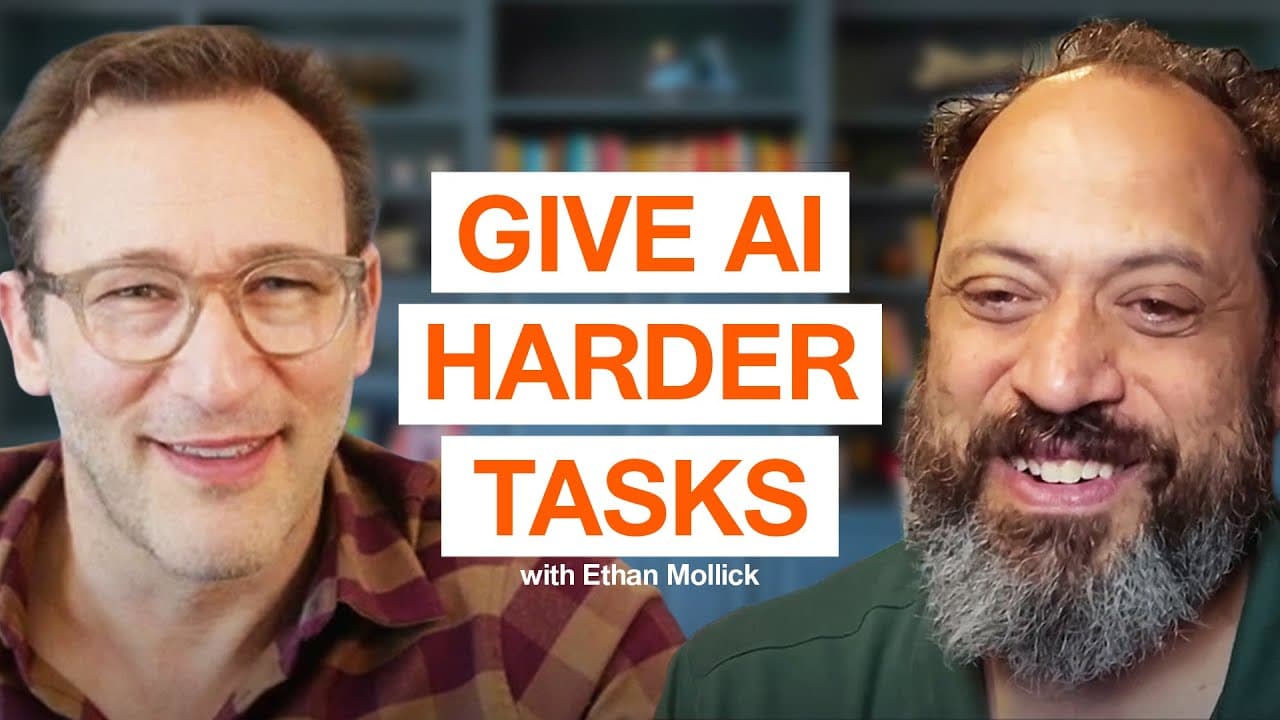
TL;DR
Use AI by giving it clear, human-style instructions, applying it to real tasks, and adding the experience, taste, and point of view that generic models lack. Prompt tricks matter less as models improve, while judgment and meaningful variation become more valuable because broadly available AI can otherwise produce similar work for everyone.
Transcript
So when you're interviewing for a job and everybody's good because of AI, how do I stand out and and get a job that's still that they still need to hire for? I'm fascinated by that. >> Like if Claude is really good at running your company, Claude's also good at running every other company and there's no variation between them. And generically high ... Read More
Key Insights
- AI is a general-purpose technology that will influence many kinds of work and daily activity. Its effects are not automatically positive or negative because people still shape how the technology is used, adopted, and regulated, even though AI is more self-directed than many earlier tools.
- Clear human-style instructions are now more useful than obsessing over elaborate prompt formulas. Mollick says techniques such as assigning an expert role, requesting harder thinking, or offering fictional bribes mattered more with earlier systems but no longer deserve the same attention.
- Model choice is less critical when using leading systems for ordinary tasks. Mollick describes offerings from OpenAI, Google, and Anthropic as broadly solid, suggesting that people should begin applying a capable model instead of becoming paralyzed by constant comparisons and conflicting advice.
- Practical experimentation is the simplest route to AI competence. People can use AI for actual work, observe what succeeds or fails, and gradually improve their instructions instead of waiting to master every prompt, agent workflow, or newly recommended chatbot before starting.
- Human taste becomes more valuable when AI makes competent output widely available. If the same capable model can assist every company, generic quality alone produces little differentiation, so the judgment and preferences of particular people can become central to competitive advantage.
- Variation is a source of competitive advantage in AI-assisted work. A model that helps one organization can also help its competitors, which means distinctive human experience, choices, and points of view are needed to prevent different organizations from producing essentially interchangeable results.
- Job disruption is a legitimate concern because current AI systems are capable and already affect real work. Mollick avoids claiming either that AI will eliminate every job or that concerns are unfounded, emphasizing that future occupations remain difficult to imagine while present changes still require attention.
- Prompt engineering is an example of how quickly a proposed AI career advantage can fade. It was recently presented as a specialized skill, but improvements in models reduced the importance of many prompting tricks, showing why durable human judgment may matter more than narrow techniques.
Install to Summarize YouTube Videos and Get Transcripts
Explore YouTube Video Summarizer or Get YouTube Transcript Extractor
Questions & Answers
Q: How should beginners start using AI without feeling overwhelmed?
Beginners should choose a capable AI system and apply it to real tasks instead of trying to master every chatbot, prompt technique, and agent recommendation first. Mollick says leading systems from OpenAI, Google, and Anthropic are all broadly solid. Clear instructions similar to those given to another person are generally sufficient, and practical use helps people discover what works over time.
Q: Does prompt engineering still matter for using AI effectively?
Elaborate prompt engineering matters less as AI models become more capable. Mollick says earlier systems responded noticeably to tactics such as assigning an expert identity, telling the model to think hard, or offering a fictional bribe. Those details no longer have the same importance. A person who communicates instructions clearly to other humans can usually give an AI system workable directions.
Q: Which AI chatbot should people use for everyday work?
People do not need to treat chatbot selection as a permanent or overwhelming decision. Mollick describes systems from OpenAI, Google, and Anthropic as broadly solid and improving quickly. His practical recommendation is to use one for meaningful tasks and learn through experience. Constantly switching tools based on each new recommendation can distract from developing useful habits and judgment.
Q: Why does human taste matter when everyone has access to AI?
Human taste matters because broadly available AI can give many organizations similarly competent assistance. If one model can help run one company, it can also help competing companies, creating generically strong work with little variation. Individual judgment, preferences, experience, and point of view introduce differences that AI alone may not provide, making the person behind the work increasingly important.
Q: How can companies maintain a competitive edge with AI?
Companies can maintain differentiation by combining AI capability with distinctive human decisions. Using the same strong models as competitors may improve baseline quality, but it does not automatically create a durable advantage. Competitive value can come from the experience, judgment, taste, and perspective of the people directing the technology, because those qualities produce variation rather than interchangeable results.
Q: Will AI eliminate knowledge-work jobs?
The conversation does not claim that every knowledge-work job will disappear, but it treats disruption as a legitimate concern. AI systems are already capable, competent, and relevant to real work. Future jobs are difficult to imagine in advance, just as earlier technological changes created unfamiliar roles, yet that uncertainty does not remove the need to consider present risks and reskilling pressures.
Q: What human skills remain valuable as AI improves?
Experience, judgment, taste, and a genuine point of view remain valuable because they guide how AI is used and distinguish one result from another. When models can provide broadly competent output to everyone, technical access alone offers little advantage. People create value by selecting goals, evaluating results, giving direction, and contributing perspectives that prevent AI-assisted work from becoming generic.
Q: How much control do people have over the future of AI?
People retain meaningful agency over AI because technology is a human-made tool whose consequences depend partly on adoption, use, and regulation. Mollick acknowledges that AI is more self-directed than many previous technologies, but he rejects the idea that its path is completely predetermined. Personal practices, organizational decisions, and societal choices will influence what AI becomes and how it affects work.
Summary & Key Takeaways
-
Ethan Mollick presents AI as a general-purpose technology whose effects will depend partly on human choices. He rejects both unquestioning optimism and absolute doom, arguing that people retain agency over how AI is adopted, used, and regulated. Some consequences will be beneficial, while others will create legitimate problems for workers and organizations.
-
Using AI no longer requires elaborate prompt engineering, according to Mollick. Tricks such as assigning the model a professional identity, telling it to think harder, or offering fictional bribes have become less important as models improve. People who can give clear instructions to other humans can generally communicate effectively with current AI systems.
-
Widely available AI may raise the general quality of work while reducing differences between competing organizations. If every company uses similarly capable systems, competitive advantage must come from human contributions such as experience, judgment, taste, and distinctive perspectives. These qualities introduce valuable variation and help prevent every AI-assisted output from becoming interchangeable.
Read in Other Languages (beta)
Share This Summary 📚
Summarize YouTube Videos and Get Video Transcripts with 1-Click
Try YouTube Summary with ChatGPT & Claude or YouTube Transcript Generator
Explore More Summaries from Simon Sinek 📚






Summarize YouTube Videos and Get Video Transcripts with 1-Click
Try YouTube Summary with ChatGPT & Claude or YouTube Transcript Generator